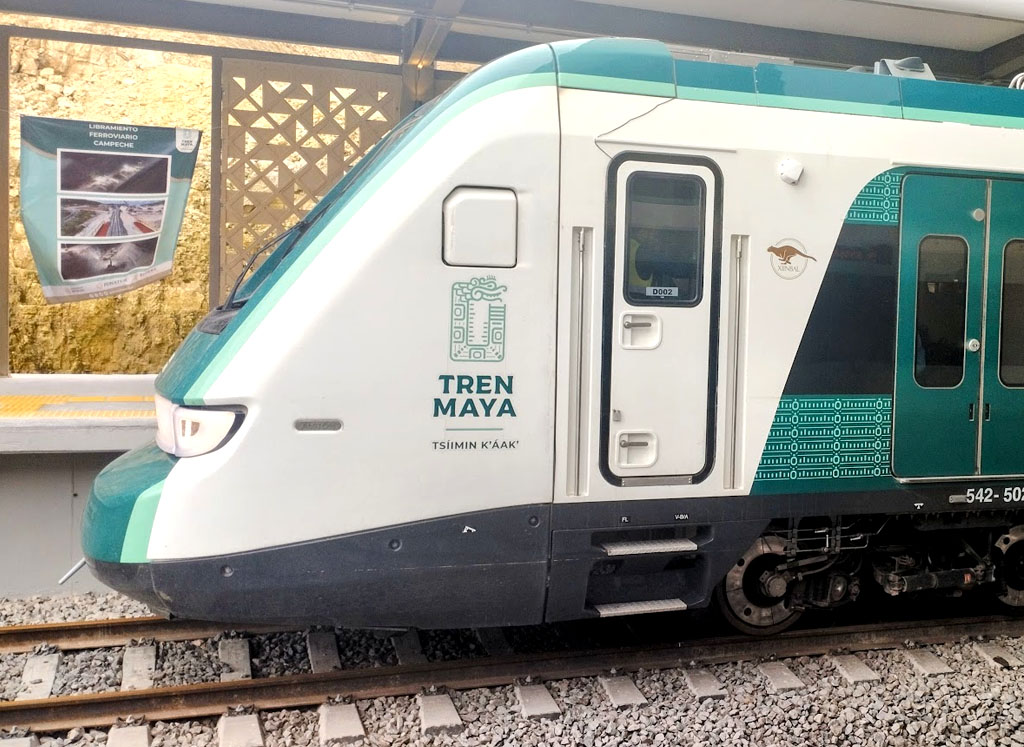
The Tren Maya, the flagship infrastructure project of former president Andrés Manuel López Obrador, was built under a legal framework that allowed the federal government to bypass normal market conditions and place thousands of hectares of land under direct military control.
A report published in June 2026 by México Unido Contra la Delincuencia (MUCD) documents how expropriations carried out for the construction of the railway significantly expanded the real estate holdings under the control of the Mexican Army.
The mechanism, the report argues, avoided the normal costs and conditions of the land market while causing direct harm to indigenous communities in the region.
The legal pathway for this accumulation of land was paved early. In November 2021, an agreement published in the Official Gazette declared the Tren Maya, or Mayan Train, a matter of national security.
This designation, issued by the National Public Security Council, had a specific practical effect: it allowed the government to lift definitive suspensions that courts had already granted against the project.
In one notable case, a federal judge had issued a definitive suspension halting construction on Section 5 of the railway. Instead of contesting the ruling with environmental impact evidence, the government declared the entire project a national security matter, effectively voiding the court order.
The move was widely criticized. The National Action Party accused the government of using a tramposa maniobra to evade justice and hide the corruption behind the project. UN experts later warned that the change of status did not allow Mexico to elude its international obligations to protect the human rights of affected communities.
With legal obstacles neutralized, the land acquisitions proceeded at scale. The MUCD report documents more than 300 expropriation decrees and public utility declarations transferring ejido and private lands across Chiapas, Tabasco, Campeche, Yucatán, and Quintana Roo.
Under President Claudia Sheinbaum, new expropriation decrees have been published regularly, affecting ejidos such as Tikuch in Yucatán, where landowners are offered as little as 14 pesos per square meter. In other cases, the government paid 354 pesos per square meter for land in Quintana Roo, demonstrating the wide disparity in valuations.
The land being acquired is not randomly selected. MUCD argues that the government deliberately incorporated strategic territorial extensions before the full added value generated by the railway could be reflected in market prices.
This means that as the railway raised land values across the peninsula, the state had already secured those parcels at pre-development prices. The benefit, therefore, is not limited to the railway infrastructure itself. It extends to the land beneath stations, operational facilities, hotels, and future commercial projects linked to the rail corridor. Unlike government spending on construction, which is consumed over time, real estate assets remain as long-term holdings.
The economic reach of the Tren Maya, the report argues, cannot be measured solely by passenger or cargo revenue, but also by the accumulation of territorial assets and infrastructure under the control of the military.
The scale of the expropriation is matched by the volume of ongoing legal challenges. As of 2026, 51 active judicial proceedings are tied to the project. These include 12 lawsuits related to expropriations and environmental matters, three nullity trials over early contract terminations and payment refusals, four agrarian suits filed by peasants demanding land restitution, and 31 labor lawsuits from workers alleging unjustified dismissals.
The social and cultural costs of this land transfer are also significant. For indigenous and ejido communities across the peninsula, land holds not just an economic value but a cultural, historical, and identity-based one. The MUCD report argues that the expropriation scheme allowed the government to incorporate strategic lands before the added value of the railway was fully reflected, meaning communities were compensated at pre-development prices while the state captured the subsequent gains.
The national security declaration, the expedited expropriations, and the consolidation of military-managed enterprises have produced a new economic reality in the southeast. The question that remains is whether this model of development, built on legal exceptionalism and land transfer at below-market prices, will ultimately serve the public interest or simply enrich a new military-commercial class.
With information from Diario de Yucatán.