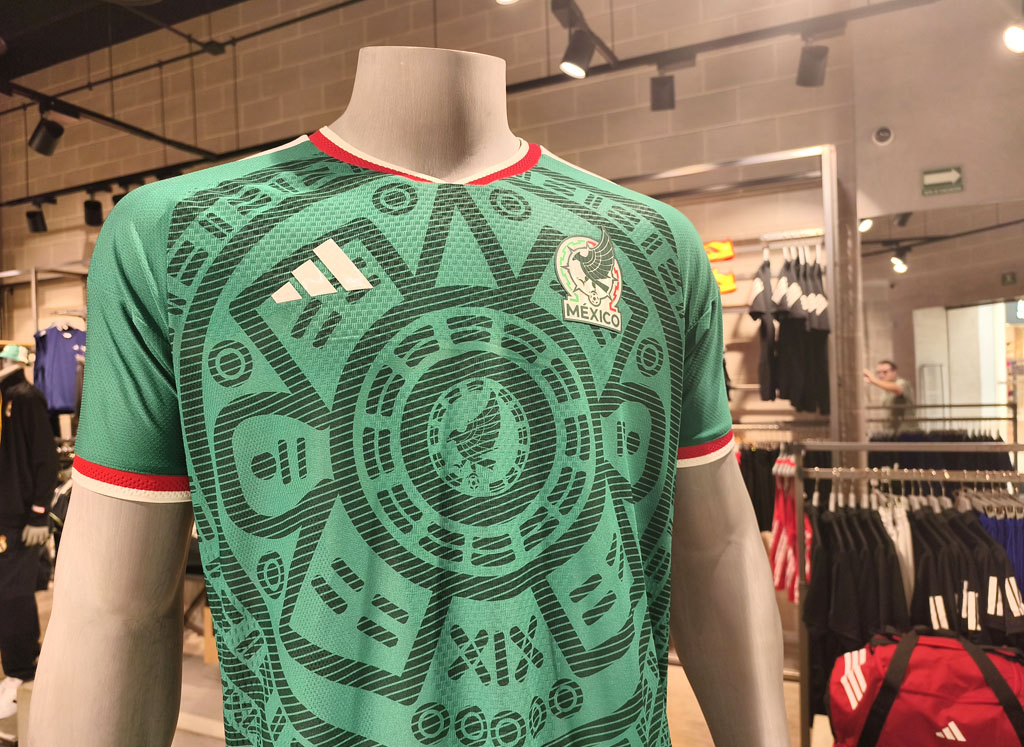
The already underwhelming excitement surrounding the 2026 FIFA World Cup has taken a controversial turn for the Mexican national team. While fans eagerly await the summer tournament, questions have emerged regarding the official team jersey.
Reports indicate that indigenous women in Puebla, Mexico, were paid extremely low wages to hand-embroider the special edition Adidas jerseys. The story raises serious questions about fair labor practices in the supply chain of global sportswear giants.
The collaboration was presented as a cultural celebration. Adidas worked with the Mexican social enterprise Someone Somewhere to create a unique jersey for the World Cup. The campaign highlighted the work of more than 150 artisans from Naupan, located in the Sierra Norte of Puebla.
The project aimed to fuse traditional Mexican textile art with modern sportswear. These women were hired to hand-embroider specific details, including the national team’s crest and the Adidas logo. However, the reality behind the marketing campaign has turned the project into a major public relations crisis.
Low Wages and Lack of Social Security
The controversy was brought to light by cultural promoter Luz Valdez. She interviewed several artisans who worked on the Adidas project for the 2026 World Cup jersey. The testimonies reveal a stark contrast between the jersey’s retail price and the workers’ pay.
The official jersey sells for between 1,599 and 4,999 Mexican pesos, which is roughly 80 to 250 USD. According to the investigation, the women received between 25 and 40 pesos per hour. That equates to approximately one to two US dollars per hour.
One artisan stated she was paid 200 pesos for a minimum five-hour shift. Beyond the low wages, the women reported a lack of access to social security. The subcontracting company, Someone Somewhere, allegedly did not register the embroiderers with the Mexican Social Security Institute (IMSS).
Instead of formal registration, the company reportedly offered a remote private medical service. This was offered despite the presence of an IMSS medical unit just a few kilometers from their community.
Use of Public Spaces and Traditional Designs
The report also details unusual working conditions for the World Cup jersey production. The artisans were required to work inside a public building: the “Amochkali” House of Culture in Naupan. This public space was reportedly converted into a private maquila workshop.
According to the women interviewed, the workers had to clock in and out using electronic devices. Furthermore, local municipal authorities were denied access to the site due to “confidentiality” agreements.
Another layer of the controversy concerns the jersey’s cultural authenticity. While the marketing campaign celebrated Mexican textile traditions, the artisans claimed the required techniques were not their own. The women said they were taught modern stitches such as French knots and zigzag patterns to meet Adidas’ quality standards.
These techniques are not part of the traditional “hilo contado” or “pepenado” embroidery style native to the Sierra Norte region.
A History of Cultural Missteps for Adidas
This is not the first time the German sportswear giant has faced cultural backlash in Mexico. Just last year, Adidas was forced to apologize over the “Oaxaca Slip-On” sandals. Designed by an American, the sandals featured traditional Zapotec patterns without permission or compensation to local artisans.
That previous incident resulted in a legal dispute with the Oaxacan government. While Adidas eventually visited the community to make amends, critics argue the new World Cup jersey scandal shows a repeated pattern of labor exploitation.
The controversy also echoes other alleged instances of overstepping by corporations in their use of Indigenous imagery, as is the case with Xcaret in Quintana Roo and the traditional textile designs plagiarized by Spanish fast-fashion giant Zara.
The Response from Adidas and Someone Somewhere
Following the public outcry, the subcontracting company Someone Somewhere, sent a letter addressing the accusations. The company defended the payment scheme, stating that wages were above the minimum legal requirement. They also claimed that using the public cultural center was requested by the artisan collective itself.
However, they confirmed that the women were not registered with the IMSS. They argued this was because the workers did not want to lose access to a separate federal welfare program.
Adidas has not issued an official statement regarding the labor conditions behind the production of the official Mexico 2026 World Cup jersey.