Two weeks before the opening whistle of the 2026 World Cup, a strange quiet has settled over the host cities of Mexico.
Hotel owners in Mexico City, Guadalajara, and Monterrey had spent years preparing for an economic boom, anticipating a flood of international football fans.
Yet the anticipated wave of bookings has not arrived. Instead of raising prices, many hoteliers are slashing them, offering deep discounts in a desperate attempt to fill the remaining rooms.
This phenomenon is not unique to Mexico; a similar pattern of tepid demand is spreading across all three host nations, casting serious doubt on the expected economic windfall from the world’s largest sporting event.
In Mexico, the numbers paint a stark picture. The National Association of Hotel Chains projects that occupancy across the three host cities will average between 60% and 65% during the tournament, a significant drop from the more than 80% forecast by the consultancy firm Deloitte back in February.
In Mexico City specifically, current reservations are reportedly even lower than they were during the summer of 2025, a concerning sign for the nation’s bustling capital.
Hotel revenue data from experts at Lighthouse Intelligence shows that in places like Guadalajara and Mexico City, prices had surged by over 100% in anticipation of the event, but as match days approach, those rates have fallen sharply from their peaks.
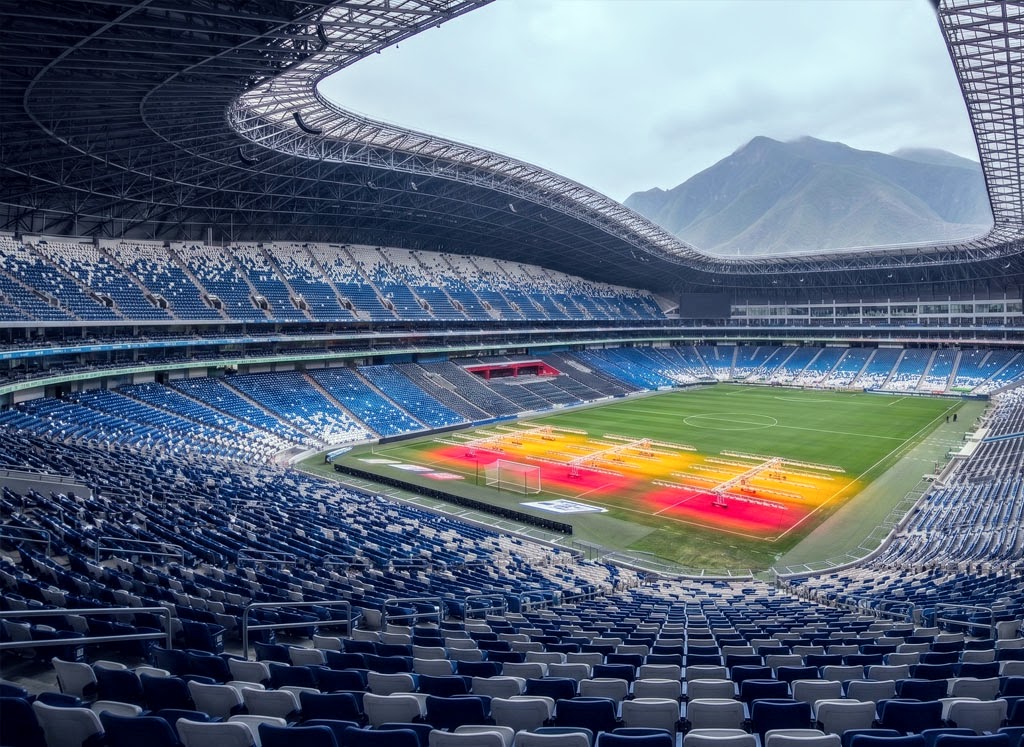
Monterrey serves as perhaps the most dramatic example of this trend. The city has been dealt a difficult hand by the tournament’s draw, which has it hosting group games involving Sweden, Tunisia, Japan, and South Africa.
Lacking a local favorite to galvanize the city, hoteliers were forced to slash their rates, cutting them by up to 42% from their peak. The disappointment is not limited to traditional hotels.
Airbnb hosts in Mexico City’s most desirable neighborhoods, including Condesa, Roma, and Coyoacán, have also reported drastically lowering their prices due to a lack of bookings, with many citing security concerns as a primary deterrent.
Not Just a Mexico Problem
This malaise is not a problem confined to Mexico’s borders. The American Hotel & Lodging Association (AHLA) has sounded the alarm, warning that reservations are far below expectations in almost every U.S. host city. A staggering 80% of hoteliers across 11 American host cities—including Atlanta, Boston, Dallas, Los Angeles, and New York—report that bookings are falling short of initial projections. At the same time, a similar outlook has presented itself in Canada’s host cities.
The forecast for the tournament’s economic impact in the U.S. has been drastically revised, with CoStar analysts projecting a meager 1.7% year-over-year lift in revenue per available room nationally.
Several critical factors appear to be driving travelers away instead of drawing them in. A major point of contention is the FIFA organization itself, which has been accused by the AHLA of creating artificial demand by block-booking large numbers of hotel rooms months in advance, only to cancel them later.
These block reservations inflated hotel revenue forecasts and staffing plans, and when FIFA released the rooms, it left hoteliers with a sudden glut of inventory they are now scrambling to fill. In some cities, such as Boston, Dallas, and Los Angeles, up to 70% of the rooms initially reserved by FIFA have reportedly been canceled, creating a real estate vacuum and forcing prices to plummet.
The high cost of attending the tournament is another massive hurdle. Ticket prices for matches are exorbitantly high, with some costing thousands of dollars, forcing even die-hard fans to reconsider their plans.
For international travelers, this is compounded by high airfares, local transportation costs, and a general inflationary environment that has made the entire trip financially prohibitive for many.
The Politics of it All
There is also a strong geopolitical undercurrent shaping the weak demand. In the United States, surveys indicate that 59% of soccer fans would feel unsafe traveling to the U.S. for a major sporting event, citing strict immigration enforcement, political unrest, and anti-foreigner sentiment.
The American Civil Liberties Union (ACLU) issued a travel advisory ahead of the event, warning that journalists and fans entering the U.S. could face invasive measures like social media scrutiny and detention by immigration authorities, which has undoubtedly dampened enthusiasm for travel.