
February 29 marked what would have been the 106th birthday of Román Piña Chan, one of Mexico’s greatest archaeologists. Though Piña Chan passed away in 2001, tributes to his life prove that he is still very much remembered, admired, and even loved.
Piña Chan spent more than 50 years exploring ancient sites, teaching students, and writing books about pre-Hispanic cultures. His work, perhaps more than that of any other single individual, helped shape what we know today about Mesoamerica.
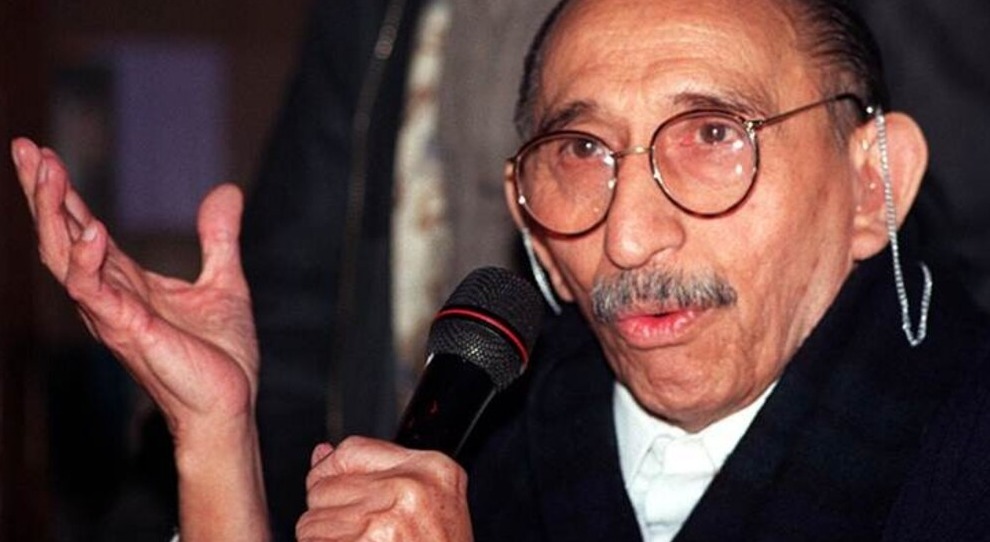
Piña Chan was born in Campeche. His family did not have much money. As a teenager, he worked teaching people to read and write. In 1942, when he was 22, he saw a poster at the National School of Anthropology and History in Mexico City about scholarships. He decided to try anthropology.
He started in physical anthropology, but soon realized he preferred studying the things ancient people made and switched to archaeology. His first field work was in Tzintzuntzan, Michoacán. He then worked at Uxmal and Jaina in the Yucatán Peninsula.
As a Campechan, he is remembered with particular appreciation in his home state. “Piña Chan was one of those once-in-a-generation geniuses. His love for his work and commitment to Mexico’s heritage, combined with his great intellect, made him a real powerhouse. But aside from straightforward admiration, he is also remembered with great affection by those who knew him and had the opportunity to work with him,” said Dr. Iván Urdapilleta Caamal of Campeche’s State University.
A Career of Discovery
Piña Chan worked at more than 70 archaeological sites across Mexico, a staggering accomplishment that remains a record to this day.
Between 1945 and 1960, he worked at Chalcatzingo and Atlihuayán in Morelos, at Tlapacoya in the State of Mexico, and at Comalcalco and along the Grijalva River in Tabasco. In the 1960s, he explored Mulchic and the Cenote at Chichén Itzá, La Ventilla at Teotihuacan, and Cuicuilco near Mexico City.
One of his most important early projects was Tlatilco, a site in the State of Mexico where he excavated hundreds of burials. This work became his 1951 thesis, and he received his degree in archaeology that same year. Later, he earned a doctorate from the National Autonomous University of Mexico.
“Working with Piña Chan at Edzná was one of the highlights of my career,” said American Archaeologist Linda Lindholm during an interview with Yucatán Magazine. “He was a very interesting man, but also tremendously devoted to his work, a real role model for all of us youngsters at the time”, continued Lindonholm.
Piña Chan’s Most Important Contributions
Piña Chan did not just dig up objects. He tried to understand what they meant. He combined what he found in the ground with what he read in old historical documents.
He is known for his work on the Preclassic period—the time before 200 BCE, when early civilizations were forming. His studies of sites in the Valley of Mexico and the Gulf Coast helped define this era.
Piña Chan also studied Quetzalcóatl, the Feathered Serpent god. In his 1977 book, he argued that this god began as a water deity. He believed the cult of Quetzalcóatl originated at Xochicalco and was later carried to other places, including the great city of Tula.
Teaching and Writing
Piña Chan began teaching at the National School of Anthropology and History in 1953. He taught there for the rest of his life. He also taught at universities in Mexico and abroad, including Southern Illinois University Carbondale. At many of these schools, he helped start new courses and degree programs.
He wrote more than 20 books and hundreds of articles. His most important works include Tlatilco (1958), Culturas y ciudades de los mayas (1959), Quetzalcóatl, Serpiente Emplumada (1977), and El lenguaje de las piedras glíficas olmecas y zapotecas (1993).
Recognition and Awards
Piña Chan received several awards. In 1985, the National Institute of Anthropology and History (INAH) named him Researcher Emeritus and gave him its Gold Medal for Academic Services. In 1994, he won the Premio Nacional de Ciencias y Artes in the History, Social Sciences, and Philosophy category — one of Mexico’s highest honors.
Later Years and Legacy
In September 1984, Piña Chan suffered a serious accident at the Becán site in Campeche. He fell from a building and broke a vertebra in his back. He spent nearly a year in bed. But even while recovering, he continued his research.
Román Piña Chan died on April 10, 2001, in Mexico City from a stroke. He was 81 years old. He predeceased his wife, archaeologist Beatriz Barba, who died 20 years later.
His legacy continues in several ways. Since 1996, the Simposio Román Piña Chan has been held each year in Mexico City. Scholars gather to discuss new research on pre-Hispanic cultures.
His personal archive, the “Acervo Román Piña Chán,” contains his manuscripts, drawings, and photographs from 1945 to 2001. The collection shows how Latin American archaeology developed during the second half of the 20th century.