
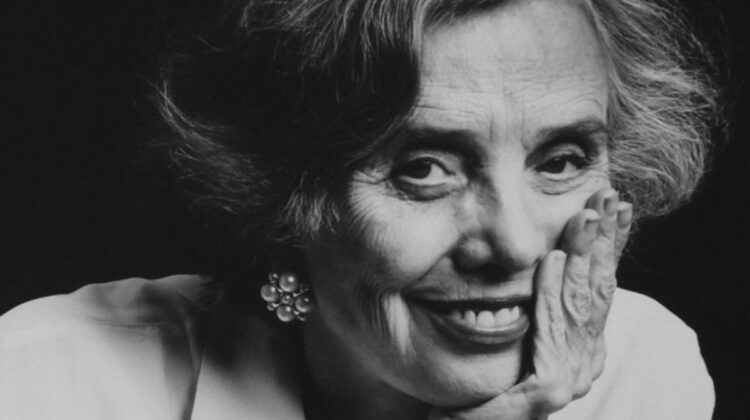
A false report that Elena Poniatowska — Mexico’s most celebrated living writer — had died spread rapidly across social media on Wednesday, alarming readers, journalists, and public figures across Latin America before being quickly and firmly denied.
The rumor originated on X, formerly Twitter, where a recently created account impersonating a publishing house posted a notice claiming the 93-year-old author had died. The post spread fast. Well-known writers and journalists shared condolences. Argentine author Martín Caparrós posted a farewell tribute, then had to delete it after learning the news was fake.
The Fundación Elena Poniatowska Amor A.C. (Elena Poniatowska Amor Foundation) moved quickly to set the record straight. “Good morning, everyone — false information is circulating about Elena; she is perfectly fine and in excellent health,” she said.
The false report even reached Mexican President Claudia Sheinbaum during her morning news conference, known as La Mañanera del Pueblo (The People’s Morning Conference). “¡Ay, no! Vamos a averiguar bien,” she said — something like “Oh no! Let’s find out properly.” Minutes later, after her staff confirmed the truth with the foundation, Sheinbaum was direct: “No es cierto. No asusten. Nuestro cariño a Elenita.” Translation: “It’s not true. Don’t scare people. Our love to little Elena.”
The incident is part of a broader pattern of fake celebrity death announcements on social media. Italian prankster Tommaso Debenedetti has been linked to similar hoaxes in the past targeting prominent public figures. In recent months, false death reports have also circulated about other well-known personalities, including singer José Luis Perales and actor Damián Alcázar.
Who is Elena Poniatowska?
Poniatowska is a towering figure in Mexico — the kind of writer whose work helped shape how an entire nation understood itself. Born in Paris on May 19, 1932, she moved to Mexico at age 10 to escape World War II. Her father was of Polish nobility and her mother came from a prominent Mexican family that had fled the country during the Revolution.
She started writing for the newspaper Excélsior at 18 and never really stopped. Over seven decades, she produced novels, essays, oral histories, and biography — more than 40 books in all, translated into over 20 languages. She was one of the founders of the newspaper La Jornada, now one of Mexico’s most-read dailies.
Her most famous work, La noche de Tlatelolco (published in English as Massacre in Mexico), documents the 1968 massacre of student protesters by government forces — an event the Mexican government tried for years to suppress. The book is built almost entirely from testimonies, recorded and woven together by Poniatowska herself. It remains essential reading for anyone trying to understand modern Mexico.
In 2013, she became the fourth woman to win the Premio Cervantes (Cervantes Prize), the most prestigious award in Spanish-language literature. She was also the first woman to receive Mexico’s National Journalism Prize, back in 1979.
President Claudia Sheinbaum, who publicly defended Poniatowska on Wednesday, has long held the author in high regard. The two women are part of a left-leaning intellectual tradition that has shaped Mexican culture for generations.
Despite her age, Poniatowska remains active. She still writes. She still gives interviews. The foundation that bears her name — and that issued Wednesday’s denial — recently launched a fiction writing competition.
The fake account that sparked Wednesday’s panic was created less than a month before the incident. Experts who track disinformation say this is a common tactic: new accounts with credible-sounding names post alarming content designed to spread before anyone thinks to verify it. The speed of X’s retweet culture does the rest.
For those who want to follow Poniatowska’s actual work and news, La Jornada — the newspaper she helped found — remains a reliable source.
Quick Facts: Elena Poniatowska
- Born May 19, 1932, in Paris, France; moved to Mexico in 1942
- Began her journalism career in 1953 at the newspaper Excélsior
- Author of more than 40 books, including novels, oral histories, and biography
- Best known for La noche de Tlatelolco (1971), published in English as Massacre in Mexico
- First woman to receive Mexico’s National Journalism Prize (1979)
- Won the Premio Cervantes in 2013, the highest honor in Spanish-language literature
- Co-founder of the Mexican newspaper La Jornada
- Trilingual in Spanish, French, and English
- Still active as a writer and public intellectual at age 93