Category: Food

  • Tapatio Hot Sauce Sold to Private Equity After 55 Years as a Mexican-American Family Business

    Tapatio Hot Sauce Sold to Private Equity After 55 Years as a Mexican-American Family Business

    tapatio
    El Tapatio: From home-made hot sauce to a spicy empire and a painful goodbye. 

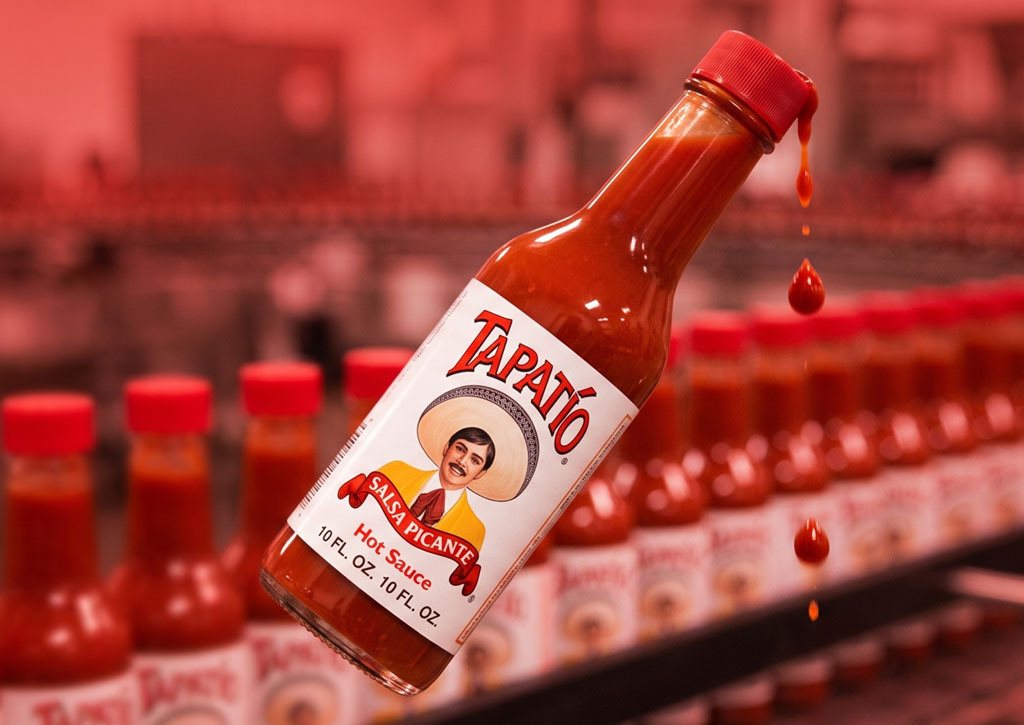
    After 55 years as a family-run business, the iconic hot sauce brand Tapatio was sold in January to a private equity firm. The transaction marks the end of an era for a company that began as a modest operation in a small Los Angeles warehouse and grew into a staple of American kitchens, ranking as the fifth best-selling hot sauce brand in the United States.

    The story of Tapatio is a classic immigrant success story. The company was founded in 1971 by Jose-Luis Saavedra Sr., a native of Mexico City who had immigrated to Southern California. Saavedra was not a chef by training; he worked in the aerospace industry. The business was born from a simple homemade recipe for a spicy sauce that he and his wife shared with friends and coworkers. Tapatiosauce proved so popular that when Saavedra was laid off from his aerospace job, he decided to pursue it as a full-time venture.

    The early years were defined by hard work and perseverance. Saavedra, who spoke little English, leased a modest 750-square-foot building in Maywood, California, and initially had to work other jobs to support his new business. He did nearly everything himself, from grinding the peppers to applying the glue to the labels. 

    The sauce’s name was also a trial. The first label, “Cuervo,” quickly drew a lawsuit from the tequila company Jose Cuervo. A second attempt, “Charro,” met the same legal fate. Finally, Saavedra chose “Tapatio,” a term used to describe a person from Guadalajara, Mexico. He chose this name as a tribute to his children, all of whom were born in that city. Even then, the name was challenged by food giants ConAgra and Del Monte, but Saavedra fought back and successfully kept the trademark.

    The company’s growth was steady. In 1985, it moved to a larger 8,500-square-foot facility in Vernon, California. By 1996, it had outgrown that space as well, and Saavedra built a custom 30,000-square-foot state-of-the-art facility. His three children eventually joined the business, helping to manage its expansion. By 1988, the sauce, once popular primarily among the Hispanic community, had become a staple in American households. The brand’s iconic label, featuring a man in a sombrero, became a familiar sight in kitchens and restaurants across the country.

    Highlander Partners, a Dallas-based private investment firm, executed the acquisition in 2026. The financial terms of the deal were not disclosed. Still, the family behind El Tapatio released a press statement stating that there was no way the company could continue to operate as it had for decades under current market conditions. The family expressed gratitude to their fans and said the decision was extremely difficult, especially for the company’s founder, who recently suffered a stroke at 97.

    Tapatio’s sale is a clear echo of similar acquisitions that have reshaped the hot sauce landscape in recent years. In 2017, the spice maker McCormick & Co. acquired Frank’s RedHot, the quintessential Buffalo wing sauce, as part of its larger $4.2 billion purchase of Reckitt Benckiser’s food business. 

    In 2020, McCormick made another significant move, purchasing the Cholula hot sauce brand from the private equity firm L Catterton for $800 million in cash. These deals, like the Tapatio acquisition, are driven by the growing consumer appetite for spicy flavors. 

    A 2024 survey found that 62% of consumers are more likely to buy a food or beverage item if it is advertised as spicy. This trend has made established hot sauce brands with loyal followings and strong brand identities exceptionally valuable assets.

    But the reality is that when large corporations acquire brands like Tapatio, compromises on ingredients are common, and longtime loyal fans often turn away. Taste aside, part of what makes brands like Tapatio special is their story.
  • Casual Dining and Fast Food in Mexico City: What’s Worth Knowing About

    Casual Dining and Fast Food in Mexico City: What’s Worth Knowing About

    Mexico City is one of the world’s great food capitals, and that reputation extends well beyond its white-tablecloth restaurants. The capital’s fast-food scene — from century-old churro shops to pandemic-era smash-burger startups — offers something that’s hard to find north of the border: quick, affordable food with a real culinary identity. Here’s a rundown of seven chains worth knowing before your next trip.

    Sanborns

    Americans of a certain age will remember when department stores had full restaurants inside — think the Walnut Room at Marshall Field’s in Chicago, or the tearoom at a Nordstrom. Sanborns is that concept, still thriving. It’s a full-service sit-down restaurant operating inside a department store, and it has been since 1903, when California brothers Walter and Frank Sanborn opened the first location in Mexico City. The chain now has roughly 146 locations concentrated heavily in the capital, with branches stretching from Tijuana to Cancún. Its most famous location occupies the Casa de los Azulejos (House of Tiles), a 16th-century colonial mansion decorated with a mural by José Clemente Orozco. Iconic menu items include enchiladas suizas — chicken enchiladas with cheese and green salsa — as well as chilaquiles and club sandwiches. Waitstaff wear traditional dress. The pace is unhurried. The chain is now owned by billionaire Carlos Slim’s Grupo Carso, but the dining room still feels pleasantly stuck in time. For a first-time visitor, it’s a genuinely worthwhile meal, food blogger Jon Barr said.

    La casa de Toño
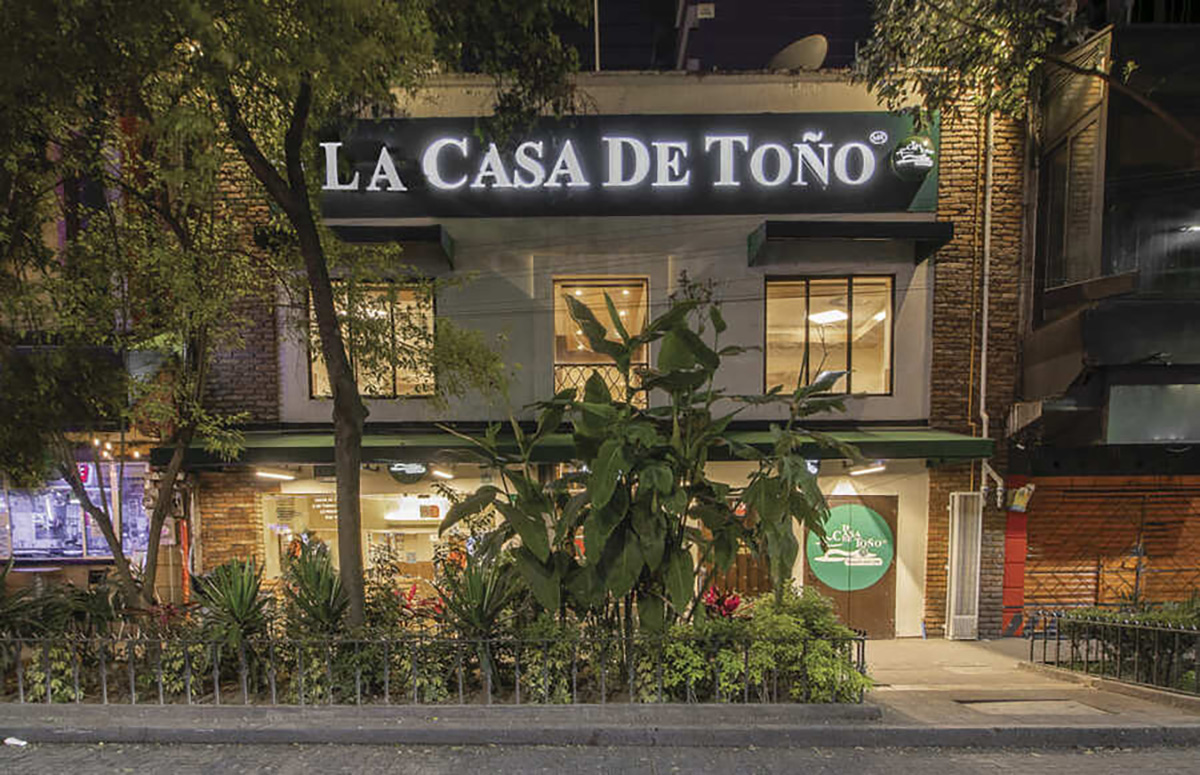
    La Casa de Toño has a branch in Mexico City’s Zona Rosa. Photo: Courtesy

    La Casa de Toño

    La Casa de Toño is a Mexico City institution built around traditional street food served at speed. The chain specializes in pozole — the slow-simmered pork and hominy soup that is one of Mexico’s great comfort dishes — alongside tostadas and other casual staples. Chips arrive before you’ve settled in, and the kitchen turns orders around in minutes. It’s a hole-in-the-wall that runs like a machine, with waiters everywhere and a pace that has no equivalent in American casual dining. Worth a stop for the pozole alone, though first-timers will want guidance on how to dress the bowl — cream, oregano, and tostadas on the side, added gradually.

    Dynasty Legendary Chinese Food

    Every major mall in Mexico City seems to have one, and Dynasty Legendary Chinese Food is a fixture in the capital’s luxury shopping centers. The free samples at the counter pull you in, and the portions are enormous — bigger than anything you’d typically see at a comparable U.S. chain. The sweet chicken and rice combo is the standard order. Visually and conceptually, it lands squarely in Panda Express territory: recognizable, filling, and not particularly memorable. Mall food culture is still going strong in Mexico City in a way it no longer is in much of the United States, and Dynasty benefits from that foot traffic. It’s fine for what it is, but it’s the one stop on this list where Mexico doesn’t have a clear edge.

    Chubbies Burger
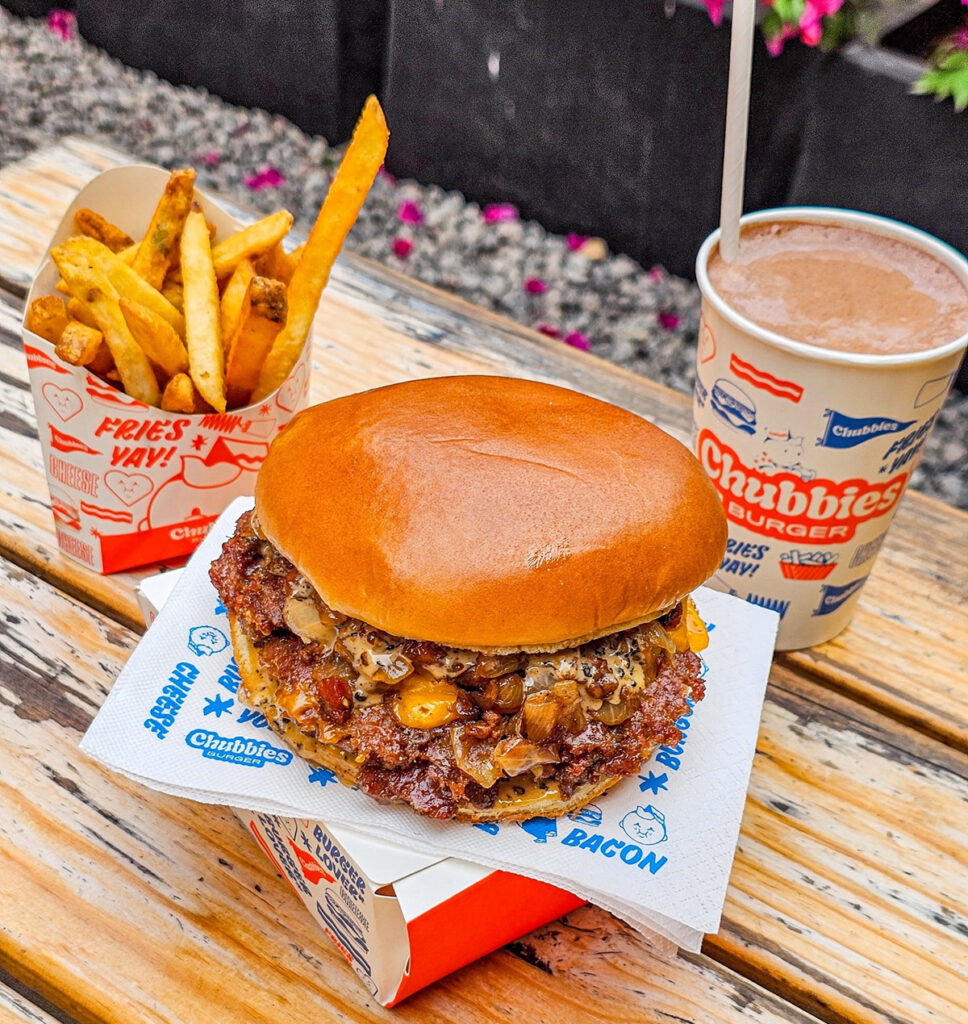
    Chubbies Burger in Mexico City started during the Pandemic. They have been expanding ever since. Photo: Courtesy

    Chubbies Burger

    This is the standout of the bunch. Chubbies is a Mexico City smash burger chain that launched during the COVID-19 pandemic and has been expanding steadily ever since. It has earned a 4.7 average rating across major review platforms and operates across the capital and State of Mexico. The especial burger — beef patty, American cheese, bacon jam, garlic dressing, and chile — runs around 250 pesos and is significantly better than most fast food burgers available anywhere, including in the United States, says food bloggerJon Barr. Loaded fries come buried under the same toppings. Outdoor seating is available at some locations.

    El Califa

    Choosing your taqueria chain in Mexico City is something like picking a soccer team — it marks age, neighborhood, and allegiance. El Califa is one of the city’s best-regarded chains, a tightly run operation open until 4 a.m. every day with multiple locations across the capital, including in Polanco and Condesa. The al pastor — pork carved from a vertical spit — is the standard order. Tacos here are small by American standards, which means you order several and eat them fast. The salsa selection is serious.

    Churrería El Moro

    Francisco Iriarte emigrated from Elizondo, Spain, to Mexico City in 1933. Noticing that no churros were being sold anywhere in the city, he set up a cart in the Zócalo before eventually opening a permanent shop, naming the business El Moro in honor of a churro vendor from his hometown. That was 1935. The original location sits on Eje Central Lázaro Cárdenas in the Historic Center and has never closed. Since 2014, the founder’s grandchildren have expanded to locations across the city, including in Polanco and Roma. The standard order is churros with chocolate for dipping. The consolada — a churro ice cream sandwich — is the signature item. For a late-night dessert stop, it’s hard to beat.

    OXXO

    This isn’t a restaurant, per se, but you can still stuff your face quickly and economically here. Think of OXXO as Mexico’s answer to 7-Eleven, only more ubiquitous. Founded in Guadalupe, Nuevo León, in 1976 and owned by the beverage conglomerate FEMSA, OXXO has grown to more than 21,000 stores across the Americas — the largest convenience store chain in Latin America. Nearly every block in Mexico City has one. The coffee is decent, cinnamon cappuccinos are a local staple, and the pastry case usually includes a concha, the sugar-topped sweet roll that is a cornerstone of Mexican bakery culture. Don’t expect anything extraordinary. Do expect it to be open at 3 a.m. OXXO is also actively expanding into the United States, with locations now appearing in Texas.

    For more on where to eat in Mexico, the street food guide at Yucatán Magazine covers regional favorites across the country.

    Fast-Food Fast Facts

    • OXXO operates more than 21,000 stores across the Americas and is currently expanding in Texas
    • Sanborns dates to 1903 and is now part of Carlos Slim’s Grupo Carso
    • La Casa de Toño specializes in pozole and other traditional street food staples, with multiple locations across Mexico City
    • Dynasty Legendary Chinese Food has more than 30 locations across Mexico
    • El Califa is open until 4 a.m. daily with multiple locations across Mexico City
    • Chubbies Burger launched during the COVID-19 pandemic and now operates across Mexico City and the State of Mexico
    • Churrería El Moro has been family-owned since 1935; the original Centro location never closes

    Sources: Jon Barr, Wikipedia, El Moro, The Infatuation, Chubbies Burger, FEMSA