Category: Analysis

  • The Fall of Mexico’s Media Duopoly: Televisa and TV Azteca in Crisis

    The Fall of Mexico’s Media Duopoly: Televisa and TV Azteca in Crisis

    For decades, two companies controlled nearly everything Mexicans watched on television. Televisa, founded in the 1950s, grew into a media powerhouse with a virtual monopoly on broadcast television for over three decades. 

    Televisa programming, from telenovelas to news, reached into virtually every home, and its relationship with the government, particularly the long-ruling Institutional Revolutionary Party (PRI), was well-documented and mutually beneficial. The company’s power was such that its logo, an eye on a screen, was often seen as a symbol of its immense influence over public perception and political discourse.

    That comfortable arrangement was disrupted in 1993. The government privatized the Imevisión television network, and a businessman named Ricardo Salinas Pliego won the bid, creating TV Azteca. For the first time, Televisa had a real competitor. This broke the monopoly and, for a while, sparked a genuine rivalry. In the 1990s, both networks fought hard for viewers with new telenovelas, sports broadcasts, and news programs. 

    At the time, it was assumed that competition would result in a degree of political and social openness, as both channels sought to cover a changing Mexico. However, over time, the fierce competition settled into a more comfortable pattern. Instead of truly differentiating themselves, Televisa and TV Azteca began to resemble each other, both in the type of entertainment they produced and in their approach to political power. They formed a duopoly, working in tandem to protect their shared interests rather than fiercely competing for audience and market share.

    Their influence on Mexican society and politics cannot be overstated. For generations, these two networks were the primary sources of news and entertainment for most Mexicans. This gave them enormous power to shape public opinion. Critics have long accused them of biased news coverage that favored those in power. A famous example occurred during the 2012 presidential election, when Televisa was accused of running a de facto propaganda campaign for PRI candidate Enrique Peña Nieto, giving him favorable coverage while suppressing criticism, in exchange for lucrative government advertising contracts. This symbiotic relationship with the state was a cornerstone of their business model. They provided positive coverage and access to the masses, and in return, they received a steady flow of revenue from government advertising and benefited from regulations that protected their dominance. This arrangement made them incredibly wealthy and politically untouchable for a long time.

    Today, both networks are in serious trouble, and the old rules no longer apply. They are losing viewers and money, and their grip on Mexican society is slipping. There are three main reasons for this decline. The first is a massive shift in how people watch television. 

    The rise of streaming services like Netflix, YouTube, and social media has shattered the old broadcast model . Viewers, especially younger ones, are cutting the cord and choosing what to watch on their own time. This has led to a steep drop in audiences for traditional TV. Televisa, for example, has been bleeding subscribers from its satellite TV service, Sky, losing over 330,000 in just the first quarter of 2025 and seeing a 13.2% revenue drop in that unit. Its overall revenue has fallen for years.

    The second factor is the collapse of their traditional advertising revenue. For decades, the government was its biggest advertiser. Under President Andrés Manuel López Obrador, who took office in 2018, that spigot was nearly turned off. His administration slashed federal advertising spending by over 70% compared to his predecessors. During Enrique Peña Nieto’s six-year government, Televisa received nearly 10 billion pesos in government ads, and TV Azteca received almost 6 billion. In the first five years of the López Obrador administration, Televisa’s take dropped by nearly 85%, and TV Azteca’s by over 78%. At the same time, private advertising revenue is drying up as companies shift spending to digital platforms, which now capture the majority of ad revenue in Mexico.

    The third factor is financial mismanagement and debt, which has hit TV Azteca much harder. The company has been in a dire financial state for years. It has defaulted on bond payments to international investors, leading to lawsuits and a downgrade of its debt to “junk”. It has also been embroiled in a massive tax dispute with the government, with the Supreme Court confirming a debt of over 48 billion pesos (well over US$3 billion). 

    After the ruling, Grupo Azteca saw its stock price collapse and stopped publishing financial reports in 2023. Televisa’s financial situation, while serious, is not as catastrophic. It has also seen its credit rating downgraded and its profits plummet by 66% drop during 2025.

  • Mexico’s Most Wanted Is Dead. Now What?
    Mexico’s Most Wanted Is Dead. Now What?

    The killing of Nemesio Rubén Oseguera Cervantes was the biggest single blow Mexican security forces have dealt to organized crime in years. It also lit parts of the country on fire.

    Oseguera Cervantes, 59, was wounded during a military raid Feb. 22 in Tapalpa, a mountain town in the western state of Jalisco, and died while being flown to Mexico City, according to Mexico’s Defense Department. He led the Jalisco New Generation Cartel — known by its Spanish initials, CJNG, or Cartel Jalisco Nueva Generación — which had become, by most accounts, the most powerful criminal organization in Mexico.

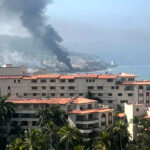
    Puerto Vallarta
    Cartel fury was unleashed most visibly in Puerto Vallarta after a drug kingpin was killed. Photo: Contributed

    Writing in The Independent, security analyst Chris Dalby argued that removing El Mencho is less a finishing blow than a destabilizing one. The drugs will keep moving, he wrote. The violence may get worse before it gets better. That assessment was hard to argue with, given what followed the raid.

    Cars set ablaze by cartel members blocked roads in nearly a dozen states. Guadalajara, Jalisco’s capital, turned into a ghost town as civilians sheltered indoors. By Monday, authorities confirmed that 25 members of Mexico’s National Guard had been killed in cartel attacks across the state. More than 250 roadblocks were reported across 20 states before security forces began clearing them.

    The operation itself came together through surveillance of a close associate tied to one of El Mencho’s romantic partners. Special forces, backed by National Guard troops and military aircraft, sealed off the rural compound before dawn. When soldiers advanced, cartel gunmen opened fire. El Mencho fled into nearby woods with members of his security detail. A second firefight broke out. Soldiers eventually found him wounded alongside two bodyguards. He was airlifted toward a hospital but died in flight. Armored vehicles, rocket launchers, and other weapons were seized at the scene.

    The White House confirmed U.S. intelligence support. “President Trump has been very clear — the United States will ensure narcoterrorists sending deadly drugs to our homeland are forced to face the wrath of justice they have long deserved,” press secretary Karoline Leavitt said in a statement Sunday night.

    El Mencho had been a fugitive for decades. Born in 1966 in the state of Michoacán, he was convicted in California in 1994 for conspiracy to distribute heroin and served three years in a U.S. prison. After returning to Mexico, he worked through the ranks of several criminal organizations before co-founding the CJNG around 2009. The group grew fast, trafficking cocaine, methamphetamine, and fentanyl into the U.S. while also smuggling migrants and diversifying into fuel theft, extortion, and timeshare fraud. The U.S. Drug Enforcement Administration estimated by 2019 that CJNG was responsible for at least one-third of all drugs entering the U.S. by air and sea. The State Department had placed a $15 million reward on his head.

    The cartel became notorious for military-style tactics — drones rigged with explosives, rocket-propelled grenades, and direct assaults on government officials. In 2015, CJNG shot down a Mexican military helicopter in Jalisco, killing nine soldiers. In 2020, cartel gunmen staged a brazen assassination attempt against then-Mexico City police chief Omar García Harfuch — now the country’s federal security secretary — using grenades and high-powered rifles in the middle of the capital.

    Dalby, in The Independent analysis, described El Mencho’s approach as almost medieval: conquer ruthlessly and make the consequences visible to anyone who might resist. That strategy built the CJNG quickly, but it also meant constant, grinding confrontation.

    Now the question is whether his death reduces that violence or simply reshuffles it. Unlike other cartels with multiple power centers, the CJNG was built around El Mencho personally. There is no obvious heir. His son, brother, and daughter are all in prison. That gap could trigger a succession fight among regional commanders — the same dynamic that shattered the Sinaloa Cartel after El Chapo’s arrest.

    Mexico has been here before. A “kingpin strategy” under President Felipe Calderón from 2006 to 2012 killed or captured dozens of cartel leaders. Violence spiked each time. More than 300,000 people have been murdered in Mexico in the past decade, a period that overlapped directly with the CJNG’s national expansion. The current president, Claudia Sheinbaum, had long been skeptical of that approach — but Sunday’s operation represents a sharp shift in posture. She applauded the security forces and called for calm.

    The Trump administration has been pressing Mexico hard on cartel enforcement, threatening tariffs and raising the specter of unilateral military action if results didn’t come. The CJNG was designated a foreign terrorist organization by the U.S. in February 2025. El Mencho’s death gives Sheinbaum a significant chip to play in that relationship — though the wave of retaliatory violence that followed will complicate any easy narrative of victory.

    The timing carries its own weight. Guadalajara, still clearing burned-out vehicles from cartel reprisals, is set to host FIFA World Cup matches in just a few months.

    For context on cartel activity in southeast Mexico, including how trafficking dynamics have shifted in states bordering the Yucatán Peninsula, see our earlier coverage at Yucatán Daily News. For broader analysis of what comes next for the CJNG, Al Jazeera has published detailed reporting on the succession question.


    Fast Facts: El Mencho and the CJNG

    • Nemesio Rubén Oseguera Cervantes, “El Mencho,” was killed Feb. 22, 2026, in Tapalpa, Jalisco, during a Mexican army operation
    • He was 59 and had been involved in drug trafficking since the 1990s
    • He co-founded the Jalisco New Generation Cartel (CJNG — Cartel Jalisco Nueva Generación) around 2009
    • The CJNG has a presence in at least 21 of Mexico’s 32 states and is active across all 50 U.S. states, according to the DEA
    • The U.S. had offered a $15 million reward for information leading to his arrest
    • The Trump administration designated the CJNG a foreign terrorist organization in February 2025
    • 25 Mexican National Guard members were killed in cartel reprisals following the operation
    • Roadblocks and arson spread across more than 20 Mexican states within hours of the raid
    • El Mencho’s son, brother, and daughter are all currently imprisoned, leaving no clear successor

    Sources: The Independent; Al Jazeera; NBC News; CBS News; Axios; Institute for Economics and Peace / Mexico Peace Index 2025

  • Is Mexico’s Proposed Electoral Reform a Threat to Democracy or a Necessary Change?
    Is Mexico’s Proposed Electoral Reform a Threat to Democracy or a Necessary Change?

    Mexico’s government, led by President Claudia Sheinbaum, is pushing forward with a major electoral reform that could change how the country’s political system works. While the formal proposal hasn’t reached Congress yet, the main ideas have already sparked intense debate about the future of Mexican democracy.

    The government says its goals are simple: make the electoral system cheaper and give ordinary citizens more direct participation. But critics have raised serious red flags about what this could mean for Mexico’s democratic institutions.

    Why The Opposition Calls This Reform Dangerous

    Opposition leaders have used stark language to describe their concerns. Senators from the PAN and PRI parties have labeled the proposed reform the “Ley Maduro,” drawing direct comparisons to authoritarian changes implemented in Venezuela. “This is not an electoral reform, it’s the ‘Maduro Law’ that the government wants to establish in Mexico,” warned the PAN’s coordinator in the Senate. Manuel Añorve of the PRI added that if this reform passes as proposed, “democracy in Mexico has its days numbered.”

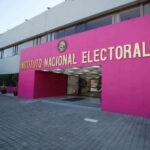
    At the heart of these warnings is a fear that the ruling party wants to take control of the institutions that are supposed to be impartial referees of elections. The National Electoral Institute, or INE, is generally seen as relatively impartial because of its independence and technical expertise. However, it would be an exaggeration to say that average citizens highly trust it. Nevertheless, weakening its autonomy and cutting its budget could make it harder for the institute to organize fair elections.

    Another danger critics highlight involves money and crime. Emilio Suárez Licona, a PRI lawmaker, warned that slashing public financing for political parties doesn’t eliminate the need for campaign funds; it just pushes candidates to look elsewhere. “If you reduce public funding for political parties, it opens the door for candidates to seek alternative financing mechanisms, and drug traffickers will be first in line,” he cautioned.

    The Main Changes

    One of the biggest proposed changes involves the legislators known as “plurinominal” deputies. Right now, party leaders select these lawmakers through closed lists to ensure minority parties are represented. The government wants voters to elect them directly instead. The parties that usually support the government oppose this change because they’d lose control over those positions. Opposition parties see it as an attempt to eliminate a system that guarantees diverse voices in Congress.

    The INE itself would get smaller under the proposal. The number of top officials would drop from eleven to nine, and some departments, including civic education, could disappear entirely. Local election offices would also change. Currently, the national INE helps choose who runs these local offices. The reform would end that connection. The government says this eliminates duplicate work, but opponents see it as a power grab that leaves local elections more vulnerable to manipulation.

    Where Things Stand Now

    The politics behind this reform are complicated. President Sheinbaum’s party, Morena, doesn’t have enough voteson its own to pass constitutional changes. They need their usual allies, the Green Party and the Labor Party, to go along. But those parties are pushing back hard, especially on the issue of plurinominal deputies and budget cuts that would directly affect their political influence. They see the current system as guaranteeing them seats, and they’re not eager to give it up.

    Negotiations have dragged on for over a month with no real breakthrough. If the government pushes too hard, it might lose its allies completely and see the reform fail, marking the fourth time this administration has tried and failed to change electoral laws. If they compromise too much, they end up with a weak reform that fails to deliver on their promises to voters.

    Civil society groups and business organizations have raised alarms. The business chamber Coparmex is concerned that the weakening of democratic institutions could scare away investment. Democracy watchdogs fear Mexico might backslide toward a system where those in power set the rules for elections.

  • Mexican Remittances Drop by $3 Billion as US Policies Take Effect

    Mexican Remittances Drop by $3 Billion as US Policies Take Effect

    New White House immigration and economic policies are putting serious financial pressure on Mexican migrants in the United States and the families who depend on the money they send home.

    Nearly 4.5 million Mexican households receive remittances. For many, especially in rural areas and among households headed by women, these monthly transfers cover food, medicine, rent, and school supplies. 

    In 2025, Mexico received 61.8 billion dollars in remittances. That was a drop of nearly 3 billion dollars from the 64.7 billion sent in 2024. It marked the first annual decline in 11 years. Prior to this, remittances had increased every year since 2013. The streak was broken. Analysts at BBVA and Banorte expect the downward trend to continue through 2026 and 2027.

    The reasons are multiple. One direct blow came on January 1, 2026, when a new federal tax on remittances took effect. It is a 1% excise tax on money sent abroad using cash, money orders, or cashier’s checks. The tax is part of the One Big Beautiful Bill Act, which President Trump signed into law in July 2025. It applies only to physical money transfers, not to digital payments from bank accounts. But this means it hits undocumented migrants the hardest. 

    Migrants rely largely on wire services and money orders. The remittance sender in the United States pays the tax in addition to regular fees. BBVA estimates that Mexican migrants could pay up to US$3 billion in this tax alone between 2026 and 2034.

    The tax is only one part of the problem. Immigration enforcement has ramped up sharply. In the first year of Trump’s second term, more than 390,000 people were deported. Other estimates place the figure at 320,000 or 146,000, depending on the dataset, but all indicate a significant increase. In November 2025, the number of remittance transfers was 7.9% lower than in the same month the previous year. It was even lower than in November 2023.

    Those who remain in the United States face a cooler labor market. Unemployment rose to 4.4% at the end of 2025, one of the highest levels since 2021. Job cuts announced in January 2026 were the highest monthly total since 2009. Sectors that employ large numbers of Mexican migrants, such as construction, hospitality, and agriculture, have slowed their growth. Some migrants have lost hours or wages. Advocates and economists argue that the climate of fear has discouraged some from sending money home as they once did.

    While deportations have increased, the government has also expanded guest worker programs. The H2A agricultural visa program and the H2B seasonal visa program are both growing. The H-2A program has no cap and admits nearly 400,000 workers annually. The Trump administration lowered the minimum wage that farmers must pay these workers. The United Farm Workers union is suing to stop the wage cut. At the same time, the H2B program is being doubled, adding 65,000 additional visas in 2026. These guest workers are tied to a single employer and cannot easily change jobs or organize for better pay. 

    Meanwhile, the purchasing power of every dollar sent is declining. The Mexican peso has strengthened against the US dollar. In early 2025, one dollar bought about 20 pesos. By early 2026, it bought about 17.30 pesos. This 10-12% appreciation means that families in Mexico receive fewer pesos per dollar sent. Inflation in Mexico adds another layer of discomfort. 

    Together, these factors have reduced the purchasing power of remittances by roughly 16%. The Center for Latin American Monetary Studies calculates that 500 dollars sent in October 2025 bought only what 355 dollars bought in December 2020. To match the 2020 standard, a family would need to receive 702 dollars today. 

  • The Contentious ‘Water Debt’ Between Mexico and the US

    The Contentious ‘Water Debt’ Between Mexico and the US

    The “water debt” between Mexico and the United States is a recurring and deeply contentious issue. It is not merely a technical matter of water management but also a source of political tension and public anger that taps into feelings of national pride and sovereignty.

    The Core of the Water Debt Conflict

    A 1944 treaty governs the situation. This agreement is vital for both countries. It requires the U.S. to release a specified amount of water from the Colorado River downstream to Mexico. In return, Mexico must send water from the Rio Grande’s tributaries to the U.S. The water from the Rio Grande is crucial for farmers in South Texas.

    The treaty sets delivery cycles. Every five years, Mexico must deliver an average of 350,000 acre-feet of water per year from Mexican tributaries like the Conchos River to the Rio Grande. If Mexico falls behind, it is said to have a deficit — a water debt.

    The conflict is sharpest in northern Mexico, particularly in the state of Chihuahua. Farmers and residents in the area are experiencing a severe water crisis. Their reservoirs are at historically low levels, crops are failing, and cities face strict rationing. When the Mexican federal government, following the 1944 treaty, releases water from these dwindling reservoirs to send to the United States, it is met with fierce resistance.

    Local farmers and activists have repeatedly taken direct action. They have occupied dams, blocked highways, and physically stopped water releases. They argue it is unjust and unsustainable to send vital water north while their own communities suffer. For them, the “debt” is an abstract concept that threatens their livelihoods and survival.

    The Mexican Political Divide

    This puts Mexican politicians in a difficult position, caught between international law and domestic pressure. Governors and local officials from affected northern states often lead the opposition. They frame the water releases as a betrayal of their people to fulfill an outdated treaty. They argue that national sovereignty entails prioritizing Mexican citizens, particularly during a drought not experienced when the treaty was signed 80 years ago.

    The federal administration has emphasized that, independently of the fairness of the accord, Mexico is a nation that honors its legal commitments. Failing to meet the treaty obligations could lead to serious diplomatic and legal repercussions from the United States, including potential lawsuits in international courts or retaliatory measures. The government states it is working to balance its duties and manage water as efficiently as possible, but it must uphold the law.

    Ordinary Mexicans: Anger and a Sense of Injustice

    For many ordinary Mexicans, especially in the north, the issue fuels a sense of injustice. There is a widespread perception that Mexico is being forced to give up a precious resource to its wealthy and powerful neighbor during a time of shared scarcity. The narrative often framed in local media is, “Why should we sacrifice our water for American farmers when our own people are thirsty?”

    A broader historical context of perceived U.S. dominance amplifies this sentiment. The water debt is widely viewed as an unequal relationship, in which Mexico is compelled to comply despite severe domestic costs. It feels less like a partnership and more like an imposition.