
Author: Carlos Rosado van der Gracht

  • Mexico’s Tourism Boom: Big Numbers, Precarious Jobs

    Mexico’s Tourism Boom: Big Numbers, Precarious Jobs

    tourism
    Tourism in Mexico continues to grow, but its economic benefits are not reaching those who actually do most of the work. 

    Mexico’s tourism sector started 2026 with extraordinary momentum. 

    According to the Confederation of Chambers of Commerce, Mexico received 16.85 million international visitors in the first two months of the year.

    But behind these record-breaking figures lies a more complicated reality. While the headlines celebrate growth, the daily lives of most workers in the sector tell a different story.

    The Numbers That Matter

    The tourism industry remains one of Mexico’s most important economic engines. The 2026 spring holidays alone brought in nearly USD 1.6 billion in revenue. The government’s Tourism Sector Program 2025-2030 (PROSECTUR) explicitly acknowledges a core problem: tourism benefits remain concentrated in a few consolidated sun-and-beach destinations and large cities, leaving many communities with tourism potential—rural, indigenous, and Afro-Mexican—without adequate infrastructure or promotion.

    Data from Concanaco paints a stark picture: 55.4% of Mexico’s 59.5 million employed workers operate in the informal economy. That means more than half of all workers lack access to social security, basic legal benefits, or job stability. In Quintana Roo, home to Cancún, Playa del Carmen, and Tulum, the informal employment rate stands at 43%.

    Octavio de la Torre, president of Concanaco Mexico’s tourism chamber of commerce, put it bluntly in a recent press conference. “We should celebrate that more Mexicans have jobs, but we cannot celebrate when those jobs are precarious,” he said.

    The Gap Between Revenue and Wages

    Mexico has created 6.9 million jobs over the past seven years. Of those, only 4 million are formal. The remaining 2.9 million—nearly half—offer no path to healthcare, housing loans, or retirement savings.

    The contrast is sharp. International tourists spend money at all-inclusive resorts, chain restaurants, and duty-free shops. Much of that revenue flows upward to shareholders and large hotel corporations. Local markets, family-owned restaurants, and small tour operators—the businesses closest to visitors—often see only a fraction of the total spend.

    De la Torre has acknowledged this disconnect. “The economic revenue is not just a number; it is the income of thousands of families,” he said. “The current challenge is that this capital reaches the local markets, restaurants, and shops that are closest to the visitor”.

    Why Formalization Matters

    Operating outside the formal economy comes with hidden costs. Informal workers have no safety net. A medical emergency or a slow season can push a family into crisis. Informal businesses struggle to access credit, invest in improvements, or grow beyond a subsistence level.

    Concanaco’s research shows that opening a formal business in Mexico requires about 28,000 pesos (approximately $1,600 USD) just in paperwork and administrative costs. For a small neighborhood shop or a family food stall, that sum is prohibitive. Without incentives and simplification, these expenses become an insurmountable barrier.

    The consequence of this barrier is massive. Of Mexico’s 6.1 million micro, small, and medium enterprises (MiPyMEs)—which represent 99.8% of all businesses in the country—67% operate informally. Among micro-businesses, 75% lack formal registration.

    What Success Looks Like

    Industry analysts agree that Mexico’s tourism industry does not need to choose between growth and fairness. The country can aim to capture more visitor spending while ensuring that the benefits spread beyond a small number of large companies.

    Community tourism offers one path. Small-scale cooperatives in indigenous and rural areas can offer authentic cultural experiences while keeping revenue within the community. Strengthening these models requires infrastructure investment, promotion, and technical support—exactly what the PROSECTUR program promises but has yet to deliver at scale.

    Reducing informality also requires addressing the structural reasons why businesses stay outside the system. If formalization meant lower costs, simpler processes, and real benefits, more businesses would choose to register. If workers could see a clear path from informal labor to formal employment with healthcare and savings, more would demand it.

  • Mexico Celebrates its 100th Día del Niño

    Mexico Celebrates its 100th Día del Niño

    niño
    The core purpose of establishing the day was to remind citizens of children’s rights and to encourage the creation of happy childhoods.

    Día del Niño, or Children’s Day, is an annual celebration in Mexico held every April 30 dedicated to honoring children, recognizing their rights, and promoting their well-being. Unlike holidays centered around religious or historical events, el Día del Niño focuses purely on childhood joy, play, and making children feel valued

    The day serves as a reminder that children require protection and that society has an obligation to ensure their healthy development. But over time, it has turned into more than that, a day to celebrate children, often with a special outing or treats. 

    History of Día del Niño

    The origins of Día del Niño trace to the early 20th-century global movement for children’s rights. In 1924, the League of Nations adopted the Declaration of the Rights of the Child, an international agreement recognizing that children require special safeguards. Mexico embraced this declaration and formally established April 30 as a day to celebrate and advocate for children.

    The declaration of Día del Niño was made by the Secretary of Public Education in 1924. Some sources cite 1925 as the year the tradition began, following Mexico’s recognition of the Geneva Convention’s focus on child protection. Regardless of the exact year, the holiday has been observed consistently since the mid-1926, making 2026 approximately its 100th celebration.

    How Día del Niño Is Celebrated

    Día del Niño is not an official public holiday in Mexico—businesses and government offices remain open—but schools typically suspend regular classes to hold festivities.

    Schools are the primary site of celebration. Regular academic activities are replaced with parties, games, music, and food. Parents and teachers organize these events together. Typical school activities include: Student performances, games, reciting poems, and sharing or performing dances.

    In some schools, a parent committee collects toy donations from local businesses, government offices, and commercial centers so every enrolled student receives a present.

    Some parents celebrate by giving small gifts—toys, books, balloons, or candy—or by taking children on special outings. In recent times, these include visits to zoos, the movie theater, carnivals, arcades, and restaurants. 

    Local governments and community organizations often organize fairs, performances, and cultural events in public spaces. Municipalities may host free carnivals with mechanical rides, face painting, and costumed characters.

    Economic Impact

    Día del Niño generates significant commercial activity. For 2026, the National Chamber of Commerce, Services, and Tourism of Mérida (CANACO SERVYTUR) estimated that the celebration would generate approximately 824 million pesos in economic impact across the state of Yucatán.

    For families nationwide, the National Alliance of Small Merchants (ANPEC) estimated that the average family spending for Día del Niño in 2026 ranges from just over 1,000 pesos to several thousand pesos, depending on the means of the family and how the family chooses to celebrate. 

    Beyond the festivities, Día del Niño serves an important social function. Psychologists note that children never forget these celebrations—the memories remain for years and strengthen children’s sense of being valued. The games and activities help develop psychological processes, form new personality traits, and prepare children for more complex tasks. The emphasis is less on material gifts and more on making children feel seen, valued, and celebrated.

    This being said, it’s important to acknowledge that for many children in México, many children do not have their basic needs are not met, let alone special days to celebrate them.

  • INAH Disvovers ‘El Jefeciño’: Massive Maya Site with Murals in Quintana Roo
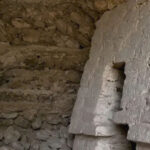
    INAH Disvovers ‘El Jefeciño’: Massive Maya Site with Murals in Quintana Roo

    INAH
    The recently discovered Maya site, nicknamed “El Jefeciño,” is currently being surveyed. While no restoration plans have been announced, its relatively well-preserved murals and stucco reliefs make it a likely candidate for more extensive research in the future.

    The National Institute of Anthropology and History (INAH) has announced the discovery of a large-scale pre-Hispanic Maya city in the municipality of Othón P. Blanco, in the southern state of Quintana Roo, Mexico. The site, known as “El Jefeciño” (roughly translating to “The Little Boss”.

    The discovery of the site, nicknamed El Jefeciño, or “little boss,” came after a citizen report during the initial surveys for the Maya Train archaeological salvage project.

    Scale and Architecture

    According to the statement released by INAH, El Jefeciño is a site of monumental architecture comprising at least 80 structures distributed across an area of approximately 100 hectares. Officials note, however, that the extension could be considerably larger and that exploration is ongoing. 

    The architecture corresponds to the Petén style, typically dated to the Early and Late Classic periods (250–900 A.D.). This style features large vaulted buildings, rounded and recessed corners, and the presence of sloping stonework.

    Archaeologists Sonny Moisés Ojeda González (head of the Dzibanché Kinichná Archaeological Zone) and Diana Karina Blancas Olvera (head of the Kohunlich zone) served as co-directors of the site’s initial prospection. They identified a specific “nuclear area” within the larger hectare count, consisting of five major buildings. These structures range in height from 11 to 14 meters and measure between 16 and 40 meters in length, arranged in a “C” shape plaza formation.

    Murals and Human Remains

    While the site requires more exploration, researchers have already documented significant features in specific structures. In a building cataloged as No. 53035, located in the northeast section of the property, archaeologists discovered painted stucco reliefs. 

    Unlike the narrative murals found at sites like Bonampak, the painting at El Jefeciño is described as “decorative and not narrative.” The visible pigments include white, orange, and red stripes. Adjacent to these mural fragments, researchers also identified fragments of a human skeleton, which they theorize may be part of a funerary context or burial.

    Ojeda González explained that within this section of the site, the team identified three distinct construction stages through surface observation. The first and deepest layer (approximately eight meters down) features the classic Petén apron molding. The second layer corresponds to the mural painting remains, while the third layer is mostly collapsed. Based on the size of the buildings, the specialists infer that the structures likely contain between four and five total construction phases.

    INAH
    The architecture of El Jefeciño corresponds to the Petén style, a form most famously on display at the grand Maya city of Tikal.

    Conservation Status and Methodology

    In a crucial clarification for the archaeological community, the INAH specialists emphasized that the work conducted so far constitutes registration and prospection, not a salvage excavation. No in-depth analysis or recovery of the materials (including the mural and bones) has been conducted. The evidence is currently designated to remain in situ (in its original place) to preserve the context until a formal excavation project is approved.

    Future Research

    The site’s discovery was facilitated by the Proyecto de Salvamento Arqueológico Tren Maya (Maya Train Archaeological Salvage Project), coordinated by archaeologist Manuel Pérez Rivas, specifically along front 1 of Section 7.

    Looking ahead, the INAH team plans to request a mapping project utilizing LiDAR (Light Detection and Ranging) technology. This laser-based remote sensing method has become indispensable in the dense jungles of Quintana Roo, as it allows archaeologists to define the settlement pattern and confirm the full extent of the structures without physical excavation.

    Secretary of Culture Claudia Curiel de Icaza stated that the registration of El Jefeciño, “Working with INAH strengthens the protection of archaeological heritage and expands knowledge about the Maya presence in southern Quintana Roo,” while also recognizing the role of local communities in safeguarding the historical memory.

  • Mexican Scientists Tackle the Sargassum Crisis to Turn the Scurge into Profit

    Mexican Scientists Tackle the Sargassum Crisis to Turn the Scurge into Profit

    sargassum
    Scientists in Mexico have found a way to get over the biggest hurdle in turning stinky, unsightly sargassum into biofuels and more.

    The beaches of Mexico’s Caribbean coast, famous for their white sand and turquoise water, face a recurring threat. Every year, massive amounts of brown seaweed known as sargassum wash ashore. 

    It rots in the sun, releasing a smell like rotten eggs, harming wildlife, and driving away tourists. In 2025, authorities in Quintana Roo collected over 80,000 tons of the stuff, and 2026 is projected to be even worse. However, researchers are turning this problem into a solution. Scientists in Mexico have developed methods to extract heavy metals from the seaweed and convert the remaining organic material into biofuel.

    Getting Over the Heavy Metal Hurdle

    To understand the solution, you first have to understand the problem: the seaweed is toxic. According to Dr. Raul Tapia-Tussell, a senior researcher at Mexico’s Secretariat of Science, Humanities, Technology and Innovation, “Heavy metals in sargassum pose serious risks to human health. As this seaweed decomposes on beaches, it can leach toxic substances like arsenic and cadmium into the environment”. These metals mean you cannot simply grind up the sargassum and use it as fertilizer or fuel. If you burned raw sargassum, you would release those toxins into the air.

    This is where the new research comes in. Scientists are treating the sargassum like an ore that needs refining. The first step is a cleaning process to remove the heavy metals, particularly arsenic. Because the cell walls of Sargassum act like magnets for dissolved metals in the ocean, they hold onto these pollutants tightly. Researchers use pre-treatment methods—sometimes involving water washes or chemical baths—to pull the arsenic and cadmium out of the biomass. Once the dangerous metals are removed, the remaining material is largely cellulose and carbohydrates, which are perfect for energy production.

    The cleaned seaweed is then processed in a device called an anaerobic digester. This is essentially a sealed tank without oxygen. Naturally occurring bacteria are added to the tank, which eat the seaweed. As the bacteria digest the carbohydrates, they produce a gas mixture primarily composed of methane. This gas, known as biogas, can be burned to generate electricity or further purified into renewable natural gas to power vehicles. The leftover solid material can even be used as a soil amendment, provided the heavy metals were successfully removed.

    Other Uses for Sargassum

    Beyond fuel, the seaweed has other uses. The Mexican government has officially declared sargassum a “fishery resource” to encourage its harvesting. Entrepreneurs are currently using it to make construction materials. Specifically, researchers have tested using sargassum ash as a substitute for cement in concrete, which reduces the carbon footprint of building. The algae can also be turned into biofertilizers for crops or processed into paper and colored pencils.

    Despite these useful applications, the amount of seaweed keeps increasing every year. There are two main reasons for this. First, climate change is warming the ocean. Second, and more specifically, there is a natural cycle involving phosphorus. An international team led by the Max Planck Institute for Chemistry recently published findings in Nature Geoscience explaining the driver. Upwelling—a process where wind pushes surface water away and pulls deep, cold water up—brings phosphorus to the surface near the equator.

    This phosphorus feeds tiny bacteria that live on the sargassum. These bacteria have a special ability: they can pull nitrogen from the air and turn it into fertilizer for the seaweed. The study notes that these cyanobacteria “capture atmospheric gaseous nitrogen and convert it into a form usable by the algae”. This symbiotic relationship gives sargassum a competitive advantage over other seaweeds, allowing it to reproduce rapidly and form the “Great Atlantic Sargassum Belt” that drifts toward the Caribbean.

    Rosa Rodríguez Martínez, a coastal ecologist at the National Autonomous University of Mexico (UNAM), sums up the shift in perspective required to fix the issue. “Sargassum isn’t just a problem — it’s a resource,” she said. “But only if we learn how to manage it sustainably”. The race is now on to build the facilities needed to process the millions of tons arriving each year before they hit the shore, turning a smelly liability into a source of biofuel and building materials.

    sargassum
    Even resorts and hotels like Xcaret, which have plenty of resources, struggle to contain the scourge that is sargassum.

    Impact on Tourism

    But despite these innovations and new ways of thinking about sargassumm, the fact remains that it is, and likely will continue to be, a problem for Mexico’s vital tourism sector. 

    Once pristine beaches like Cancun are increasingly overrun with the foul-smelling seaweed, and partnerships between hotels and governments spend millions to clean up the mess, the best they can; but only achieve a modest measure of success. 
    To make things even more complicated, changing sea currents and rising temperatures threaten beaches that have historically not been hit by large amounts of sargassum, as is the case with Isla Mujeres.

  • New Suburban Train Connects Mexico City to Felipe Ángeles Airport

    New Suburban Train Connects Mexico City to Felipe Ángeles Airport

    train
    Airport officials hope the new suburban train will boost activity at Felipe Ángeles International Airport, which has been widely avoided by travelers since first opening in 2022. 

    The long-awaited suburban train connecting Mexico City to the Felipe Ángeles International Airport (AIFA) officially opened on Sunday, April 26, 2026, after multiple delays spanning over three years.

    President Claudia Sheinbaum inaugurated the new 41-kilometer extension from the Lechería station to the AIFA terminal, completing a journey from Buenavista station in downtown Mexico City in approximately one hour. Authorities expect travel time to reduce to 45 minutes once the system is fully adapted.

    “Today we can say: mission accomplished. We have kept our promise to the people of Mexico,” Sheinbaum said during the ribbon-cutting ceremony at the AIFA station.

    The Suburban Train is especially important as ride-sharing services are not allowed into the AIFA, and drivers do not dare break the rules, as the airport is within a larger military facility.  

    Construction Timeline and Delays

    Construction of the missing segment began in 2021 and was originally scheduled for completion in 2023. The project faced significant setbacks primarily because the government did not have the necessary rights-of-way for the train passage.

    The extension was initially managed by a private concessionaire, the construction firm CAF. In February 2025, Sheinbaum transferred responsibility for the project to the Mexican Army’s engineering corps, which has become the most trusted construction entity for the current administration.

    “The concessionaire had plenty of time to develop it. In agreement with them, we transferred the work to military engineers, and now it has impressive progress,” Sheinbaum said when announcing the transfer.

    train
    The Felipe Ángeles was intended to take pressure off Mexico City’s main airport (AICM), but has largely failed to do so, as getting to and from the city has, until now, been extremely difficult and expensive.

    Route and Service Details

    The new line extends from Lechería station, which was previously the terminus of Suburban Train Line 1. Six new stations were built to connect to the airport: Cueyamil, La Loma, Teyahualco, Prado Sur, Cajiga, Xaltocán, and AIFA.

    The full route from Buenavista includes 12 stations covering approximately 23.7 kilometers of new track. The system will operate with 10 trains, each consisting of five cars with a capacity for 719 passengers.

    Operating hours run from 5:00 AM to 12:30 AM on weekdays, with later openings on weekends.

    During the first month of operations, the complete trip from Buenavista to AIFA costs 45 pesos. Intermediate trips maintain existing Suburban Train rates: 11.50 pesos for short trips and 26.50 pesos for journeys between 12.9 and 25.6 kilometers.

    Solving a Critical Transportation Problem

    The lack of infrastructure to reach AIFA had discouraged use of the airport, which has struggled with low passenger traffic since its construction under former President Andrés Manuel López Obrador. Previously, travelers faced journeys of up to two and a half hours by alternate routes or paid high fares for ride-hailing taxis.

    The new train service arrives directly at an underground station inside the airport terminal, allowing passengers to walk upstairs and check their luggage.

    Future Expansion

    The federal government plans to extend Line 1 to Pachuca, the capital of Hidalgo state, in the future. Officials attended the inauguration, including Mexico City Mayor Clara Brugada, State of Mexico Governor Delfina Gómez, and Hidalgo Governor Julio Menchaca.

    “The Suburban Train is the people’s train of Mexico,” Sheinbaum said, highlighting her administration’s plan to rescue passenger train service throughout the country. “It’s the possibility for Mexicans, at accessible prices and on the best possible transport, to be able to move throughout the country.”