Author: Carlos Rosado van der Gracht

  • Ancient Shaft Tombs Discovered Near Ancient Tula During Train Network Construction

    Ancient Shaft Tombs Discovered Near Ancient Tula During Train Network Construction

    Tula
    This rare domestic cemetery from Teotihuacan’s golden age offers an intimate look at the beliefs and social ties of ordinary people, not just elites.

    A residential neighborhood from the height of the Teotihuacán civilization, complete with a collection of intricate shaft tombs and human remains near Tula, has been uncovered during salvage work for a new railway line in central Mexico.

    The find was made in the community of Ignacio Zaragoza, near the ancient Toltec capital of Tula in Hidalgo state, roughly 90 kilometers (50 miles)  north of Mexico City. Since September, a team from the National Institute of Anthropology and History (INAH) has been systematically exploring a 2,400-square-meter area, about half the size of a football field, that lies directly in the path of the new Mexico City-Querétaro passenger train. 

    What they discovered was not a grand ceremonial center like that at Tula, but something arguably more intimate: a 1,800-year-old domestic compound, providing a rare window into the daily lives and death rituals of common people living in the shadow of a vast empire.

    “Every burial, every offering, and every context recovered by the INAH provides information about the ways of life, beliefs, and social organization of those who inhabited this region over a thousand years ago,” said Claudia Curiel de Icaza, Mexico’s Secretary of Culture, as quoted by INAH. “It confirms that infrastructure development can go hand in hand with rigorous research and the care of our heritage.”

    Led by field archaeologist Laura Magallón Sandoval, the team found the first clues in plain sight: fragments of pottery scattered on the surface. Test pits soon revealed the faint outlines of walls, leading to full-scale excavations augmented by drone flights and orthophotography for precise mapping. 

    What emerged was a pattern of small residential units clustered around central and side patios, with doorways aligned north-south and east-west. The main period of occupation dates back to between 225 and 550 C.E., during the Tlamimilolpan and Xolalpan phases—the very apogee of the great metropolis of Teotihuacan. The site also saw minor reoccupation much later, during the Postclassic period, as evidenced by Coyotlatelco and Mexica ceramics, as was also the case in Tula itself.

    Tula
    Tula is famous for being the capital of the enigmatic peoples, who would become known as the Toltec.

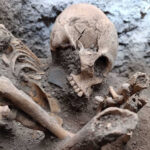
    The ancient inhabitants of the area surrounding Tula took advantage of the area’s rocky terrain, digging their most sacred spaces deep into the soft volcanic stone known as tepetate. Among the most significant discoveries are five shaft tombs, named for the vertical entrance shafts that lead down to burial chambers. Inside one residence, archaeologists found two such tombs. The northern tomb contained a particularly striking scene: the skeletal remains of eight individuals, most of them adults, placed inside its chambers alongside 47 miniature vessels. Remarkably, six of the bodies were found in a seated position, with the ceramic offerings placed at their feet.

    The tomb itself appears to have been a family crypt, used and reused over generations. “When they were going to deposit the last individual, they removed the funerary bundle of the previous one,” explained Juana Mitzi Serrano Rivero, an archaeologist on the team. This practice resulted in a complex mix of remains, including complete and incomplete skeletons from adults, juveniles, and at least one child between eight and 11 years old. Among the offerings found with the burials were a small shell, part of a pendant made of mother-of-pearl, and several engraved vessels.

    The discoveries near Tula do not exist in isolation. Archaeologist Jonathan Velázquez Palacios noted that the area has been exploited since pre-Hispanic times as a source of lime, a crucial material for the plaster coatings of Teotihuacan’s monumental buildings, located 90 kilometers away. 

    The find adds to a growing list of Classic-period settlements in the region north of Tula, including the significant Teotihuacan center of Chingú, as well as sites like El Tesoro, Acoculco, El Llano, and La Malinche. For the researchers, the work is far from over. The funerary contexts will be key to unlocking the beliefs, social structure, and culture of a people who lived and died in the orbit of one of the ancient world’s most influential cities, their memories now unearthed by a modern train.

  • New Evidence Shows Continuous Fallout from Cantarell Spill Contaminating Protected Reserves
    New Evidence Shows Continuous Fallout from Cantarell Spill Contaminating Protected Reserves

    cantarell
    Many questions still surround Cantarell and the platform’s explosion, but one thing is for certain: the damage is done. 

    For two months, the Mexican government maintained a steadfast narrative: the oil staining hundreds of miles of Gulf coastline was the result of an illegal ship dump and natural seabed seeps. But on April 16, that narrative collapsed. 

    Federal authorities were forced to admit that a decaying 36-inch pipeline owned by state oil giant Pemex, located within the Cantarell complex off the Campeche coast, was the source of a disaster that has quietly grown into one of Mexico’s most significant environmental crises in years.

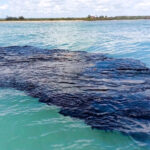
    The admission of what occurred at Cantarell has torn open a widening gap between the government’s initial assurances of limited damage and the stark reality of a “continuous fallout.” Evidence now confirms that previously unaffected areas along the Gulf are showing signs of toxicity as the slick continues to expand, threatening the delicate ecological balance of protected wetlands and coral reefs.

    Cantarell: The Perfect Storm of Negligence

    The accident did not occur suddenly. According to the investigation released by the federal Interinstitutional Group, the rupture began as early as Feb. 4 near the Abkatún platform. While an aerial survey spotted hydrocarbons on Feb. 6, a chaotic chain of operational failures ensued.

    It took divers 48 hours to locate the breach in the labyrinth of seabed pipes at Cantarell. Even then, the response was hobbled by what Pemex Director General Víctor Rodríguez described as a “chain of specific misconduct.” Senior management was not informed of the severity of the leak. Critically, the main pipeline valve was not shut until Feb. 14—eight days after the leak was detected—allowing crude to billow into the Gulf virtually unchecked.

    Internal reports indicate that at least 350 cubic meters of oily water recovered by containment barriers were deliberately hidden from records. When tar balls began washing ashore in Veracruz and Tabasco in early March, officials denied a pipeline breach, instead blaming a “mystery ship” and natural “chapopoteras.”

    Expanding Fallout and Ecological Devastation

    The delay in response at Cantarell allowed the slick to metastasize. Satellite imagery and drift models show that the spill has now impacted more than 600 kilometers of coastline, stretching from Tamaulipas down through Veracruz and Campeche.

    More alarmingly, the contamination is reaching regions previously untouched by the initial wave. Environmental groups report that the toxic sheen has infiltrated seven federally protected natural reserves, including the Los Tuxtlas Biosphere Reserve and the Veracruz Reef System, a UNESCO-recognized biosphere that is home to the most biodiverse marine ecosystems in the western Atlantic.

    Oceana and local environmental organizations have documented the deaths of sea turtles, a manatee, and dozens of fish species. The economic fallout is equally severe; fishing cooperatives have been paralyzed, and the tourism industry along the once-pristine beaches is facing an existential threat as cleanup crews dig tar out of the sand.

    Cantarell
    The true scope of the Cantarell disaster is becoming evident not through official data, but through the remains of dead fish washing ashore

    Shifting the Blame over Cantarell

    Mexico has mobilized a massive, albeit belated, force. Over 3,000 military and cleanup personnel, 47 vessels, and thousands of meters of containment barriers have been deployed along the affected shores.

    President Claudia Sheinbaum, who as recently as March 31 defended Pemex and denied a pipeline leak at Cantarell, has pivoted to damage control. Officials announced a 30-million-peso fund to support displaced fishermen and insisted that beaches remain safe for tourists. However, environmentalists argue these measures are superficial. Greenpeace and other organizations have lambasted the government’s approach, stating that financial aid does not equate to ecosystem restoration, especially when the total volume of oil spilled remains unknown.

    As the cleanup continues, the federal government has promised to create a permanent environmental observatory to monitor the Gulf. But for the coastal communities of Campeche, watching the black tide rise against their shores, the promise feels hollow. 

    With Information from Reforma.

  • Mexico’s Interoceanic Corridor Passes Crucial Test to Prove Its Viability as a Global Trade Route

    Mexico’s Interoceanic Corridor Passes Crucial Test to Prove Its Viability as a Global Trade Route

    corridor
    Mexico’s Interoceanic Corridor has been described as a dry canal designed to compete directly with the Panama Canal. 

    In a significant milestone for international logistics, the first major shipment of vehicles has successfully traversed Mexico’s Interoceanic Corridor of the Isthmus of Tehuantepec (CIIT). A shipment of 900 Hyundai vehicles covered the 308-kilometer (approximately 191.4-mile) land crossing between the Pacific and Atlantic oceans in just nine hours by rail, marking a turning point for the ambitious infrastructure project and positioning it as a serious challenger to the Panama Canal.

    The operation, which took place between March 28 and April 3, 2025, was executed by Hyundai Motor Company and its logistics division, Hyundai Glovis. The vehicles arrived from South Korea at the Pacific port of Salina Cruz, Oaxaca, on the vessel Glovis Cosmos. There, crews loaded the units onto more than 50 specialized BI-MAX double-deck freight wagons. The train then traveled along Line Z of the interoceanic railway to the Gulf port of Coatzacoalcos, Veracruz, a 308-kilometer (191.4-mile) journey completed in roughly nine hours. From there, the vehicles were transferred to a second ship for the final voyage to Brunswick, Georgia, on the U.S. East Coast, bringing the total door-to-door transit time from Asia to approximately 72 hours.

    A Faster, More Flexible “Dry Canal”

    The success of this test is not merely a logistical achievement; it is a direct challenge to the status quo of global shipping, which the Panama Canal has dominated for over a century. The waterway, which relies on a system of locks fed by Gatún Lake, has faced severe operational constraints in recent years due to droughts. In 2023, canal operators were forced to slash daily ship transits from 38 to as few as 22, causing weeks-long delays for some cargo. A 2025 study in Geophysical Research Letters projects that such drought conditions could occur twice as often by century’s end under high-emission scenarios, highlighting the vulnerability of sea-based routes.

    corridor
    In recent years, droughts and logistical issues have made traffic along the Panama Canal increasingly difficult and costly. 

    In contrast, Mexico’s “dry canal” is immune to water shortages. By using a modernized railway, the CIIT offers a faster and more predictable alternative for time-sensitive cargo like finished vehicles and electronics. The operation “provided an alternative to the Panama Canal… a faster and more reliable option for certain types of cargo,” confirmed a report from Logistics Insider. The 9-hour rail transit across the isthmus is significantly faster than the typical day-long passage through the Panama Canal, representing a strategic advantage for shippers prioritizing speed and reliability.

    A Strategic Vision for North American Trade

    The Interoceanic Corridor is a centerpiece of Mexico’s national development strategy, designed to position the country as a new continental logistics hub. President Claudia Sheinbaum has championed the project, noting that “it’s an exceptional project — it provides an alternative to the Panama Canal.” The corridor is not just a single rail line but a multimodal logistics platform administered by the Mexican Navy, stitching together the ports of Salina Cruz, Coatzacoalcos, Dos Bocas, and Puerto Chiapas.

    The success of the Hyundai test is already yielding results. Following the successful pilot, the CIIT is preparing for a second, much larger shipment. Mexico’s port authority, ASIPONA, is planning to move 3,000 Hyundai vehicles in May 2026, tripling the volume of the initial operation. Authorities estimate that the corridor could soon handle up to 5,000 units per month.

    The corridor is one of the two largest projects, along with the Tren Maya (Maya Train), spearheaded by the Mexican government, designed to modernize the nation’s rail infrastructure.

    Positioning for the Future

    Mexico’s interoceanic corridor is leveraging the global trend of nearshoring, where companies are moving production and supply chains closer to their primary markets—especially the United States. This route provides a direct, efficient, and geopolitically stable pathway for Asian manufacturers to reach the entire East Coast of North America.

    President Sheinbaum has articulated that the vision for the corridor extends far beyond a single transit route. The government’s plan includes developing 14 industrial parks along the railway, creating a manufacturing belt that will attract foreign investment and generate thousands of jobs. “The corridor is conceived as a dry canal… a port‑to‑port rail link designed to move containers coast‑to‑coast,” reported Newsweek, adding that the $7.5 billion project could eventually divert up to five percent of typical Panama Canal traffic.

    The first crossing of the 900 Hyundais has proven that the Corredor Interoceánico del Istmo de Tehuantepec is no longer just a project—it is a functional, competitive reality. As global trade adapts to climate change and shifting economic pressures, this Mexican “dry canal” is poised to become a dominant artery for commerce between the world’s largest economies.

  • Energy Crisis in Mexico Deepens Amid New Plants and Public Embarrassments

    Energy Crisis in Mexico Deepens Amid New Plants and Public Embarrassments

    energy
    Many households in Mexico still rely on candles for light when the energy grid fails, which is something that continues to happen all too often despite considerable investment in the grid. 

    After years of construction, the Federal Electricity Commission (CFE) has finally brought a massive new 499-megawatt natural gas plant online in Mérida, Yucatán. The facility, named the Central de Ciclo Combinado “Elvia Carrillo Puerto,” began operating in early May to serve over 1.53 million residents across the Yucatán Peninsula.

    The story is similar across the country, and especially dire in states like Veracruz and Tamaulipas, where outages have become nearly daily occurrences.

    Yet, just days after its activation, a stark reality has set in: the plant is too little, too late. The Peninsula remains trapped in a vicious cycle of blackouts, exposing the deep-seated failures of Mexico’s embattled national power grid.

    The fragility of the system was laid bare on September 26, 2025, when a transmission line failure triggered a cascade collapse, taking nine power plants offline and plunging over 2.3 million users in Yucatán, Campeche, and Quintana Roo into darkness. Traffic lights died in Cancún, telephone networks went silent, and hospitals were forced to scramble on backup generators.

    The crisis is not for lack of spending. The CFE invested 2.5 billion pesos in new combined-cycle plants designed to generate surplus energy. Yet, in a damning indictment of state planning, those plants are complete but cannot operate.

    An investigation by the news outlet Código Magenta revealed the facilities are unusable because the necessary gas pipelines were never built. “Without gas, there is no electricity,” the report noted. In response, the CFE turned to a patchwork of emergency diesel turbines and portable generators, many contracted through inexperienced companies, while the state-owned subsidiary CFEnergía operates “outside the scrutiny of Congress”.

    Public Humiliations in the Dark

    The grid’s unreliability has reached the point of high-profile embarrassment for the nation’s leadership. At the prestigious Tianguis Turístico in Acapulco, an event designed to showcase Mexico to the global travel industry, a blackout interrupted the inauguration ceremony. Federal officials were forced to continue their speeches by cellphone light for over twenty minutes, joking that the incident would be something to tell their grandchildren about.

    Perhaps the most striking example of the disconnect between rhetoric and reality occurred just days ago in Baja California. Governor Marina del Pilar Ávila Olmeda was holding a morning press conference to assure the public that there were “no power outages” in the state. As her staff defended the administration’s investments in electrical infrastructure, the cameras and lights abruptly shut off. A video quickly went viral showing the governor speaking in the darkness, the very embodiment of a system that denies its own crumbling reality.

    Energy Infrastructure and Corruption

    Yucatán Governor Joaquín Díaz Mena said the blackouts result from “decades of neglect and a lack of planning,” leaving the infrastructure without the capacity to meet skyrocketing demand. Energy experts have reached a consensus that there is a “major infrastructure shortage in electricity transmission, natural gas pipelines, and storage” across the country, warning that this lack of solid infrastructure inhibits large-scale investment.

    Meanwhile, the sector remains plagued by corruption and mismanagement. Reports have emerged that the CFE is relying on illegally introduced diesel to run plants, while state-owned subsidiaries are allegedly bypassing federal anti-corruption oversight to award millions in contracts.

    The Paradox of the Energy Engineer President

    At the helm of this crisis is President Claudia Sheinbaum, who holds a master’s degree and a PhD in energy engineering and presents herself as a scientifically minded environmentalist. She has pledged to raise renewable energy’s share of the national grid to 38% by 2030.

    Yet, despite her credentials, Sheinbaum continues to champion a fossil-fuel-first agenda. She has argued for “energy sovereignty” by exploiting natural gas deposits—a move that would effectively endorse fracking, a practice she avoids naming directly. Her administration remains heavily reliant on state oil giant Pemex, and despite the viability of battery storage and hybrid grid management systems, she has repeatedly claimed that solar power is not a viable national solution for the simple reason that “the sun does not shine at night.”

  • Temple of the Feathered Serpent in Teotihuacán Could Disappear Within 100 Years
    Temple of the Feathered Serpent in Teotihuacán Could Disappear Within 100 Years

    Teotihuacán
    Teotihuacán’s Temple of Quetzalcóatl has stood for nearly two millennia, but according to archaeologists, it is now under extreme risk.

    In the fall of 2003, archaeologist Sergio Gómez Chávez arrived at work after a heavy rainstorm to find a sinkhole had opened at the foot of the Temple of the Feathered Serpent in Teotihuacán.

    The three-foot-wide collapse was an accident that led to one of the most significant discoveries of his career: a tunnel system that ran hundreds of feet below the pyramid. But today, what Gómez Chávez sees when he looks at the same temple is not just an opportunity for discovery, but the slow, steady disintegration of the building itself. He now warns that the structure could disappear almost entirely within a century.

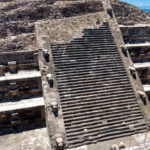
    The Temple of the Feathered Serpent at Teotihuacán, also known as the Temple of Quetzalcóatl, is the third-largest pyramid at Teotihuacán, a Prehispanic archaeological site located in central Mexico. Built between 150 and 200 CE, the pyramid consists of seven stepped bodies with a talud-tablero architectural style and features one of the most complex sculptural programs of its time. 

    The pyramid in Teotihuacán takes its name from the numerous representations of the feathered serpent deity that cover its sides, which are among the earliest-known depictions of a figure later associated with the Aztec (Mexica) god Quetzalcoatl. 

    The four sides of the structure were originally covered in stone reliefs depicting multi-colored feathered serpents that appear to slide among seashells. Alternating with the serpent heads are large sculptures of a separate figure with prominent fangs and two rings on its forehead, which some researchers have interpreted as the rain god Tlaloc or other deities.

    Teotihuacán
    Quetzalcoatl was one of the most venerated deities in Mesoamerica and went by many names, including Kukulkán in the Maya world. 

    The pyramid was originally hidden behind a later construction known as the Adosada platform, and the sculptures that were once visible were intentionally destroyed or covered, a fact that paradoxically helped preserve the rest. The temple also sits within the Ciudadela, a massive walled courtyard capable of holding the estimated 100,000 inhabitants of Teotihuacán at its peak.

    In May 2026, Gómez Chávez told La Jornada that the Temple of the Feathered Serpent at Teotihuacán “could cease to exist in about 100 years” due to “very severe” damage. The primary cause of the deterioration is moisture accumulation. Studies conducted with scanning electron microscopes have revealed that the stone is in a critical process of disintegration and sandification. 

    The moisture penetrates the subsoil and then rises into the structure through capillary action, fracturing the stone and causing it to lose its cohesion. Temperature fluctuations in the region, ranging from freezing to over 30 degrees Celsius in a single day, exacerbate the problem, as do constant humidity levels around 65%. The damage is not always visible to the naked eye, but particles of the original material are now detaching from the temple daily.

    The origins of the moisture problem are partly modern. Gómez Chávez noted that when Manuel Gamio first excavated the temple in Teotihuacán in the 1910s, he altered the original platform structure, creating openings that allowed water to filter into the subsoil. The tunnel discovered beneath the temple in 2003 has also become an entry point for humidity. Further compounding the problem, conservation interventions in the 1940s and 1980s inadvertently damaged the stone. In the 1980s, a chemical product was applied to the facade to protect it, but it instead accelerated the stone’s deterioration.

    An international competition was held to evaluate proposals, and one was selected, but it was the cheapest option and did not actually solve the underlying problem. Gómez Chávez told La Jornada that the project was evaluated, postponed, and ultimately forgotten as administrations changed at the National Institute of Anthropology and History. 

    “We have taken photographs with scanning electron microscopes, where you can see that the stone is completely disintegrated—that is, turned to sand. For this reason, we called attention to the need to address this problem,” Gómez Chávez said. “An international competition was held where many proposals were presented, of which one was selected that did not solve the problem, but it was the cheapest; the issue is that nothing has been done yet; the temple continues to be damaged, and the deterioration process cannot be stopped”.

    In October 2024, the INAH and its board launched a campaign called “Let’s Save the Feathered Serpent Pyramid” to raise funds for a fluoropolymer roof over the west facade. The roof would cover 700 square meters. But even that effort remains preliminary, with the INAH stating that studies of soil mechanics and other projections are still required before any installation can take place. 

    Gómez Chávez has noted that the solution he proposed was to cover only the facade, discreetly, restoring the building’s original shape. But bureaucratic inertia has left the temple exposed. “The solution that was proposed some time ago, to reduce the temple’s deterioration, was to place a roof; the project was evaluated, postponed, and finally forgotten as administrations changed at the National Institute of Anthropology and History,” he said.