Author: Carlos Rosado van der Gracht

  • Mexico’s 2026 World Cup: Host Cities, Protest Snubs and Broken Promises

    Mexico’s 2026 World Cup: Host Cities, Protest Snubs and Broken Promises

    Fifa
    The FIFA World Cup is coming to Mexico this summer, but not everyone is thrilled, and they are letting it be known.

    For a nation about to become the first to host three World Cups, the expected excitement is notably muted. The 2026 tournament, co-hosted with the United States and Canada, has triggered protests and disappointment over three main issues: the misallocation of resources that ignores urgent local needs, the prohibitive cost of tickets that locks out average fans, and a pervasive sense of national snub as Mexico is given a diminished role despite having hosted the tournament alone twice before.

    The strongest opposition to the World Cup in Mexico comes from those who see vital public funds diverted to a sporting event while basic crises remain unaddressed. The three host cities have made costly investments. Renovations at Mexico City’s Estadio Banorte have cost an estimated 150 to 180 million dollars, funded by sponsorship deals and public money. In Monterrey, activists have criticized the rushed construction of expensive tourist-focused projects like new monorail lines, which they say bypass environmental assessments. Meanwhile, overall federal infrastructure investment outside of the state oil company PEMEX fell by 33.5% in early 2025 compared to the previous year, from 147.6 billion to 101.8 billion pesos, raising concerns about the country’s ability to handle the event.

    Fifa
    In Monterrey, monorail lines promised to be ready in time for the World Cup are nowhere near being ready and have already suffered several collapses. 

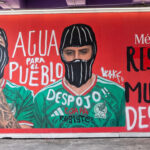
    The starkest contrast is visible around the Banorte Stadium in the Santa Ursula Coapa neighborhood. While authorities build luxury boxes and cycle paths, residents receive water from local wells only two to three times a week. The government grants the stadium 450,000 cubic meters of water per year, enough to supply the entire neighborhood for a month. This perceived priority has fueled a “World Cup of Dispossession” protest movement, with activists blocking major highways to denounce the lack of housing, water, transport, and electricity. One banner read, “Global event, local eviction,” capturing the fear that World Cup development accelerates gentrification and displacement. A protester summarized the sentiment: “We want decent transport. We want water. We want electricity. We want to be able to get home.”

    For many Mexicans, attending a World Cup match on home soil has become financially impossible. Tickets for the opening match in Mexico City ranged from 3,000 to 10,000 dollars, an exorbitant sum in a nation where the average monthly income is around 1,000 dollars. Data indicates that watching Mexico play is the most expensive fan experience in the entire tournament, with an average cost of 5,189 dollars per match. Fans who fondly remember attending the 1970 and 1986 World Cups can no longer afford to go. One retired fan lamented, “For Mexico’s economic reality, the only people who have the most means will be able to get in. It doesn’t feel the same. This World Cup basically belongs to the United States.” This sentiment ties directly to the issue of perceived snub: the tournament feels like an event happening in Mexico, not one that belongs to Mexico.

    Perhaps the most bitter aspect is the sense that Mexico is being treated as a secondary partner. The numbers are clear: the United States will host 78 of the 104 matches across 11 cities, while Mexico will host only 13 across three cities: Mexico City, Guadalajara, and Monterrey. This would feel like a demotion for any nation, but for one that has successfully hosted the tournament alone twice, it is especially pointed. 

    Mexican journalists and fans have also expressed anger over the quality of matches allocated to the country. Prominent ESPN critic José Ramón Fernández called the schedule “not attractive at all,” arguing that the tournament is not really “ours.” Monterrey was assigned group-stage matches, including Japan versus Tunisia and South Africa versus South Korea. Fernández said these matches are “ridiculous compared with the stadium and infrastructure they have.” Fans on social media have protested that there are no big matches and the lineup is full of mediocre games.

    Mexico’s 2026 World Cup experience is far from the celebrations of 1970 and 1986. The narrative has shifted from national pride to resource misallocation, economic exclusion, and a profound sense of being undervalued by larger partners. As the world prepares for kickoff, a large segment of the Mexican population will be watching from the outside, questioning whether the sacrifices made were truly worth it.

  • ‘Hondurasgate’: Leaked Audio Recordings Expose Alleged International Plot Targeting Mexico 
    ‘Hondurasgate’: Leaked Audio Recordings Expose Alleged International Plot Targeting Mexico 

    honduras
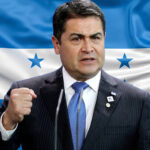
    Former Honduran president Juan Orlando Hernández, recently released from a 45-year U.S. drug sentence, is at the center of the ‘Hondurasgate’ scandal.

    A series of leaked voice notes, verified using forensic software, purportedly reveal a sprawling scheme involving former President Juan Orlando Hernández, Donald Trump, Benjamin Netanyahu, and Argentina’s Javier Milei to destabilize progressive governments in Latin America.

    A political firestorm, being dubbed “#Hondurasgate” on social media, after the publication of 37 leaked audio recordings. The investigation, led by the Hondurasgate platform and the Mexico-based digital outlet Diario Red en América Latina, alleges the existence of a coordinated campaign funded by international right-wing actors to spread disinformation and destabilize the administrations of Mexican President Claudia Sheinbaum and Colombian President Gustavo Petro.

    The recordings, allegedly obtained from WhatsApp, Signal, and Telegram conversations between January and April 2026, place the recently pardoned former Honduran President Juan Orlando Hernández (JOH) at the center of a plot to build a “digital journalism unit” designed to attack leftist leaders in the region.

    The Mexican Connection: A “Smear Campaign Office”

    According to the transcripts, which have been authenticated using forensic voice authentication software developed by the Czech firm Phonexia, Hernández is heard discussing the need to “move the narrative in Mexico” by activating media allies.

    In a conversation with current Honduran President Nasry Asfura, Hernández allegedly requests $150,000 to rent an apartment in the United States to set up a propaganda cell. “We are going to set up a cell, Mr. President. From here, from the United States, an information cell, so they can’t track us there in Honduras. It’s going to be like a Latin American news site,” Hernández says in the leaked audio.

    Hernández reportedly added, “Some cases are coming up against Mexico, some cases are coming up against Colombia, and, most importantly, against Honduras,” suggesting a strategy to weaponize issues like insecurity and drug trafficking to erode public trust in the current administrations.

    During her morning press conference on Wednesday, President Claudia Sheinbaum confirmed she had listened to the excerpts but dismissed the operation as ineffective.

    “They can set up a smear campaign office against our government in Honduras, using resources from a friendly nation. It won’t affect us, not at all,” Sheinbaum stated. “There may be days of confusion, but if we remain true to our principles … no one will be able to undermine the transformation project”.

    International Support: Milei, Netanyahu, and Trump

    The investigation reveals a complex web of international financing and political favors. The audios suggest that Argentine President Javier Milei pledged $350,000 to support the initiative. “I was on a call with President Javier Milei, and it was successful. Very, very good,” Hernández is heard telling Asfura.

    Perhaps the most explosive claims involve the circumstances surrounding Hernández’s release from prison. The former Honduran leader was serving a 45-year sentence for drug trafficking but was pardoned by U.S. President Donald Trump in December 2025.

    In one recording, Hernández allegedly explains the geopolitical debt behind his clemency, stating that Israeli Prime Minister Benjamin Netanyahu had “everything to do” with his release. “The pardon money didn’t even come from you. It came from a group of rabbis and people who supported Israel,” Hernández says in a leaked voice note.

    Analysts cited by Middle East Eye and El País suggest that Netanyahu’s involvement points to a broader strategy to counter left-wing influence in the hemisphere, using Hernández as a proxy ally.

    Reactions and Denials

    The response from the accused has been mixed. While current Honduran President Asfura has remained publicly silent, Honduran National Congress President Tomás Zambrano dismissed the tapes as a “burda fabricación” (crude fabrication). Juan Orlando Hernández, speaking from his new status as a free man, has also denied the authenticity of the conversations.

    However, the publishers of the Hondurasgate investigation stand by their reporting, noting that the audio was subjected to rigorous forensic analysis. Colombian President Gustavo Petro, also a target of the alleged plot, reacted on social media platform X, stating, “That’s how the extreme right’s communication networks move. The money comes from cocaine and Israel”.

  • Why Sargassum is Causing Skin Irritation on Caribbean Beaches 
    Why Sargassum is Causing Skin Irritation on Caribbean Beaches 

    Sargassum
    Sargassum is known to have adverse health effects, manifesting most commonly as skin irritation, but those most at risk are those charged with cleaning it up.

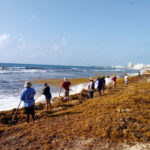
    Playa del Carmen has become one of the most affected destinations in Mexico by the massive influx of sargassum, which this year has been worse than ever.

    Aside from its foul smell and serving as an obstacle to entering the ocean, sargassum is now presenting a new problem: skin conditions. 

    As sargassum rots, it releases compounds like hydrogen sulfide and ammonia. Direct contact with the decaying algae can cause skin redness, itching, rashes, and irritation, especially in individuals with sensitive skin or eczema.

    José Gómez Burgos, president of the Cooperativa Turística del Mar Caribe, stated that an increasing number of fishermen and tourists have been presenting skin issues, despite navigating and swimming in areas away from the coast where sargassum concentrates. 

    “We already have colleagues with skin issues — they go into the sea and have to board their boats in that condition. It’s a serious problem that causes skin irritation lasting several days, but we have to keep working,” Gómez Burgos told Sipse.

    Making matters even worse is the fact that even contact with dry sargassum on beaches can have adverse effects, as it contains small, rough, calcified structures that can scratch or chafe the skin, leading to minor cuts or abrasions. These breaks in the skin can then become entry points for bacteria or other pathogens.

    Medical experts advise avoiding direct skin contact with washed-up sargassum, wearing protective clothing and gloves during cleanup, rinsing immediately with fresh water and soap after exposure, and seeking medical attention for persistent rashes or signs of infection.

    Evidence suggests that those most at risk for developing health issues related to sargassum are not tourists, but rather the large number of people employed by private companies and governments to collect it for disposal or processing. 

    The Inter-American Development Bank estimates that Mexico’s Caribbean region in the state of Quintana Roo has suffered economic losses of nearly 12% due to declining tourism. The hotel sector spends approximately 135 million dollars annually on beach cleaning. By July 2025 alone, 44,000 tons of sargassum had been removed from beaches and coastal waters in Quintana Roo

    Despite ongoing efforts, authorities warn that the arrival of sargassum will not disappear anytime soon. On the contrary, it is expected to increase due to ocean currents and weather conditions as temperatures continue to rise over the next few weeks. 

    Sargassum and Its Effects  Beyond Mexico

    At the regional level, Caribbean nations are moving toward coordinated action. In October 2025, the Association of Caribbean States established a Sargassum Sub-Commission, the first intergovernmental mechanism with a regional political mandate to comprehensively address sargassum impacts on ecosystems, public health, the economy, and coastal communities. 

    The Sub-Commission will guide the formulation of a Regional Plan for Sargassum Management, defining common approaches to monitoring, prevention, mitigation, and sustainable use. 

    The United Nations Environment Programme is also advocating for strengthening regional action plans, early warning systems, and sustainable response strategies.

    West Africa, while less studied, faces significant but underreported impacts. Scientific research indicates that West African countries, including Ghana, Nigeria, and Senegal, experience substantial sargassum inundations that affect fisheries, tourism, and public health.

  • U.S. Attorney General Vows More Charges Against Mexican Officials 

    U.S. Attorney General Vows More Charges Against Mexican Officials 

    A sweeping U.S. indictment targeting a sitting Mexican official has set off one of the sharpest diplomatic confrontations of President Claudia Sheinbaum’s government.

    Todd Blanche, acting Attorney General of the U.S., announced that the indictment of Sinaloa’s governor is just the beginning, as tensions over sovereignty escalate between the Trump administration and Mexico’s President Sheinbaum.

    [PHOENIX] — Acting United States Attorney General Todd Blanche has issued a stark warning to Mexican politicians, stating that the recent indictment of Sinaloa Governor Rubén Rocha Moya is merely “the beginning” of a broader legal campaign. The announcement comes as President Donald Trump intensifies his rhetoric, threatening unilateral military ground operations inside Mexico to combat drug cartels.

    In an interview with News Nation on the sidelines of the Border Security Expo in Phoenix on Wednesday, Blanche confirmed that additional charges are imminent. When asked if the Department of Justice would pursue more cases beyond visa revocations, Blanche responded unequivocally, “Sure, yes”.

    “Last week, we announced that an indictment was filed against a governor of Mexico by the Southern District of New York,” Blanche told reporter Ali Bradley. “I think that’s something we’ve done in the past, and we will certainly continue to do it”.

    The Rocha Moya Indictment

    The escalating legal pressure began on April 30, when a federal grand jury in the Southern District of New York indicted Rubén Rocha Moya, the governor of Sinaloa, along with nine other current and former Mexican officials. The charges include drug trafficking and weapons offenses, effectively accusing the state’s highest-ranking official of collaboration with the Sinaloa Cartel, which the U.S. designated as a Foreign Terrorist Organization (FTO) in 2025.

    Rocha Moya, who has since taken a leave of absence from his post, is the first sitting Mexican governor to be charged under the new FTO framework.

    Blanche attributed the influx of intelligence that is driving these cases to the extradition of high-profile cartel leaders. “One of the consequences of many of the leaders of some of these cartels having been brought here over the last year… is that some of them are probably going to want to cooperate,” Blanche explained. He added that such cooperation “may lead to additional charges” against political figures previously thought to be untouchable.

    Potential Military Action

    The Justice Department’s legal offensive is unfolding alongside a dramatic military posture shift from the White House. On the same day as Blanche’s interview, President Trump explicitly warned that the United States would conduct ground operations in Mexican territory if the government in Mexico City fails to dismantle the cartels itself.

    “If they aren’t going to do the job, we will do it, and they understand that,” Trump said during a public event at the White House, dismissing anticipated complaints from Mexican officials as irrelevant.

    The White House reinforced this stance with the release of the 2026 Counterterrorism Strategy, which declares the administration’s readiness to take “unilateral action” against cartels operating in countries deemed “complicit” in narcoterrorism. This strategy has already manifested in U.S. military actions at sea, with reports indicating that operations against smugglers have resulted in over a hundred casualties in maritime zones over the past year.

    Mexico’s Response

    Facing the dual threat of criminal indictments against her political class and military intervention against her nation, Mexican President Claudia Sheinbaum has adopted a firm stance of defiance rooted in constitutional law.

    “It is not negotiable,” Sheinbaum said during a press conference following the latest threats, referring to Mexico’s sovereignty and territorial integrity. She has consistently rejected U.S. military intervention, dating back to a January phone call with Trump where she told him such assistance was “not necessary”.

    “We seek coordination without subordination, as equals,” Sheinbaum stated earlier this year, a phrase she has repeated as a cornerstone of her administration’s foreign policy.

    Rather than accepting U.S. military help, Sheinbaum has turned the argument back on Washington. She recently suggested that Trump should focus on combating the American demand for drugs and the illegal trafficking of firearms from the U.S. into Mexico. Citing Department of Justice statistics, she noted that 75% of the guns used by cartels originate in the United States.

    “If the flow of illegal weapons from the United States into Mexico were stopped, these groups wouldn’t have access to this type of high-powered weaponry,” Sheinbaum argued.

  • Mexico Secures 1 Million Barrels of Oil Deal With Japan 

    Mexico Secures 1 Million Barrels of Oil Deal With Japan 

    oil
    Since the 20th century, Mexico and Japan have transformed a modest trade relationship into a key economic partnership.

    In a strategic pivot to safeguard its energy security, Japan has finalized an agreement to import one million barrels of crude oil from Mexico. The deal, confirmed by Mexican President Claudia Sheinbaum, comes as the de facto closure of the Strait of Hormuz threatens the supply lines for over 90% of Japan’s oil imports.

    The agreement represents a concrete shift in global energy procurement, driven by escalating conflict in the Middle East. Following a recent telephone conversation between Japanese Prime Minister Sanae Takaichi and President Sheinbaum, both nations committed to bolstering bilateral energy cooperation to mitigate the risks posed by the disruption of the strategic chokepoint.

    President Sheinbaum confirmed the arrangement during a press conference, explaining that the crude to be shipped is surplus material not processed by Mexico’s domestic refineries. “It is not the first time it has been done. This is the surplus crude we still have for export,” Sheinbaum stated. She noted that Japan’s request had been longstanding, but the urgency of the current crisis accelerated the approval. While Sheinbaum did not specify the delivery date, reports from the Japanese economic daily Nikkei and other sources suggest the shipment is scheduled for July 2026.

    A Critical Alternative to a Vulnerable Route

    The urgency of the deal is underscored by Japan’s heavy reliance on Middle Eastern oil. With domestic production covering only roughly 0.3% of its crude needs, Japan is the world’s fourth-largest oil importer and is exceptionally vulnerable to maritime blockades. The Strait of Hormuz, a narrow waterway between Iran and Oman, has effectively been closed amid the ongoing US-Iran-Israel conflict, prompting Tokyo to seek urgent alternatives.

    This vulnerability has forced a rapid diplomatic response. By turning to Mexico, Japan gains access to a Pacific coastline supply route that avoids the conflict zones of the Middle East entirely. Mexico produces approximately 1.8 million barrels of crude oil per day, though a significant portion of that volume is directed toward domestic refining. Currently, between 400,000 and 500,000 barrels are available for daily export, meaning the one-million-barrel shipment for Japan is a substantial, but manageable, commitment for the state-owned oil company Pemex.

    Broader Economic Pressures

    The reverberations of the Hormuz closure are being felt in fuel markets as well. To shield consumers from the shock of Brent crude reaching $107 per barrel at its April peak, the Sheinbaum administration has tightened a price containment agreement. This pact caps regular gasoline (Magna) below 24 pesos per liter, as the government estimated that without intervention, unsubsidized diesel could have surged to as high as 35 pesos per liter.

    While the deal has been framed by some as a historic diplomatic victory, the logistical and financial realities present a more measured picture. The agreement provides a vital stopgap, allowing Japan to diversify its sources away from an increasingly volatile Middle East. However, it remains a relatively small volume compared to Japan’s total consumption, suggesting it is a strategic supplement rather than a complete solution to the supply crisis.

    Furthermore, analysts note that Pemex continues to face significant financial constraints. The state company recently posted a first-quarter loss of MX 2.6 billion in debt.

    The logistical challenges of shipping crude across the Pacific, as opposed to the shorter routes through Hormuz, also add layers of cost and transit time to the transaction.

    Ultimately, the Japan-Mexico agreement signals a slow redrawing of the global oil map. It confirms that Latin America is an essential, stable alternative supplier in a fractured global market, and that Mexico is willing to play a more active role in Pacific energy security despite its domestic production challenges.

    Mexico and Japan’s Little-Known Long-Term Partnership

    Following Mexico’s nationalization of oil in 1938 and Japan’s post-World War II industrial boom, bilateral trade grew slowly, centered on Mexican raw materials such as minerals, copper, and later crude oil in exchange for Japanese machinery and consumer goods. 

    A key shift occurred in the 1960s and 1970s as Japanese auto and electronics manufacturers established assembly plants in Mexico, leveraging its proximity to the U.S. market. The relationship deepened further in the 21st century with the entry into force of the Economic Partnership Agreement in 2005, which eliminated most tariffs on industrial and agricultural goods. 

    Since then, trade has expanded rapidly: Mexico exports automobiles, auto parts, and agricultural products like pork and vegetables to Japan, while Japan sends high-tech machinery, electrical equipment, and steel to Mexico. 

    By the 2010s and 2020s, annual bilateral trade surpassed $20 billion, making Japan one of Mexico’s top Asian trading partners, though the flow remains broadly balanced with a slight Mexican surplus in recent years.