
Author: Carlos Rosado van der Gracht

  • Zoo at Villahermosa’s Parque-Museo La Venta Under Scrutiny

    Zoo at Villahermosa’s Parque-Museo La Venta Under Scrutiny

    Zoo
    Because of their size, Jaguars are especially difficult to keep healthy in captivity, which is why authorities are recommending a transfer to Tabasco’s Yumká sanctuary.

    In Villahermosa, Parque-Museo La Venta functions as both a zoo and an archaeological park. The site houses several Olmec colossal heads and other artifacts from what is considered Mesoamerica’s “mother culture,” alongside living animals, including jaguars, monkeys, and crocodiles. Recent investigations by federal environmental authorities have focused on whether the park is doing enough to ensure animal welfare.

    The Profepa Investigation

    In response to allegations that the park is not ensuring animal well-being, the Procuraduría Federal de Protección al Ambiente (Profepa) conducted a inspection of the zoo on April 21, 2026. The inspection was carried out with state and federal authorities, including the Secretaría de Medio Ambiente y Recursos Naturales (Semarnat) and the Tabasco Secretariat of Culture.

    According to the official report released that same day, federal inspectors performed a complete count of the animals. They conducted physical reviews to verify nutritional and health conditions, and they audited the enclosures and feeding areas.

    Following the inspection, authorities confirmed that the park operates under current regulations, which, nevertheless, inspectors added should perhaps be reviewed, especially when it comes to larger species. Officials present included Aída Elba Castillo Santiago, Secretary of Culture in Tabasco; Salvador Heredia Domínguez, Semarnat delegate; and Mayra Villagómez, acting head of Profepa in Tabasco.

    The Culture Secretary described the inspection as a productive transparency exercise, stating that the physical verification allows the government to build solid records demonstrating Tabasco’s compliance with federal environmental policy. However, the inspection did find irregularities.

    The Administrative Dispute and Animal Transfers

    Despite the positive findings from Profepa, allegations of negligence have not disappeared. The controversy relates to an edict declaring that the 134 animals under the Secretariat of Culture’s care were “no longer useful” to that department and should be transferred to Yumká, a larger wildlife interpretation center managed by the environmental agency Semades.

    Critics, including activists, interpreted this as a plan to empty the zoo to make way for a proposed National Olmec Museum. However, state officials have denied this. In June 2025, Secretary of Environment Sheila Cadena Nieto explained that the transfer is administrative—changing which department pays for the animals’ care—not a physical relocation. “The animals will remain there; they will just now be attended to by Yumká,” Cadena Nieto said. She acknowledged that the “form of captivity” at La Venta has been criticized for years and argued the change could improve animal welfare.

    The April 2026 Profepa inspection appears to have established a baseline record of the animals’ condition before this administrative transfer takes effect.

    A Dual Mission: Zoo and Archaeological Park

    Parque-Museo La Venta was inaugurated in 1958. The park serves two functions. First, it is an open-air museum displaying Olmec monumental art. It holds four Olmec colossal heads, basalt sculptures weighing up to 40 tons, along with altars, stelae, and mosaics. These pieces were moved from the original La Venta archaeological site, which was threatened by oil exploration.

    Second, the park operates as a wildlife conservation and management institute. This legal designation allows it to keep species such as jaguars, howler monkeys, crocodiles, and various tropical birds. The combination of archaeology and live animals is intended to illustrate the connection between Olmec culture and the region’s wildlife.

    Current Status

    Parque-Museo La Venta remains open to the public. The recent inspection confirmed that the enclosures meet legal safety and hygiene requirements. However, the ongoing scrutiny reflects a broader debate about whether a small, urban park designed in the 1950s can provide adequate welfare for wild animals, or whether its educational and archaeological value justifies the current arrangement.

    For now, authorities maintain the site is safe, and the animals are in stable condition. But as the government moves forward with plans for a National Olmec Museum, the living collection at La Venta will likely remain under close watch.

  • Torn Apart: The Impossible Choice Facing American Families as Deportation Forces a Relocation to Mexico

    Torn Apart: The Impossible Choice Facing American Families as Deportation Forces a Relocation to Mexico

    deportation
    Thousands of U.S. citizens are choosing to relocate to Mexico and other Latin American countries to reunite with spouses or children who have been deported—leaving behind the only country many have ever known.

    For thousands of U.S. citizens, the American Dream is ending not with a bang, but with a heartbreaking choice: break up their family or leave their homeland behind.

    As the Trump administration ramps up its mass deportation campaign—with the Department of Homeland Security reporting 2.2 million self-deportations since January 2025—a quieter but equally devastating migration is unfolding in reverse . American citizens, many of whom have never lived elsewhere, are packing their bags and moving to Mexico to keep their families intact .

    They are the “de facto deportees”—a population researchers estimate included more than 11,000 people who moved from the U.S. to Mexico between 2015 and 2020 specifically to accompany a deported family member . Among them are over 6,000 U.S. citizens, nearly 90% of them children .

    Families Torn Apart

    For parents facing deportation, the decision is often made in a matter of days, with lifelong consequences.

    The cruelty of these separations cuts across all demographics—including military families.

    Patricia Reyes, a 40-year-old hairstylist from Atlanta, was deported after a domestic violence dispute turned into an immigration case. She left behind three U.S. citizen children, two of whom serve in the United States Marine Corps .

    “I have two daughters in the Marines, yet they deported me; they are my family,” Reyes said as she arrived in Tapachula, a sweltering city in Mexico’s southern tip—some 2,000 miles from the U.S. border. “I mean, they don’t even care about that”.

    The U.S. has increasingly been flying deportees to Tapachula and Villahermosa in southern Mexico, making it far more difficult for them to attempt to return. Of the nearly 60,000 immigrants in U.S. immigration detention in September 2025, 71.5% had no criminal records, according to data analyzed by the Transactional Records Access Clearinghouse.

    The Reverse Migration

    For many deportees, Mexico is not home. They left as young children and have spent decades building lives in the United States.

    Marvin Robledo Rodriguez, 43, had lived in the United States for 35 years—most recently in New Jersey—before he was deported following a fight. The charges were dropped, he said, but ICE was waiting for him as he walked away from the courthouse.

    Asked if anything in Tapachula seemed familiar, Robledo Rodriguez had a three-word answer: “Not at all”.

    “My Spanish is a little crude,” he added. He left behind two boys in the United States, ages seven and eleven.

    Families Choosing to Leave

    Some Americans are making the move voluntarily before deportation forces their hand.

    Lois Muñoz, originally from Brooklyn, now lives in her husband Alfredo’s family compound in Puebla. She was a waitress at a diner in New York. Now, with no car and little Spanish, her world has shrunk dramatically.

    But for her, the calculation was simple: moving to Mexico was an easier legal path than risking her husband’s detention. Under Mexican “Family Unit” rules, Americans married to Mexican nationals can apply for temporary, then permanent, residency.

    Candace Maria Garcia Sánchez made the same choice nearly a decade ago, moving from Utah to rural Mexico after her husband was deported. She now has more than 1.5 million TikTok followers and describes the experience as unexpectedly positive.

    “Fast forward to now, I feel like we’re just living our happy lives and raising our children in a beautiful place,” she said.

    ‘Mexico Embraces You’

    The Mexican government has launched a program called “México Te Abraza“—”Mexico Embraces You”—to help deportees and their families integrate. Returnees receive debit cards preloaded with about $108, health screenings, and assistance obtaining Mexican birth certificates.

    But for many, the psychological toll is severe. Researchers have documented “extreme anxiety” and other mental health problems among deportees “from the shock and mistreatment they’d just gone through,” said Adam Isacson of the Washington Office on Latin America.

    “There are people who are basically gringos at this point, and they’re undergoing a real big shock,” Isacson said.

    The Children Left Behind in Limbo

    A report by American Families United estimates that 1.5 million U.S. citizens are separated or live in fear of separation from loved ones because they are in mixed-status relationships. More than 200,000 U.S. citizen minors living in Mexico lack proper documentation to register for school, according to the Rhizome Center for Migrants.

    They become the undocumented—in their own families’ homeland.

    For Amalia, now finally in California after two decades, the journey is not over. She is working toward her G.E.D. and dreams of studying psychology to help others struggling with depression.

    “Our fears are always the only thing holding us back,” she said, “but once you see things for yourself, you see what you’ve been missing”.

    With Information from NBC News.

  • From Opposition to Open Door: Sheinbaum’s New Fracking Policy Sparks Backlash from 80+ Civil Groups

    From Opposition to Open Door: Sheinbaum’s New Fracking Policy Sparks Backlash from 80+ Civil Groups

    fracking
    President Sheinbaum has opened the door to fracking in Mexico—but activists and experts warn it’s an environmental dead end, especially under Pemex’s watch.

    President Claudia Sheinbaum has signaled a major policy shift by opening the door to new natural gas extraction technologies, a decision that environmental groups and energy experts warn could be a dangerous leap into an environmental “dead end.”

    During her daily press conference this week, Sheinbaum defended the exploration of non-conventional gas extraction techniques, arguing they are essential to “fortify” the nation’s energy sovereignty. This marks a significant reversal from her previous staunch opposition to hydraulic fracturing, the controversial process more commonly known as fracking.

    While the President insists she is rejecting “traditional fracking” due to its severe environmental impacts, she has proposed a scientific committee, including experts from UNAM and the IPN, to evaluate newer, purportedly “low-impact” methods. However, more than 80 civil society organizations, including the Mexican Alliance Against Fracking, immediately condemned the proposal.

    “The idea of a ‘sustainable’ version of fracking may sound promising in a speech, but in reality, it does not exist,” the coalition said in a blistering statement, accusing the administration of a “political U-turn” that breaks campaign promises.

    What is Fracking and Why is it a Problem?

    Hydraulic fracturing, or fracking, is the process of injecting a high-pressure mixture of water, sand, and toxic chemicals deep into underground rock formations to crack them open and release trapped oil or gas.

    While the industry has hailed it as a bridge to energy independence, the technique is deeply controversial due to a catastrophic list of side effects documented over the last 15 years across more than 2,300 scientific studies.

    In the United States, the cradle of the fracking boom, the consequences have been dire. The disposal of fracking wastewater—so chemically laden it cannot be returned to the water cycle—has been directly linked to a dramatic surge in earthquakes in states like Oklahoma and Texas.

    Furthermore, the industry is currently facing a wastewater crisis. In the Permian Basin, for every barrel of oil extracted, up to five to six barrels of toxic brine are produced. Disposal wells are overloading, leading to leaks, ground deformation, and the potential contamination of freshwater reserves. These “new technologies” touted by the government—such as using treated wastewater or seawater—have been tested in the US but have not become standard practice due to prohibitive costs, ranging from $5 to $10 million per installation.

    The Pemex Factor: Corruption and Catastrophe

    Even if the technical hurdles of fracking could be overcome, experts argue that Mexico is uniquely ill-equipped to manage the risks, primarily due to the state of Petróleos Mexicanos (Pemex). The state-owned giant has a notoriously poor environmental and safety record, raising profound questions about its ability to regulate a process as volatile as fracking.

    The skepticism is not unfounded. Just this week, Pemex admitted that one of its undersea pipelines caused a massive oil spill in the Gulf of Mexico, which has already soiled beaches and threatens biosphere reserves like Los Tuxtlas. This incident is merely the latest in a long history of disasters.

    Furthermore, a 2024 fatal incident at the Pemex Deer Park Refinery in Texas, which released over 27,000 pounds of hydrogen sulfide gas, killing two workers, highlighted the company’s ongoing struggles with maintenance and safety protocols.

    Critics argue that entrusting Pemex with the high-stakes, precision-dependent task of fracking is reckless. Analysts point to the soaring costs and operational failures of the Dos Bocas refinery as evidence that Pemex cannot handle complex projects.

    “The President, blinded by ideology, starts from an error,” one political analysis noted. “The enormous limitations of Pemex are not being considered. The overcosts and operational problems of the Dos Bocas refinery should be enough not to entrust a single project more to them”.

    The Numbers Don’t Add Up

    Beyond the environmental and institutional risks, the coalition of NGOs argues that the economic rationale for fracking in Mexico is fundamentally flawed. Currently, Mexico imports 75% of its natural gas, creating a dependency Sheinbaum wishes to break.

    However, the math does not support the plan. According to Pemex’s own Strategic Plan, by 2035, Mexico would only produce 4.988 billion cubic feet per day (MMpcd) of gas. This falls drastically short of the current national demand of 9,000 MMpcd.

    “Energy sovereignty will not be achieved by extracting Mexico’s dwindling gas reserves,” the NGOs argued. “Even if we could extract all the gas in our subsoil, it would be insufficient to supply the growing demand for fossil gas”.

  • Ancient Maya Lintel  to Be Repatriated to Mexico After Voluntary Return 
    Ancient Maya Lintel to Be Repatriated to Mexico After Voluntary Return 

    Maya
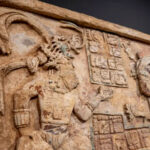
    The artifact being repatriated to Mexico depicts Cheleew Chan K’inich, the ninth ruler of Yaxchilán, receiving tribute from a subordinate lord.

    A Maya limestone lintel dating to the Mesoamerican Classic period (600-900 A.D.) will be returned to Mexico after an anonymous businessman voluntarily surrendered the piece to the Mexican Consulate in New York. The artifact, weighing approximately one ton, was presented to the public for the first time on April 16, 2026, during a ceremony at the consulate’s Octavio Paz Auditorium.

    What Is a Maya Lintel

    In Maya architecture, a lintel is the horizontal beam that spans the opening above a doorway, set between two upright supports. At major Maya centers like Yaxchilán in Chiapas, rulers commissioned elaborately carved limestone lintels to document dynastic history, ritual events, and military conquests. These lintels were placed above doorways so that anyone entering the room would see the commemorative text and image.

    Maya lintels are considered among the finest examples of pre-Hispanic art. The carvings combine hieroglyphic texts with detailed figural scenes, providing scholars with invaluable records of royal lineages, political alliances, and religious practices. Their value lies not only in their artistic quality but in the historical information they preserve about Maya rulers and their ceremonies. Fewer than a dozen such carved wooden lintels are known to exist from the Classic period, making each discovery a significant archaeological event.

    Maya
    Dintel 24 of Yaxchilán depicts Lord Jaguar II supervising a bloodletting ritual performed by his wife Lady K’ab’al Xook. Such rituals were considered essential to earn the favor of the gods, especially during times of warfare.

    Identity of the Ruler Depicted

    Diego Sandoval, the consulate’s legal director, explained that iconographic analysis identified the main figure on the lintel as Cheleew Chan K’inich, also known as Jaguar Acorazado IV, the ninth ruler of Yaxchilán. He reigned from approximately 769 to 800 A.D. and is shown receiving tribute from a subordinate ruler.

    The scene includes symbolic elements such as atlantean figures holding a representation of the sky and the presence of the god Itzam, associated with mountains and universal balance. At the center of the carving appears the signature of the artisan, “Mayú.” Sandoval noted that the figures together represent a quincunx, a symbol of cosmic order and the renewal of time.

    How the Artifact Left Mexico

    Mexican authorities have not disclosed how the lintel was removed from Mexican territory. The artifact originated in the Yaxchilán region of Chiapas, a major Maya center located along the Usumacinta River that flourished during the Late Classic period. The consulate stated that the piece was taken from Mexico, passed through Europe, and eventually arrived in the United States, but specific details about its removal remain unknown.

    Erroneous Reports About the British Museum

    Following news of the repatriation, some media reports incorrectly suggested that the lintel had previously been housed at the British Museum in London. This is not accurate. While the British Museum does hold notable Maya lintels from Yaxchilán, those pieces are different artifacts. Lintels 24 and 25 from Yaxchilán Structure 23 are on permanent display in the British Museum’s Mexican Gallery. Those lintels were removed from Yaxchilán by Alfred Maudslay in 1882 and 1883 and shipped to Great Britain. The lintel being returned to Mexico from New York is a separate piece that has no connection to the British Museum’s collection.

    Dispute Over the Lintel’s True Origin

    While Mexican authorities have claimed the lintel as part of their national heritage, some experts argue that the artifact may actually originate from Guatemala and should therefore be repatriated there. Scholarly research on similar looted Maya lintels has documented the case of a sculptor named Mayuy, whose signature appears on at least four masterwork lintels that have been traced to northern Guatemala.

    According to academic studies published by the Getty Research Institute, the lintels in question were discovered in 1950 by explorer Dana Lamb, who stumbled upon a Maya ruin in the tropical forests of northern Guatemala. Lamb called the site Laxtunich but failed to record its precise location, turning his find into a longstanding mystery. The lintels he discovered there, long since looted, are considered among the masterworks of Maya sculpture from the Classic period. Using fieldwork, physical evidence, and Lamb’s expedition notes, researchers have identified a small area with archaeological sites where the carvings were likely produced.

    The scholar Stephen Houston and his colleagues have argued that these works can be assigned to a carver named Mayuy, who sculpted his name on two of them. The research points to their repatriation and, as an ultimate aim, repatriation to Guatemala. One analysis specifically examines how Mayuy grafted celestial, seasonal, and divine identities onto a local magnate and his overlord from the kingdom of Yaxchilan, Mexico, suggesting a complex political relationship between sites on both sides of the modern border.

    Transport and Final Destination

    A Mexican Air Force plane will transport the lintel to Mexico, where it will be received by Foreign Secretary Roberto Velasco. The piece will then be taken to the National Museum of Anthropology in Mexico City as part of the government’s ongoing policy of cultural patrimony restitution.

    According to Consul Bucio, this piece is among approximately 14,000 archaeological pieces recovered by Mexico in the last five years during the administrations of Andrés Manuel López Obrador and Claudia Sheinbaum. Of that total, more than 2,300 pieces were in New York and were recovered with support from the Manhattan District Attorney’s Office.

    The exact date of the lintel’s return to Mexico has not been announced. It remains unclear whether Guatemala will make a formal claim for the artifact, and how Mexican authorities would respond to such a request.

  • Grupo Xcaret Cancels Annual “Gran Travesía” Amidst Legal Dispute

    Grupo Xcaret Cancels Annual “Gran Travesía” Amidst Legal Dispute

    Xcaret
    Xcaret’s “Gran Travesia” pilgrimage reenactment to Cozumel has been cancelled for 2026 after a ruling by Mexico’s Supreme Court.

    Xcaret has officially announced the suspension of its annual “Travesía Sagrada” (Sacred Journey) for 2026. The decision comes as a direct response to a recent ruling by Mexico’s Supreme Court regarding the commercial use of Maya iconography, marking a significant turning point in the debate over cultural appropriation and indigenous rights in the country.

    For nearly two decades, the event—known in English as the “Gran Travesía”—has been a staple of Xcaret’s activities calendar. However, Grupo Xcaret confirmed this week that it will halt the 19th edition of the pilgrimage to prevent the company from being perceived as being in a state of “rebellion or confrontation” with federal authorities charged with protecting national heritage.

    What is the “Gran Travesía”?

    The Travesía Sagrada Maya is a large-scale reenactment of a pre-Hispanic maritime pilgrimage. Historically, the ancient Maya traveled from Pole (near present-day Xcaret) to the island of Cozumel to worship Ixchel, the goddess of fertility, the moon, and medicine.

    According to data provided by the company, the event had seen the participation of 5,322 people over its lifespan. For the now-canceled 2026 edition, 333 participants from Playa del Carmen, Cancún, Tulum, and Cozumel had already completed their training. Notably, for the first time, the roster included more women than men, alongside a volunteer cast of 300 dancers and artists from local communities, including elders and children from Tihosuco, Chunhuhub, and Felipe Carrillo Puerto.

    The Supreme Court Ruling and the Controversy

    The suspension was triggered by a specific legal battle regarding who has the right to authorize the use of Maya symbols. The controversy is not new; it originated in 2022 when the National Institute of Copyright asked the company to remove Maya cultural elements from its advertising.

    The conflict escalated when the Gran Consejo Maya (Great Maya Council)—an organization recognized by the Quintana Roo constitution as a representative of indigenous communities—filed a complaint. While Grupo Xcaret claimed it had a financial agreement and authorization from the Gran Consejo Maya, the Supreme Court ruled that this was insufficient.

    Xcaret
    The goddess Ixhcel, the Maya moon deity, was also closely associated with fertility but also sucide.

    In a landmark decision, the SCJN revoked an amparo (injunction) that had previously allowed Xcaret to use these symbols. The Court argued that indigenous cultural heritage is not owned by a single organization or individual but belongs to the communities as a whole. Therefore, any use of these elements requires “free, prior, and informed consent” from the collective community, not just a single representative body.

    Not an Admission Wrongdoing

    In a press conference directed primarily at the paddlers affected by the cancellation, Ileana Rodríguez Cavazos, Corporate Director of Sustainability and Institutional Dialogue for Grupo Xcaret, clarified the company’s legal stance.

    “We have decided to suspend the edition of the Travesía Sagrada this year,” Rodríguez stated. She emphasized that the suspension “does not imply an acknowledgment of irregularities,” but rather a strategy to avoid the company becoming a “pretext for conflicts” between the various actors involved in the representation of Maya culture.

    Rodríguez explained that the recent judicial resolution does not address the core of the conflict—that matter will still have to be resolved by Indautor. However, to avoid any appearance of rebelling against the authorities, they chose to cancel the 2026 event.

    “The case opens the debate about who has the legitimacy to authorize the use of symbols, practices, and narratives of the Maya culture, as well as the mechanisms of economic compensation and indigenous representation,” Rodríguez added.

    As for the Travesía Sagrada, its future remains uncertain. The company has not confirmed whether the suspension is temporary or permanent, stating that its return depends entirely on the evolution of the legal framework regarding cultural heritage.