Two years after her historic election victory, President Claudia Sheinbaum marked her political anniversary by delivering her toughest warning yet to the United States, reframing a growing domestic political crisis as a national struggle to defend Mexico’s sovereignty.
Addressing an estimated 130,000 supporters packed into the Plaza de la República on Sunday, Sheinbaum launched a fierce attack on the US Department of Justice over its accusations against high-ranking officials in Sinaloa.
Her central question was direct: “Is it a legitimate interest to fight organized crime, or do they actually intend to influence the 2027 election in our country?” In the shadow of the Monument to the Revolution, she answered her own question by accusing Washington of injerencia, a Spanish term for interference.
A Swift and Partisan Dispersal
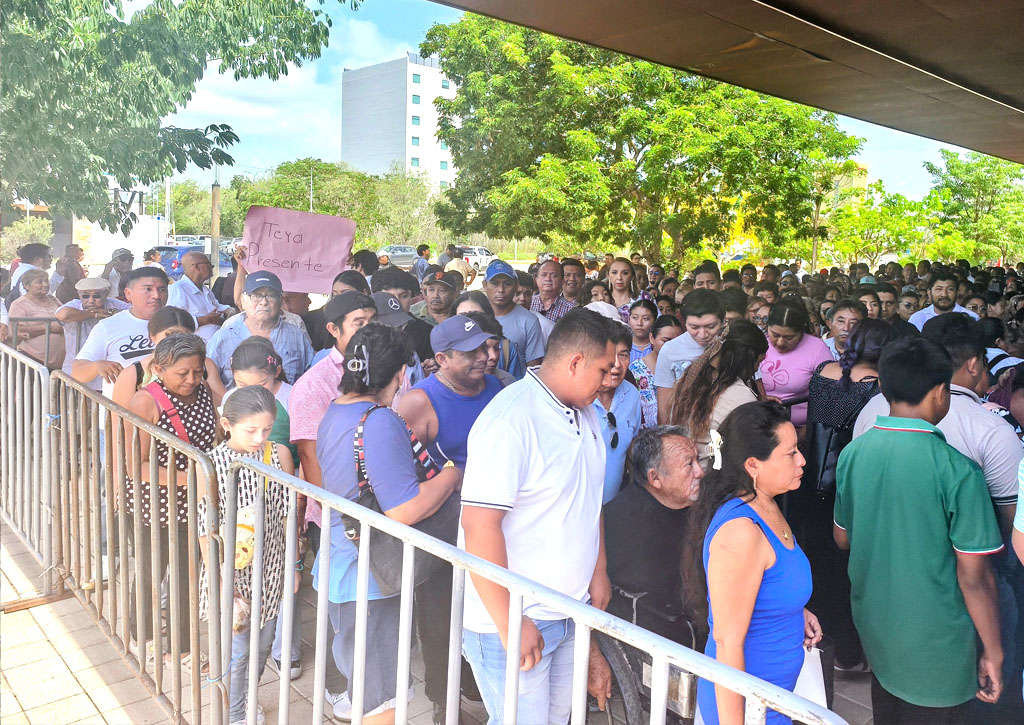
By mid-afternoon, the plaza was almost empty. While the administration boasted of a massive turnout, the speed with which the crowd vanished was as notable as its size. Buses idled at the ready, their engines running to return supporters to their destinations shortly after the president’s speech ended.
The swift and organized dispersal highlighted the nature of the event: it was not an organic outpouring of public sentiment, but a calculated mobilization of territorial leadership—a hallmark of the political machine built by her predecessor, Andrés Manuel López Obrador.
The Sinaloa Elephant in the Room
The president’s nationalist messaging obscured a much more delicate issue: the crisis within her own party. The event was meant to celebrate the second anniversary of her triumph. Still, it instead functioned as a show of force to shield Morena from the fallout of U.S. accusations against high-ranking party members.
The Justice Department has formally accused and requested the extradition of Sinaloa Governor Rubén Rocha Moya and Senator Enrique Inzunza, alongside eight other officials, for alleged ties to the Sinaloa Cartel. The US claims these officials received bribes to protect the cartel in exchange for political support.
Not once during her speech did the president mention the accused by name. There were no substantive explanations of the allegations and no detailed defense of their conduct. Instead, the Sinaloa scandal was transformed into a national grievance against an overreaching United States.
A New Law to Block Elections
This confrontation comes as Mexico’s Senate is fast-tracking a controversial constitutional amendment that would allow elections to be annulled on the grounds of “foreign interference.” While the official narrative, echoed by the president, presents the reform as a preemptive shield against global meddling, critics see it as a political weapon.
The amendment’s language is vague: it refers to “acts of foreign intervention or interference that influence electoral results,” a definition so broad that it raises immediate concerns about how it might be wielded by a dominant political party controlling all three branches of government.
The United States has also publicly expressed concerns that the amendment could be “used as a political tool against the opposition.” Morena’s defenders, including Deputy Ricardo Monreal, argue that simple tweets or news reports will not trigger the measure. However, with Washington’s aggressive security policies and the upcoming Mexican mid-term elections, the combination of a high-stakes political battle and ambiguous legal language has put electoral stability at the center of the debate.
The Chihuahua Subplot
Sheinbaum also wove the unrelated death of two CIA agents in Chihuahua into her sovereignty narrative. While the US has called for cooperation and transparency, the president has used the incident to highlight the double standards of security cooperation. Her administration has pointedly noted that while the US demands extraditions, it has not fulfilled Mexico’s own requests. The Mexican Foreign Ministry revealed that between 2018 and 2026, Mexico filed 269 extradition requests with the United States—none of which were granted.
The case has also been used to spotlight opposition figures. Although Governor Maru Campos has said she is cooperating with the investigation, Sheinbaum used her speech to link her political adversaries to a pattern of foreign collusion, a recurring theme in López Obrador’s playbook.
A Battle for the Narrative
As the rally wound down, the crowd chanted, “You are not alone!” It was a potent display of loyalty as Sheinbaum recalibrates her presidency for the challenges ahead.
But Sheinbaum’s critics, including El País opinion columnist Elia Castillo Jiménez, argue that the president is less focused on governing than on winning the argument.