
Author: MxTrib Staff

  • Big Tax Break for Mexican Film Productions Has Salma Hayek’s Blessing

    Big Tax Break for Mexican Film Productions Has Salma Hayek’s Blessing

    Actress Salma Hayek Pinault stood alongside President Claudia Sheinbaum Pardo on Sunday to announce a sweeping new tax incentive for film and audiovisual production in Mexico — a 30% income tax break designed to keep domestic productions at home and lure international shoots south of the border.

    The incentive, coordinated with the Ministry of Finance and Public Credit (Secretaría de Hacienda y Crédito Público), officially took effect Sunday. It applies to productions that meet minimum spending thresholds in Mexico: 40 million pesos (about $2.3 million) for live-action or animated feature films and series episodes, 20 million pesos (about $1.2 million) for documentary features and series, and 5 million pesos (about $290,000) for animation, visual effects or post-production work.

    Each project can receive up to 40 million pesos in tax relief. To qualify, at least 70% of a project’s suppliers must be Mexican.

    Minister of Culture Claudia Curiel de Icaza said the incentive aims to attract big-budget international productions while making sure Mexican films stay in Mexico. The goal, she said, is to strengthen the country’s creative economy and cultural sovereignty.

    Hayek Pinault, who got her start in Mexican telenovelas before becoming one of Hollywood’s biggest stars, praised the initiative. The Oscar-nominated actress and producer from Coatzacoalcos, Veracruz, said she owed her career to Mexico’s film community.

    The announcement is part of a broader government push to support the country’s film industry. In its first year, the Sheinbaum administration increased funding for EFICINE, Mexico’s longstanding tax incentive for national film production and distribution, by 18%. The budget for the Mexican Film Institute (IMCINE) grew 25% for 2026. A new Federal Film and Audiovisual Law was introduced in Congress last Friday.

    The government also expanded the country’s main film school, the Centro de Capacitación Cinematográfica (CCC), opening a new campus at Chapultepec with capacity for about 2,000 students. Enrollment fees were eliminated.

    Mexico has been building momentum as a production hub. In February 2025, Netflix co-CEO Ted Sarandos joined Sheinbaum to announce a $1 billion investment in Mexican production over four years. The state of Jalisco launched a 20% cash rebate program in 2022 through its Filma Jalisco agency, which now oversees up to $150 million per year in rebates.

    The country’s audiovisual industry accounts for about 1.25% of national GDP and a much bigger share — 11.6% — in Mexico City alone, according to 2023 data. The capital reported $583 million in production investment that year.

    Sunday’s announcement also arrives against the backdrop of U.S. President Donald Trump’s repeated threats to impose a 100% tariff on films produced outside the United States. Trump first floated the idea in May 2025, then repeated it in September, arguing that foreign incentives were hurting Hollywood. No clear mechanism for implementing such tariffs has been established, and industry experts have questioned how they would work for non-material goods. Many in the U.S. industry have pushed instead for a federal tax credit to bring production home.

    Mexico’s new incentive is open to Mexican citizens and companies, foreign entities with a permanent presence in the country, and foreign producers working through a Mexican resident or company.

    The country is no stranger to serving as a backdrop for major productions. Yucatán’s Hacienda Temozón Sur, a restored henequén-era estate, was featured prominently in Zoë Kravitz’s directorial debut Blink Twice, starring Channing Tatum. Netflix has produced dozens of original titles in Mexico over the past decade, and Lionsgate shot “Saw X” in Mexico City in 2022-2023.

    Several prominent Mexican actors and filmmakers attended Sunday’s event, including Jesús Ochoa, Irene Azuela, Darío Yazbek, Arcelia Ramírez, Julieta Egurrola, Chema Yazpik, Mercedes Hernández and María Rojo. Mexico City Mayor Clara Brugada was also present.

    Mexico’s New Film Incentive: Key Facts

    • Tax break: Up to 30% of income tax on qualifying production spending in Mexico
    • Cap: 40 million pesos (about $2.3 million) per project
    • Minimum spend: 40 million pesos for fiction features/series; 20 million pesos for documentaries; 5 million pesos for VFX/post-production
    • Domestic sourcing: At least 70% of suppliers must be Mexican
    • Who qualifies: Mexican individuals and companies, foreign entities with a permanent establishment in Mexico, and foreign producers working through a Mexican partner
    • IMCINE budget: Up 25% for 2026
    • EFICINE increase: Up 18% in the administration’s first year
    • New legislation: A Federal Film and Audiovisual Law was introduced in Congress on Feb. 13
  • Go, Canada! Canadians Beat Out USA for Most Air Routes to Mexico
    Go, Canada! Canadians Beat Out USA for Most Air Routes to Mexico

    Photo: Kylie Anderson / Unsplash

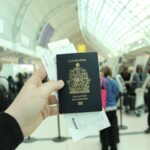
    For the first time on record, Canadian cities hold more top-ten positions than America in the ranking of busiest international air routes into Mexico. According to data released by Mexico’s Federal Civil Aviation Agency (AFAC), five of the ten busiest international corridors now connect Canadian airports with Mexican destinations, with the Torontoto Cancún route topping the list as the single busiest international flight into the country.

    The Toronto to Cancún route grew 26.1% in 2025 to surpass 1.3 million passengers, while the Montreal connection climbed 24%, carrying more than 737,000 travelers. Those are the largest year-over-year increases since records began. Meanwhile, six of the ten busiest U.S. routes to Cancún lost passengers: Chicago dropped 11.7%, Dallas fell 4.5%, New York slipped roughly 4%, and Atlanta declined 2%.

    Overall, Mexico welcomed just over 2.8 million Canadian visitors in 2025, an 11% increase over the previous year, according to Mexico’s Ministry of Tourism. Of that total, 1.6 million arrived through Quintana Roo, accounting for 13.6% of all international arrivals to the state. The United States remains the overall leader by volume, with 13.7 million passengers (5.29 million to Cancún alone), followed by Canada, the United KingdomColombia, and Argentina.

    More Air Routes to Mexico Result of Boycotts of USA

    The shift didn’t happen by accident. A boycott of U.S. travel that began in early 2025, triggered by President Donald Trump’s repeated suggestions that Canada should become the 51st U.S. state, has shown no signs of slowing down. An Abacus Data poll in March 2025 found that 62% of Canadians planned to avoid traveling to the U.S. for the following year. By late 2025, Flight Centre Canada reported that bookings to U.S. destinations were down 40% year over year, with general manager Anita Emilio telling CTV News the decline was expected to continue through 2026.

    Airlines wasted no time redirecting capacity. According to aviation data from PAX News, Canada’s four largest carriers, Air CanadaWestJetPorter Airlines, and Air Transat, collectively boosted capacity to Latin America by approximately 36% for the 2025-2026 winter season while trimming more than 1,500 flights to the United States. WestJet and Air Canada together now control roughly 70% of the Canada-Mexico market. New seasonal routes, including WestJet’s direct Calgary to Cozumel service and a Winnipeg to Cancún connection, launched in late 2025, with Porter introducing its first-ever Caribbean flights from Toronto, Hamilton, and Ottawa.

    Francisco Madrid, director of STARC (a Mexican tourism research body), put the shift in perspective: for the first time in history, the busiest international air routes into Mexico are not those connecting U.S. cities, but those linking Canadian ones.

    Betting on Canada

    Tourism officials in the region are treating this as an opportunity that demands a deliberate response. Andrés Martínez Reynoso, director of the Quintana Roo Tourism Promotion Council (CPTQ), confirmed plans to double promotional spending in Canada for 2026. The council is also working to increase flight frequency from the 19 Canadian cities already connected to Cancún, at a time when 17 new air routes into Cancún International Airport are being added, including five from Canada and the first ever non-stop from Dublin via Aer Lingus.

    But the boom comes with a caveat. Seven out of every ten international tourists arriving in Mexico still come from North America. The decline of South American and European markets in the 2025 rankings, with countries like Brazil and Peru both losing ground, underlines the risk of relying too heavily on a single region. The CPTQ says diversification toward those markets is now part of its strategy, alongside the Canadian push.

    For expats living along the Riviera Maya and in Cancún, the influx is already visible. More Canadian voices at airport arrivals, more WestJet and Air Canada liveries on the tarmac at CUN, and a growing snowbird population choosing Mexico over Florida and Arizona

    Whether the trend holds will depend in part on the political temperature between Ottawa and Washington, but for now, Canada has quite literally taken the top spot on the departure board.

  • Mexico City Smog Sets Off ‘Double No Driving Day’ Contingency

    Mexico City Smog Sets Off ‘Double No Driving Day’ Contingency

    Millions of drivers in the Mexico City metropolitan area faced expanded traffic restrictions Friday as environmental authorities kept a Phase 1 pollution contingency in place.

    The Megalopolis Environmental Commission (CAMe) said high ozone concentrations across the Valley of Mexico showed no signs of easing, blaming low wind, strong sunshine and temperatures around 80°F for trapping pollutants close to the ground. That meant a “Doble Hoy No Circula” — or double no-driving day — remained in effect from 5 a.m. to 10 p.m.

    Under the expanded restrictions, all vehicles with hologram 2 verification stickers were barred from the road, along with hologram 1 vehicles whose plates end in 1, 3, 5, 7, 9 or 0. Vehicles with hologram 0 and 00 stickers and blue engomado decals with plates ending in 9 or 0 were also pulled from circulation. Cars without any hologram — including those with out-of-state or foreign plates — could not drive at all.

    Electric and hybrid vehicles, emergency services, authorized school transport and motorcycles were exempt.

    What is the Hoy No Circula program?

    Mexico City’s no-driving day program dates back to 1989, when record ozone levels pushed the government to act fast. The idea was simple: ban most private cars from the road one weekday per week based on the last digit of their license plates. Officials hoped it would cut weekday traffic by roughly 20%.

    The program applies across all 16 boroughs of Mexico City and 18 neighboring municipalities in the State of Mexico. On a normal day, vehicles are restricted based on a color-coded sticker system tied to emissions verification. Newer, cleaner cars with “00” or “0” hologram stickers can generally drive without limits, while older or higher-emitting vehicles face one restricted weekday and some Saturday bans.

    When pollution spikes — as it did this week — authorities escalate the restrictions. A Phase 1 contingency doubles the number of cars pulled off the road. In the worst cases, a Phase 2 can restrict even more vehicles.

    Does it work?

    Researchers have long debated the question. A widely cited study from the University of Chicago found no evidence that the restrictions improved air quality, noting many households simply bought a second car — often an older, dirtier one — to dodge the weekly ban.

    Still, the program has survived more than three decades and inspired similar efforts in Bogotá, Santiago and São Paulo. Authorities have gradually tightened it, lowering the ozone threshold for triggering a contingency and adding Saturday restrictions for high-emission vehicles.

    Mexico City sits in a mountain-ringed basin at about 7,350 feet above sea level. Roughly 5.5 million vehicles circulate daily, and the dry season — typically February through May — brings the worst air quality of the year. High-pressure systems trap pollutants in the valley, and intense sunlight drives the chemical reactions that create ground-level ozone.

    On Jan. 1, a new expansion of Hoy No Circula took effect across 22 municipalities in the Valley of Toluca and Santiago Tianguistenco, restricting vehicles with hologram 1 and 2 stickers six days a week. That same day, CAMe activated a separate contingency for fine particulate matter driven by New Year’s Eve fireworks.

    CAMe said the current contingency would remain in place until atmospheric conditions improve.

    What to know about Mexico City’s Doble Hoy No Circula:

    • The program bans certain vehicles from driving between 5 a.m. and 10 p.m. based on plate numbers and emissions stickers.
    • A “double” restriction kicks in when ozone exceeds 150 parts per billion.
    • Fines for violations can run several thousand pesos, and vehicles may be towed and impounded.
    • Electric vehicles, hybrids, emergency services and motorcycles are exempt.
    • The dry season, roughly February through May, is the worst period for ozone in the Valley of Mexico.
    • Residents can check real-time air quality through the city’s “Aire” app or the CAMe website.
  • Face Mask and Antiviral Sales Jump 17% as Mexico Measles Outbreak Spreads

    Face Mask and Antiviral Sales Jump 17% as Mexico Measles Outbreak Spreads

    Sales of face masks, hand sanitizer and common medications have surged across Mexico’s pharmacy chains as a measles outbreak that began last year continues to grow, with confirmed cases now reported in all 32 states.

    The National Union of Pharmacy Businesses (Unefarm) reported a 17% spike in demand for face masks, antibacterial gel, ibuprofen, paracetamol, antivirals and antibiotics starting last weekend and picking up steam on Monday. The increase is tied directly to rising measles cases across the Mexico City metropolitan area and several other states.

    Juvenal Becerra Orozco, president of Unefarm, said the buying trend is being driven by two things: parents stockpiling supplies out of concern, and schools in several states now requiring students to wear masks. “Parents are in a bit of a panic and are buying face masks as reserves, along with ibuprofen, antibiotics or paracetamol,” Becerra Orozco said.

    National outbreak grows

    Mexico has confirmed more than 9,000 measles cases since the outbreak began in early 2025, with 28 deaths across seven states. The surge originally centered in the northern border state of Chihuahua, where officials traced the outbreak to an unvaccinated 8-year-old Mennonite boy who had visited relatives in Seminole, Texas.

    Chihuahua still accounts for nearly half of all confirmed cases since 2025, but the western state of Jalisco has become the current epicenter. Jalisco alone has logged more than 1,600 confirmed cases in 2026 — roughly 58% of this year’s national total. Schools in Guadalajara, Mexico’s second-largest city, have made face masks mandatory.

    The state of Mexico, which surrounds the capital on three sides, announced this week it is screening students’ temperatures at school entrances and ramping up vaccination campaigns. Mexico City has launched an aggressive vaccination push after confirming more than 160 cases.

    Through Feb. 6, there were more than 2,100 confirmed cases nationwide in 2026 and nearly 6,000 suspected cases.

    Pharmacy supply holding — for now

    Across Unefarm’s more than 5,600 affiliated pharmacies in 18 states, supplies remain adequate. Pharmacy owners have increased their orders to stay ahead of demand, and prices have held steady so far. Becerra Orozco compared the current situation to the early days of the Covid-19 pandemic, when demand for similar products spiked 70% to 80% almost overnight, causing widespread shortages at laboratories and pharmacies.

    The current 17% increase is specific to measles-related buying, he said, though it overlaps with the winter respiratory illness season, which was already driving higher sales of some medications.

    Vaccination campaign accelerates

    Deputy Health Minister Ramiro López Elizalde said this week that Mexico has 28 million vaccine doses ready for immediate use, on top of the 14.3 million already administered since 2025. The priority group is children ages 6 months to 12 years.

    The state of Mexico reported that within five days of launching its vaccination week, it had administered 352,111 doses covering measles, influenza, Covid-19, rubella, pneumococcal disease, tetanus, hexavalent and rotavirus vaccines. Officials expected to hit their 400,000-dose target by Thursday.

    Yucatán Peninsula largely spared

    In Southeast Mexico, the Yucatán Peninsula has experienced minimal impact to date. Yucatán state has confirmed only five cases since the outbreak began—three in 2026 and two in 2025 —in the municipalities of Mérida, Kanasín, and Izamal. That represents 0.05% of the national total, the lowest incidence rate in the country.

    Campeche has recorded 14 confirmed cases and Quintana Roo has 12. Quintana Roo recently joined the national vaccination campaign, with authorities focusing on schools and rural communities.

    The Pan American Health Organization issued an epidemiological alert on Feb. 4, calling on countries across the Americas to intensify surveillance and vaccination. PAHO noted that measles cases in the first three weeks of 2026 were 43 times higher than the same period in 2025. Among confirmed cases with vaccination data, 78% were unvaccinated.

    A PAHO panel is expected to convene on April 13 to review whether Mexico and the United States will lose their measles-free status — a designation Mexico has held for three decades. The meeting falls less than two months before the 2026 FIFA World Cup, which Mexico is co-hosting.

    Measles in Mexico: Key Facts

    • More than 9,000 confirmed cases since early 2025; 28 deaths
    • Jalisco is the current epicenter with 58% of 2026 cases
    • All 32 states have reported confirmed cases
    • 28 million vaccine doses available for immediate use
    • Priority vaccination group: children ages 6 months to 12 years
    • The MMR vaccine is 98% effective against measles
    • Yucatán state: 5 confirmed cases, lowest rate in the country
    • PAHO will review Mexico’s measles-free status on April 13
  • Is Angelina Jolie in Tulum Scouting Locations for Her Next Film?

    Is Angelina Jolie in Tulum Scouting Locations for Her Next Film?

    Photo: Luan Fonseca / Unsplash

    Unconfirmed reports out of Quintana Roo suggest that two of Hollywood‘s biggest names may be eyeing Tulum as the backdrop for a new film project. According to multiple Mexican news outlets, Angelina Jolie and Salma Hayek Pinault were recently spotted visiting natural locations in the area, including the popular Cenote Casa Tortuga park, located a few miles north of Tulum. 

    Social media posts showing security details and what appeared to be production crew members quickly fueled speculation that the pair was scouting, and possibly even filming, scenes for an upcoming and as yet unspecified movie. Neither actress nor any production company has officially confirmed the project. 

    Despite all the speculation and rumors, the buzz has been enough to put Tulum’s growing profile as an international film location squarely back in the spotlight. And for a town that has steadily built its reputation beyond sun-and-sand tourism, the prospect of a Jolie-Hayek collaboration filming among its jungle cenotes and white-sand coastline would represent a significant milestone.  

    Angelina Jolie in Tulum: What We Know So Far

    Regional news outlet Marcrix Noticias reported that both actresses toured several natural areas across the Mexican Caribbean as part of what it described as location exploration and filming for an upcoming Hollywood production. The report specifically named Cenote Casa Tortuga, a natural park featuring four cenotes, among them Cenote WishoCenote CampanaCenote Jaguar, and Cenote Tres Zapotes, as a primary filming location. The park features both open-air sinkholes and cave cenotes with ancient stalactites and stalagmites, offering a range of dramatic natural backdrops.

    La Jornada Maya, another regional publication, added that sources close to the production indicated the cenote had made a “particularly favorable impression” on both Jolie and Hayek, who reportedly considered it ideal for filming key scenes.

    The Tulum Times reported that the visit was conducted discreetly, with limited access to certain areas but without causing major disruptions to tourists visiting the cenote park.

    A Friendship Forged on Screen

    Jolie and Hayek’s professional relationship dates to Marvel‘s Eternals in 2021, directed by Chloé Zhao. Since then, the two have developed a close personal friendship. Hayek starred in Jolie’s directorial effort Without Blood, which premiered at the Toronto International Film Festival in September 2024 alongside Demián Bichir.

    The pair also made headlines in July 2025 when they were spotted traveling on a commercial flight from Mexico City to Veracruz, Hayek’s home state. That visit included a meeting with Veracruz Governor Rocío Nahle and the state’s Secretary of Culture, Xóchitl Molina, generating similar speculation about a possible film project.

    Tulum’s Growing Appeal to Filmmakers

    Tulum is no stranger to the camera. Quentin Tarantino‘s Grindhouse filmed scenes there, and the 1984 thriller Against All Odds starring Jeff Bridges used the clifftop Mayan ruins as a key location. Netflix also shot The Christmas Chronicles: Part Two in the Riviera Maya region. The combination of jungle, cenotes, Caribbean coastline, and the archaeological zone gives location scouts a rare variety of settings within a compact area.

    Tulum has recently been ranked as the second most recognized tourism brand in the Mexican Caribbean, trailing only Cancún, according to the Quintana Roo Tourism Promotion Council. A major Hollywood production filming here would only reinforce that momentum.

    What It Could Mean for the Community

    Local business owners and tourism operators said that a production of this scale could generate both immediate economic benefits and a longer-term boost once the finished film reaches international audiences. Executives at Casa Tortuga noted that the attention helps diversify Tulum’s appeal, positioning its cenotes and jungle landscapes as cinematic assets.

    For now, the project remains unconfirmed. But if Jolie and Hayek do choose Tulum for their next collaboration, it would mark one of the highest-profile film shoots the town has ever hosted.