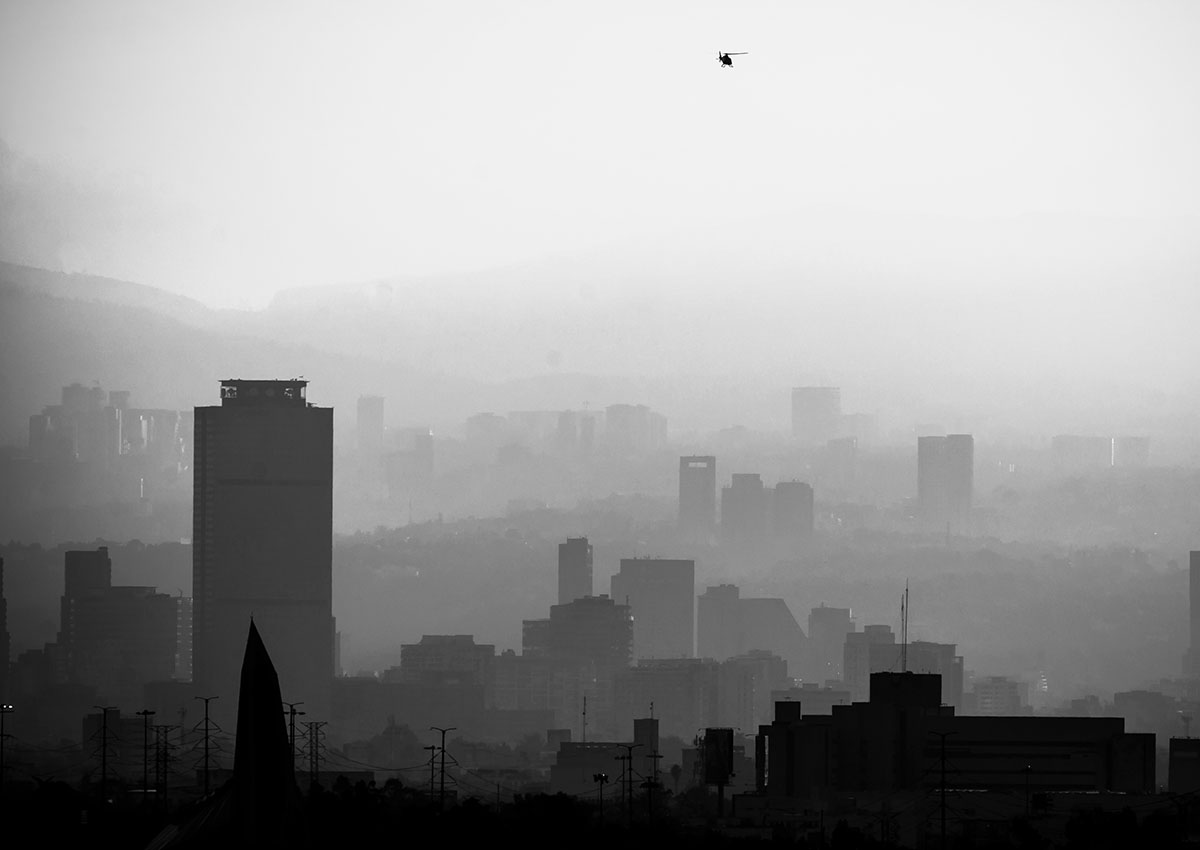
Millions of drivers in the Mexico City metropolitan area faced expanded traffic restrictions Friday as environmental authorities kept a Phase 1 pollution contingency in place.
The Megalopolis Environmental Commission (CAMe) said high ozone concentrations across the Valley of Mexico showed no signs of easing, blaming low wind, strong sunshine and temperatures around 80°F for trapping pollutants close to the ground. That meant a “Doble Hoy No Circula” — or double no-driving day — remained in effect from 5 a.m. to 10 p.m.
Under the expanded restrictions, all vehicles with hologram 2 verification stickers were barred from the road, along with hologram 1 vehicles whose plates end in 1, 3, 5, 7, 9 or 0. Vehicles with hologram 0 and 00 stickers and blue engomado decals with plates ending in 9 or 0 were also pulled from circulation. Cars without any hologram — including those with out-of-state or foreign plates — could not drive at all.
Electric and hybrid vehicles, emergency services, authorized school transport and motorcycles were exempt.
What is the Hoy No Circula program?
Mexico City’s no-driving day program dates back to 1989, when record ozone levels pushed the government to act fast. The idea was simple: ban most private cars from the road one weekday per week based on the last digit of their license plates. Officials hoped it would cut weekday traffic by roughly 20%.
The program applies across all 16 boroughs of Mexico City and 18 neighboring municipalities in the State of Mexico. On a normal day, vehicles are restricted based on a color-coded sticker system tied to emissions verification. Newer, cleaner cars with “00” or “0” hologram stickers can generally drive without limits, while older or higher-emitting vehicles face one restricted weekday and some Saturday bans.
When pollution spikes — as it did this week — authorities escalate the restrictions. A Phase 1 contingency doubles the number of cars pulled off the road. In the worst cases, a Phase 2 can restrict even more vehicles.
Does it work?
Researchers have long debated the question. A widely cited study from the University of Chicago found no evidence that the restrictions improved air quality, noting many households simply bought a second car — often an older, dirtier one — to dodge the weekly ban.
Still, the program has survived more than three decades and inspired similar efforts in Bogotá, Santiago and São Paulo. Authorities have gradually tightened it, lowering the ozone threshold for triggering a contingency and adding Saturday restrictions for high-emission vehicles.
Mexico City sits in a mountain-ringed basin at about 7,350 feet above sea level. Roughly 5.5 million vehicles circulate daily, and the dry season — typically February through May — brings the worst air quality of the year. High-pressure systems trap pollutants in the valley, and intense sunlight drives the chemical reactions that create ground-level ozone.
On Jan. 1, a new expansion of Hoy No Circula took effect across 22 municipalities in the Valley of Toluca and Santiago Tianguistenco, restricting vehicles with hologram 1 and 2 stickers six days a week. That same day, CAMe activated a separate contingency for fine particulate matter driven by New Year’s Eve fireworks.
CAMe said the current contingency would remain in place until atmospheric conditions improve.
What to know about Mexico City’s Doble Hoy No Circula:
- The program bans certain vehicles from driving between 5 a.m. and 10 p.m. based on plate numbers and emissions stickers.
- A “double” restriction kicks in when ozone exceeds 150 parts per billion.
- Fines for violations can run several thousand pesos, and vehicles may be towed and impounded.
- Electric vehicles, hybrids, emergency services and motorcycles are exempt.
- The dry season, roughly February through May, is the worst period for ozone in the Valley of Mexico.
- Residents can check real-time air quality through the city’s “Aire” app or the CAMe website.