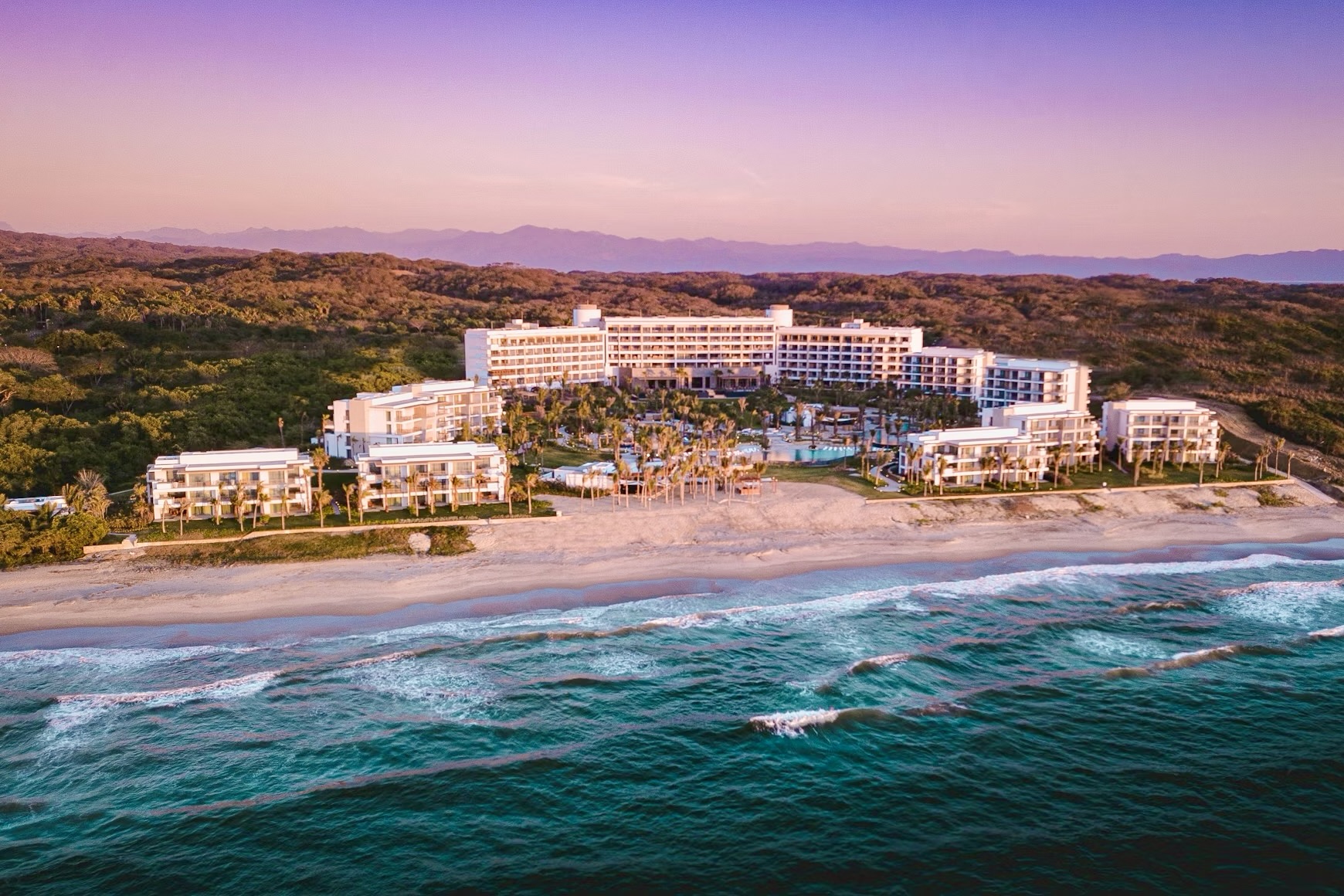
Photo: Hotel Conrad in Riviera Nayarit / Fernando Gutierrez / Unsplash
The coastline north of Punta Mita has long been considered one of Mexico‘s last accessible frontiers. Picture jungle-covered ridges dropping into the Pacific, estuaries where herons wade among crocodiles, and fishing boats pulled onto palm-shaded beaches. For decades, reaching this part of Nayarit required patience and commitment, with travelers flying into Puerto Vallarta‘s international airport before enduring a two-hour (or longer) drive north on winding roads.
That equation is changing rapidly. A combination of expanded air service through Tepic‘s upgraded international airport, major highway improvements, and the planned Riviera Nayarit Express shuttle system is making this stretch of coast dramatically easier to reach. But the real story for travelers and expats lies in what awaits on the ground: protected natural reserves, uncrowded beach towns, and some of the most ambitious luxury hotel developments anywhere in the Americas.
Getting to Riviera Nayarit
Tepic-Riviera Nayarit International Airport (TPQ) has undergone a $249 million transformation that positions it as a genuine alternative to Puerto Vallarta for reaching the northern Riviera Nayarit. The project included a lengthened runway capable of handling long-haul aircraft, a 42-meter control tower (the third tallest in Mexico), and a new terminal building. International service launched in July 2025 with Volaris operating three weekly nonstop flights from Los Angeles. By December 2025, the route map expanded considerably: United Airlines began twice-weekly service from Houston, WestJet launched the first-ever direct connection between Canada and Nayarit with weekly flights from Calgary, and Air Canada added service from Vancouver.
For travelers flying into Tepic, the state government has announced the Riviera Nayarit Express, a shuttle system connecting the airport directly to coastal destinations including San Blas, Rincón de Guayabitos, Sayulita, Punta Mita, and Nuevo Nayarit. The service is designed to eliminate the need for car rentals or taxis for those heading straight to the beach.
Highway improvements are also reshaping travel times. A new 20-mile stretch of the Guadalajara-Puerto Vallarta highway between La Florida and La Cruz de Huanacaxtle has cut the drive between Puerto Vallarta and the luxury Mandarina development to approximately 40 minutes. Additional highway sections extending farther north were scheduled for completion by late 2025, with a long-planned Jala-Bahía de Banderas freeway eventually expected to reduce drive times from Guadalajara to the Riviera Nayarit beaches from five hours to around two.
San Blas: Where History Meets Ecology
Travelers seeking both cultural depth and ecological immersion will find San Blas a compelling starting point. This small town served as one of the busiest ports during the Spanish colonial era when Mexico was known as New Spain. Today, San Blas draws visitors for its mangrove-lined waterways and reputation as one of Mexico’s premier birding destinations.
La Tovara National Park, accessible only by boat, protects an extensive mangrove forest and freshwater spring system that feeds approximately six kilometers of natural channels. The area shelters over 300 bird species, with roughly 80% of North America’s migratory birds passing through during winter months. Boat tours navigate through vegetation-covered passages where sunlight barely penetrates, passing crocodile habitats and stopping at natural swimming pools surrounded by wooden structures built for the Spanish film, Cabeza de Vaca.
San Blas also serves as one of two departure points for the Islas Marías, an archipelago located roughly 60 miles off the Pacific coast. This former penal colony, which operated from 1905 until 2019, has been reinvented as the Muros de Agua José Revueltas Biosphere Reserve and opened for tourism in 2022. The islands are often called the Galápagos of Mexico due to their endemic species, including the Tres Marías cottontail rabbit, the Tres Marías raccoon, and the Tres Marías hummingbird.
Visiting requires booking through an all-inclusive government-regulated package that includes ferry transportation (departing Fridays, returning Sundays, alternating between San Blas and Mazatlán), accommodations in renovated former prison buildings, meals, and guided tours. Packages start around 3,500 pesos (approximately $210 USD) for tourist-class ferry seating, plus food costs of about 1,900 pesos. Activities range from touring the former prison facilities to hiking to a 60-foot Cristo Rey statue, snorkeling in clear Pacific waters, and observing endemic wildlife.
Rincón de Guayabitos: The Family-Friendly Alternative
South of San Blas, Rincón de Guayabitos offers one of the Riviera Nayarit’s most accessible beach getaways for families and budget-conscious travelers. The town sits on a wide, shallow bay with calm waters, drawing Canadian snowbirdsduring winter months and Mexican families year-round.
Accommodation options range from midrange hotels like the Costa Alegre Hotel & Suites and the Casablanca Resortto several all-inclusive properties operated by Decameron, including the Isla Coral, La Marina, and Los Cocos resorts. The variety provides genuine value compared to the higher-priced Puerto Vallarta hotel zone, with beachfront rooms available from around $50-150 USD per night, depending on the property and season.
During the day, visitors can join whale-watching tours during migration season (December through March), take boat trips to Isla del Coral for snorkeling among colorful fish and sea turtles, or drive 20 minutes south to the quieter beach village of Los Ayala. The Tianguis Market in town offers souvenirs, including hand-painted ceramics and beaded art created by the indigenous Huichol people.
Tips & Tactics
Best Time to Go: The dry season runs from mid-October through April, with December through March being peak season. Whale-watching is best December through March. The rainy season (May through mid-October) brings afternoon showers but also lower prices and fewer crowds.
Getting to Riviera Nayarit:
- Via Tepic (TPQ): Direct flights from Los Angeles (Volaris), Houston (United), Calgary (WestJet), and Vancouver (Air Canada). The airport is approximately 40-90 minutes from coastal destinations, depending on location.
- Via Puerto Vallarta (PVR): More flight options but longer drives to northern Nayarit properties. Puerto Vallarta is approximately 45 minutes to Mandarina, 90 minutes to Siari, and 2+ hours to San Blas.
- Ground Transportation: Rental cars available at both airports. Taxis and the forthcoming Riviera Nayarit Express shuttle offer alternatives. Local buses connect coastal towns but require