Category: News

  • Bomb Scare Grounds Viva Aerobus Flight at Mexico City Airport

    Bomb Scare Grounds Viva Aerobus Flight at Mexico City Airport

    Mexico City airport
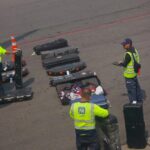
    Luggage is inspected on the tarmac at Mexico City airport during a bomb scare. Photo: Social media

    A bomb threat against a Viva Aerobus aircraft parked at Mexico City’s Benito Juárez International Airport triggered a full security response Saturday afternoon, mobilizing multiple specialized units before authorities cleared the plane and found nothing.

    The alert involved aircraft registration XA-VBM, which had arrived on flight VB1029 from Cancún and was preparing to depart as flight VB1104 to Mérida. The plane was parked at position 13 in Terminal 1 when the airline reported the threat to airport authorities.

    Units from Three Agencies Sweep the Aircraft

    Airport security personnel (AVSEC), members of the Naval Airport Protection Unit, and specialists from the Búsqueda, Localización y Neutralización de Artefactos Explosivos (BLONAE) team — a bomb disposal unit — carried out a thorough inspection of the aircraft and all passenger luggage. Working under the coordination of the airport’s General Command, the teams found no trace of any explosive device.

    Once the all-clear was given, Viva Aerobus confirmed that its security protocols had been activated immediately after receiving the report and that crew members resumed normal operations after receiving official authorization to do so. The airline said boarding of the Mérida-bound flight proceeded without further incident.

    The airport, known by its initials AICM, announced the outcome via its official social media channels, confirming there were no injuries and no devices found.

    False Alarms Are a Known Risk

    Bomb hoaxes at airports impose significant costs even when they turn out to be nothing — grounded aircraft, delayed passengers, and the diversion of emergency personnel from other duties. Saturday’s incident appeared to resolve quickly, with no widespread disruption to other flights reported.

    The AICM is currently in a period of intense preparation. With Mexico co-hosting the 2026 FIFA World Cup alongside the United States and Canada, the airport is expected to handle millions of additional travelers in the coming weeks. Officials recently approved an increase in hourly takeoff and landing slots — from 44 to 46 — to help manage peak summer demand. A project to install more than 3,600 AI-enabled surveillance cameras throughout the airport is scheduled for completion later this month.

    Saturday’s real-world response echoed a simulated bomb exercise the AICM conducted in August 2025 aboard the Aerotrén, the shuttle connecting Terminal 1 and Terminal 2. That drill was designed to identify gaps in the airport’s emergency plan ahead of the World Cup.

    Not Viva Aerobus’s First Dramatic Flight Story

    The incident is only the latest in a series of newsworthy events for the Monterrey-based budget carrier. Last year, a Viva Aerobus flight from Miami was forced to divert to Havana after experiencing engine trouble over the Caribbean, stranding more than 200 passengers.

    The airline operates dozens of routes across Mexico and to the U.S. and Central America, including regular service between Cancún, Mérida, and Mexico City.

    No arrests were reported in connection with Saturday’s threat, and authorities had not publicly announced any investigation into its origin as of Saturday evening. The AICM did not identify who made the threat or through what channel it was communicated.

    For more on Mexico City’s airport, see coverage from Expansión.


    At a Glance

    • Date: Saturday, May 2, 2026
    • Airport: Benito Juárez International Airport (AICM), Mexico City, Terminal 1
    • Airline: Viva Aerobus; aircraft registration XA-VBM
    • Flights affected: VB1029 (from Cancún) and VB1104 (bound for Mérida)
    • Response teams: AVSEC, Naval Airport Protection Unit, BLONAE bomb disposal unit
    • Outcome: No explosive device found; no injuries; flight resumed

    Source: Expansión, La Jornada, AICM official statement

  • Citigroup Sells Another Chunk of Banamex — What It Means for Your Account

    Citigroup Sells Another Chunk of Banamex — What It Means for Your Account

    Banamex is becoming a fully Mexican bank. For the millions of customers it serves, including expats and foreign residents who have relied on its Citigroup connection for years, that transition just moved significantly closer to completion.

    Citigroup confirmed Wednesday that it has closed the sale of 22.6% of Grupo Financiero Banamex to a group of institutional investors and family offices, including Blackstone, General Atlantic, Afore Sura, the Qatar Investment Authority, and others. The transaction finalizes most of the 24% equity stake Citi announced in February for approximately 43 billion pesos (about US$2.5 billion). The remaining 1.4% is expected to be sold through a public offering in the coming months.

    A 4-Year Exit, Nearly Complete

    The sale is the culmination of a process Citigroup began in January 2022, when it announced plans to exit Mexico’s consumer banking market as part of CEO Jane Fraser’s broader effort to simplify the company and focus on institutional clients. What followed was a drawn-out search for buyers, failed negotiations, regulatory hurdles, and repeated delays.

    The breakthrough came in stages. In December 2025, prominent Mexican businessman Fernando Chico Pardo — chairman of airport operator Grupo Aeroportuario del Sureste — purchased a 25% stake for approximately US$2.3 billion, becoming Banamex’s largest individual shareholder and chairman of its board. The latest sale brings the total divestiture to 49%, just below the threshold that would require Citi to deconsolidate the bank from its balance sheet.

    Citi retains just over 50% for now. The company has said it does not plan further sales this year, giving the new investor group time to focus on operations before an eventual initial public offering, expected to list Banamex on the Mexican Stock Exchange.

    “We are pleased to finalize these investments from a group of renowned investors,” said Ernesto Torres Cantú, head of Citi International, pointing to confidence in the bank’s strategic direction and Mexico’s financial sector overall.

    Chico Pardo, who participated in selecting the new minority investors, added that he takes “great pride in these partners’ commitment to Mexico.”

    What Changes for Account Holders

    Banamex, founded in 1884 as Banco Nacional de México, is the country’s fourth-largest financial group with around 1,300 branches, 9,000 ATMs, and 13 million active clients.

    For most everyday customers, the practical impact will be minimal in the short term. Accounts, services, and branch operations continue as normal. But the longer-term picture matters particularly for foreign residents.

    For years, Citigroup’s ownership of Banamex gave American expats and international residents a sense of familiarity. In practical terms, U.S. Citibank account holders could make ATM withdrawals at Banamex branches without fees. As Citi’s ownership share diminishes toward zero, that arrangement becomes less certain. The bank has already rebranded from Citibanamex to simply Banamex, and a recent update reportedly removed the app’s English-language option.

    As a guide to banking for expats notes, Banamex’s reach is unmatched, but foreign residents should be aware they are now banking with an institution in the middle of its most significant structural change in two decades.

    Also announced last week: Manuel Romo is stepping down as Banamex’s director general. He will be replaced by Edgardo del Rincón, who previously served as director of Banbajío, with the transition expected in May.

    Banamex at a Glance

    • Founded: 1884
    • Rank: 4th-largest financial group in Mexico by total assets
    • Active clients: 13 million retail banking customers
    • Branches: approximately 1,300
    • ATMs: approximately 9,000
    • Majority shareholder: Fernando Chico Pardo (25%), with Blackstone, General Atlantic, Qatar Investment Authority, Afore Sura, and others holding additional minority stakes
    • Citi’s remaining ownership: just over 51%
    • IPO: planned, timing subject to market conditions and regulatory approvals

    With information from El País

  • Mexico Celebrates its 100th Día del Niño

    Mexico Celebrates its 100th Día del Niño

    niño
    The core purpose of establishing the day was to remind citizens of children’s rights and to encourage the creation of happy childhoods.

    Día del Niño, or Children’s Day, is an annual celebration in Mexico held every April 30 dedicated to honoring children, recognizing their rights, and promoting their well-being. Unlike holidays centered around religious or historical events, el Día del Niño focuses purely on childhood joy, play, and making children feel valued

    The day serves as a reminder that children require protection and that society has an obligation to ensure their healthy development. But over time, it has turned into more than that, a day to celebrate children, often with a special outing or treats. 

    History of Día del Niño

    The origins of Día del Niño trace to the early 20th-century global movement for children’s rights. In 1924, the League of Nations adopted the Declaration of the Rights of the Child, an international agreement recognizing that children require special safeguards. Mexico embraced this declaration and formally established April 30 as a day to celebrate and advocate for children.

    The declaration of Día del Niño was made by the Secretary of Public Education in 1924. Some sources cite 1925 as the year the tradition began, following Mexico’s recognition of the Geneva Convention’s focus on child protection. Regardless of the exact year, the holiday has been observed consistently since the mid-1926, making 2026 approximately its 100th celebration.

    How Día del Niño Is Celebrated

    Día del Niño is not an official public holiday in Mexico—businesses and government offices remain open—but schools typically suspend regular classes to hold festivities.

    Schools are the primary site of celebration. Regular academic activities are replaced with parties, games, music, and food. Parents and teachers organize these events together. Typical school activities include: Student performances, games, reciting poems, and sharing or performing dances.

    In some schools, a parent committee collects toy donations from local businesses, government offices, and commercial centers so every enrolled student receives a present.

    Some parents celebrate by giving small gifts—toys, books, balloons, or candy—or by taking children on special outings. In recent times, these include visits to zoos, the movie theater, carnivals, arcades, and restaurants. 

    Local governments and community organizations often organize fairs, performances, and cultural events in public spaces. Municipalities may host free carnivals with mechanical rides, face painting, and costumed characters.

    Economic Impact

    Día del Niño generates significant commercial activity. For 2026, the National Chamber of Commerce, Services, and Tourism of Mérida (CANACO SERVYTUR) estimated that the celebration would generate approximately 824 million pesos in economic impact across the state of Yucatán.

    For families nationwide, the National Alliance of Small Merchants (ANPEC) estimated that the average family spending for Día del Niño in 2026 ranges from just over 1,000 pesos to several thousand pesos, depending on the means of the family and how the family chooses to celebrate. 

    Beyond the festivities, Día del Niño serves an important social function. Psychologists note that children never forget these celebrations—the memories remain for years and strengthen children’s sense of being valued. The games and activities help develop psychological processes, form new personality traits, and prepare children for more complex tasks. The emphasis is less on material gifts and more on making children feel seen, valued, and celebrated.

    This being said, it’s important to acknowledge that for many children in México, many children do not have their basic needs are not met, let alone special days to celebrate them.

  • U.S. Charges Sinaloa Governor With Drug Trafficking in Cartel Case

    U.S. Charges Sinaloa Governor With Drug Trafficking in Cartel Case

    Rubén Rocha Moya
    Rubén Rocha Moya. Photo: Courtesy

    The governor of Mexico’s Sinaloa state is facing U.S. federal drug charges, marking one of the most significant corruption cases to reach a sitting Mexican official in years.

    Rubén Rocha Moya, who has served as Sinaloa’s governor since November 2021, was among 10 current and former Mexican officials charged Wednesday in a U.S. indictment unsealed in Manhattan federal court. Prosecutors allege that Rocha and the others conspired with leaders of the Sinaloa Cartel to import massive quantities of narcotics into the United States in exchange for political support and cash bribes. None of the defendants is currently in U.S. custody.

    What the Indictment Alleges

    The charges, announced by the U.S. Attorney’s Office for the Southern District of New York and the DEA, allege that the defendants collectively received millions of dollars from the Chapitos, the faction of the Sinaloa Cartel run by the sons of Joaquín “El Chapo” Guzmán, whose father is serving a life sentence in a U.S. prison. In exchange, the officials allegedly used their government and law enforcement positions to shield cartel operations, share sensitive information, and facilitate drug shipments of fentanyl, heroin, cocaine and methamphetamine into the United States.

    One co-defendant, Juan Valenzuela Millán, a senior commander in the Culiacán Municipal Police, is accused of accepting more than $1,600 a month from the Chapitos faction in exchange for conducting arrests, kidnappings and killings on the cartel’s behalf. In October 2023, according to the indictment, Millán helped the Chapitos abduct a DEA confidential source and that source’s relative, who was subsequently tortured and killed.

    Political Ties

    At least three of those charged — Rocha, the mayor of Culiacán (Sinaloa’s capital), and a senator — are affiliated with Morena, the party of Mexican President Claudia Sheinbaum. The governor’s office said Wednesday it had not yet been notified of the accusations and could not offer additional comment. Sheinbaum’s administration was not named in the indictment.

    U.S. Attorney Jay Clayton framed the charges in sweeping terms. “The Sinaloa Cartel would not operate as freely or successfully without corrupt politicians and law enforcement officials on their payroll,” he said.

    U.S. Ambassador to Mexico Ron Johnson called combating corruption and transnational crime a shared priority, adding that citizens on both sides of the border “deserve” accountability.

    A Cartel Already in Turmoil

    The charges come days after the U.S. ambassador said Washington would launch an anti-corruption campaign targeting Mexican officials with alleged cartel ties. The Sinaloa Cartel was designated a Foreign Terrorist Organization by the U.S. State Department in February 2025. The cartel has been in internal turmoil since mid-2024, when founding boss Ismael “El Mayo” Zambada was arrested in the United States after allegedly being lured into a trap by Joaquín Guzmán López, a son of El Chapo. Bloody territorial fighting erupted in Culiacán in September 2024, leaving much of the city paralyzed for weeks.


    Fast Facts

    • Gov. Rubén Rocha Moya of Sinaloa charged by U.S. federal prosecutors Wednesday
    • 10 current and former Mexican officials indicted in total
    • Charges unsealed in Manhattan federal court
    • Defendants allegedly received millions from the Chapitos cartel faction
    • Drugs cited: fentanyl, heroin, cocaine and methamphetamine
    • None of the defendants are in U.S. custody as of Wednesday
    • Rocha has been Sinaloa’s governor since November 2021
    • At least 3 of those indicted are members of President Sheinbaum’s Morena party

    Source: Associated Press, U.S. Department of Justice

  • Mexico’s Spring Heat Wave: What to Expect — and How to Stay Cool
    Mexico’s Spring Heat Wave: What to Expect — and How to Stay Cool

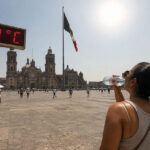
    Stay cool! Mexico is having a spring heat wave. AI image generated for Mexico Tribune

    Spring in Mexico brings reliable sunshine, dry skies, and, increasingly, dangerous heat. This week, Mexico City’s civil protection agency issued a formal advisory warning residents of a heat wave running through Thursday — with daytime highs projected between 29 and 32 degrees Celsius (84 to 90 Fahrenheit) across the capital, along with strong wind gusts and elevated UV radiation levels.

    Mexico City isn’t alone. The advisory noted heat affecting several other states, including Tlaxcala, the State of Mexico, Hidalgo, Veracruz, and Tabasco. On the Yucatán Peninsula, where spring heat is a fact of life, temperatures in April regularly climb to 33 to 36 degrees Celsius (91 to 97 Fahrenheit) across the region, with inland areas like Mérida often running hotter.

    April and May are statistically the most heat-prone months in Mexico. According to the country’s National Meteorological Service (SMN), roughly 71% of Mexico’s annual heat waves occur during these two spring months. That pattern has been intensifying: in spring 2024, the country endured three consecutive heat waves, with temperatures exceeding 45 C (113 F) in parts of the north and records broken across multiple cities. Heat-related deaths that season surpassed 125, according to World Weather Attribution researchers, who linked the severity of that event directly to climate change.

    For the Peninsula, where the dry season wraps up just as temperatures peak, the weeks before the rainy season begins in June represent an annual challenge. Mérida’s April highs regularly top 35 C (95 F), and inland areas can push well above 40 C (104 F) on the hottest days. Humidity, still relatively low in April, rises fast as summer approaches, making conditions feel more oppressive.

    There’s something worth understanding about how this heat behaves. A high-pressure system trapping warm air close to the surface — a heat dome — is typically behind the worst spikes. That’s what drove the 2024 crisis and what forecasters watch for each spring. With ocean surface temperatures in the Gulf of Mexico and Caribbean running warmer than historical averages, the conditions that fuel these systems have become more common.

    For residents and visitors across Mexico right now, civil protection authorities are recommending straightforward precautions. Yucatán Magazine has more on surviving the heat.


    Staying Safe in the Heat

    • Drink water consistently — don’t wait until you’re thirsty
    • Wear lightweight, light-colored clothing and a hat
    • Limit time outdoors between 11 a.m. and 4 p.m.
    • Apply sunscreen and reapply throughout the day
    • Avoid eating food that has been left out in the heat — spoilage accelerates rapidly
    • Check on elderly neighbors, children, and pets
    • Use air-conditioned spaces — malls, libraries, museums — during peak afternoon hours

    Those visiting archaeological sites during April and May should plan to arrive by 8 a.m. and wrap up by mid-morning. By late morning, sites with limited shade become genuinely punishing. Carrying at least two liters of water per person is not an overcaution.

    Temperatures on the Yucatán Peninsula typically ease once the rainy season begins, usually in June, when afternoon storms break the heat — though they also bring higher humidity and the beginning of hurricane season. For now, the Peninsula is in its hottest and driest stretch of the year.

    Source: Secretaría de Gestión Integral de Riesgos y Protección Civil