Category: News

  • Gunman Kills Canadian at Teotihuacán, 13 Injured

    Gunman Kills Canadian at Teotihuacán, 13 Injured

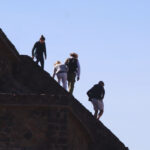
    Tourists climb the Pyramid of the Moon in Teotihuacan in 2025.
    Photo: Carlos Rosado van der Gracht / Yucatán Magazine

    A gunman opened fire Monday at the ancient pyramids of Teotihuacán, killing a Canadian woman and wounding 13 others at one of Mexico’s most visited archaeological sites before turning the weapon on himself.

    The shooting happened around 11:30 a.m. at the Pyramid of the Moon, roughly 50 kilometers (30 miles) northeast of Mexico City. According to a tour guide who spoke to the Associated Press anonymously for safety reasons, the man was standing on the pyramid’s platform when he began firing upward at tourists. As people scrambled to descend the steep stone steps, he turned and continued shooting at them.

    Witnesses described scenes of panic. Tim Chung, an American tourist visiting from Seattle, told reporters he saw a person fall from one of the viewing platforms, then heard a shot, then another fall. “I knew something bad was happening,” Chung said. A Vancouver resident named Brenda Lee, who was near a vendor’s stand when she heard what she thought were firecrackers, got a swift reality check. “Somebody asked, ‘Was that gunfire?’” she told CBC News. “And the vendor said: ‘Yes, that’s gunfire — run.’”

    Local prosecutors identified the gunman as Julio Cesar Jasso Ramirez, a Mexican national, who died from a self-inflicted gunshot wound. Security officials recovered a firearm, a knife, and live cartridges at the scene.

    Among those hospitalized were six Americans, three Colombians, two Brazilians, one Russian, and a Canadian. Mexico’s Secretary of Government said eight people remained hospitalized Monday evening.

    Canada’s Foreign Affairs Minister Anita Anand confirmed that one Canadian was killed and another wounded. “My thoughts are with their family and loved ones,” Anand wrote on social media.

    President Claudia Sheinbaum said she was in contact with the Canadian Embassy and directed federal, state, and local authorities to respond and investigate. Mexico State Gov. Delfina Gómez Álvarez said security forces would maintain a presence at the site. By late Monday, local officials described the archaeological zone as “calm and under control.”

    World Cup Timing Adds Scrutiny

    The attack lands at a sensitive moment. Mexico is co-hosting the 2026 FIFA World Cup alongside the United States and Canada this summer, and the prospect of millions of international visitors has brought renewed attention to public security. Teotihuacán, a UNESCO World Heritage Site, drew more than 1.8 million international visitors last year and is considered one of the country’s flagship tourist destinations.

    The site itself has been a cultural touchstone for tourists across the Americas and beyond. Built by three successive ancient civilizations, its two towering pyramids — the Pyramid of the Sun and the Pyramid of the Moon — attract visitors year-round, particularly during the spring equinox.

    Canada’s travel advisory for Mexico urges travelers to exercise a high degree of caution “due to high levels of criminal activity and kidnapping.” That guidance was last updated March 31, weeks before Monday’s attack.

    Authorities said the investigation is ongoing.

    At a Glance

    • What: Shooting at the Pyramid of the Moon, Teotihuacán archaeological site
    • When: Monday, April 21, around 11:30 a.m. local time
    • Dead: 1 Canadian woman; gunman (self-inflicted)
    • Injured: 13 total, including 6 Americans, 3 Colombians, 2 Brazilians, 1 Russian, 1 Canadian
    • Gunman: Identified as Julio Cesar Jasso Ramirez, Mexican national
    • Site: UNESCO World Heritage Site, ~50 km (30 miles) northeast of Mexico City; 1.8 million international visitors in 2024
    • Status: Site secured; federal, state, and local investigation underway

    Source: CNN, CBC News, PBS/AP

  • 2 US Embassy Officials Die in Chihuahua Crash After Drug Lab Raids
    2 US Embassy Officials Die in Chihuahua Crash After Drug Lab Raids

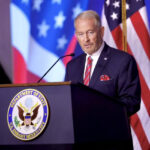
    Ronald Johnson, United States Ambassador to Mexico. Photo: Special

    A car crash in the northern Mexican state of Chihuahua on Sunday killed two U.S. Embassy instructors and two members of a Chihuahua state law enforcement agency, just hours after a joint operation dismantled a series of clandestine methamphetamine laboratories in the area.

    The four men were traveling in a convoy returning from the municipality of Morelos when the lead vehicle skidded off the road and plunged into a ravine on the Chihuahua–Ciudad Juárez highway. Chihuahua state Attorney General César Jáuregui Moreno confirmed the deaths at a Sunday press conference.

    The American victims were identified only as “instructor officers” — advisers embedded in a bilateral training program between the U.S. Embassy and Mexican law enforcement. Their names have not been publicly released. Jáuregui identified the two Mexican officials as Pedro Román Oseguera Cervantes, director of the state’s Agencia Estatal de Investigación, and his bodyguard, Manuel Genaro Méndez Montes.

    A Rare Joint Operation

    The crash followed a two-day operation on Friday and Saturday in which Chihuahua state investigators and Mexican military forces, working together with U.S. Embassy personnel, raided six clandestine synthetic drug laboratories hidden in the mountainous terrain between the towns of Guachochi and Morelos, in the rugged southwest corner of the state near the Sinaloa border. Authorities described the operation as the result of a three-month investigation. The facilities were reportedly divided into multiple sections, equipped with ovens, gas cylinders, and on-site campgrounds.

    The arrangement reflected a broader pattern of U.S.-Mexican security collaboration that has gained momentum under Mexican President Claudia Sheinbaum. The two governments have expanded joint training programs and intelligence-sharing in recent months, with U.S. officials saying the relationship has reached what they call an “unprecedented level” of cooperation. Chihuahua, which borders Texas and New Mexico, has long been one of the states most affected by drug cartel activity.

    Ambassador Responds

    U.S. Ambassador Ronald Johnson addressed the deaths in a post on X, calling them “a tragic loss” and honoring the victims for their commitment to “confronting one of the greatest challenges of our time.”

    “This tragedy is a solemn reminder of the risks faced by those Mexican and U.S. officials who are dedicated to protecting our communities,” Johnson wrote. “It strengthens our resolve to continue their mission and advance our shared commitment to security and justice.”

    The Chihuahua state attorney general’s office also issued a statement mourning Oseguera Cervantes and Méndez Montes, praising their “bravery, dedication and commitment to keeping our state safe.” As of Sunday evening, authorities had not disclosed a cause for the accident.

    The deaths come at a fraught moment in U.S.-Mexico relations. The Trump administration has pushed hard for visible results on drug interdiction and cartel disruption, linking progress on security cooperation to trade negotiations under the United States-Mexico-Canada Agreement. Mexico’s government has responded with a series of high-profile operations, including the February killing of Jalisco New Generation Cartel leader “El Mencho,” which drew praise from U.S. officials even as it set off waves of retaliatory cartel violence across several states.

    The causes of the Sunday crash are under investigation.


    At a Glance

    • 4 killed: 2 U.S. Embassy instructors, 2 Chihuahua state agents
    • Crash occurred on the Chihuahua–Ciudad Juárez highway on Sunday, April 19
    • Victims were returning from a drug lab operation in the municipality of Morelos, Chihuahua
    • 6 clandestine methamphetamine labs dismantled over 2 days following a 3-month investigation
    • Mexican officials killed: AEI Director Pedro Román Oseguera Cervantes and Officer Manuel Genaro Méndez Montes
    • U.S. victims not publicly identified; described as training advisers
    • Cause of accident still under investigation

    Source: El Universal, CNN

  • Grupo Xcaret Cancels Annual “Gran Travesía” Amidst Legal Dispute

    Grupo Xcaret Cancels Annual “Gran Travesía” Amidst Legal Dispute

    Xcaret
    Xcaret’s “Gran Travesia” pilgrimage reenactment to Cozumel has been cancelled for 2026 after a ruling by Mexico’s Supreme Court.

    Xcaret has officially announced the suspension of its annual “Travesía Sagrada” (Sacred Journey) for 2026. The decision comes as a direct response to a recent ruling by Mexico’s Supreme Court regarding the commercial use of Maya iconography, marking a significant turning point in the debate over cultural appropriation and indigenous rights in the country.

    For nearly two decades, the event—known in English as the “Gran Travesía”—has been a staple of Xcaret’s activities calendar. However, Grupo Xcaret confirmed this week that it will halt the 19th edition of the pilgrimage to prevent the company from being perceived as being in a state of “rebellion or confrontation” with federal authorities charged with protecting national heritage.

    What is the “Gran Travesía”?

    The Travesía Sagrada Maya is a large-scale reenactment of a pre-Hispanic maritime pilgrimage. Historically, the ancient Maya traveled from Pole (near present-day Xcaret) to the island of Cozumel to worship Ixchel, the goddess of fertility, the moon, and medicine.

    According to data provided by the company, the event had seen the participation of 5,322 people over its lifespan. For the now-canceled 2026 edition, 333 participants from Playa del Carmen, Cancún, Tulum, and Cozumel had already completed their training. Notably, for the first time, the roster included more women than men, alongside a volunteer cast of 300 dancers and artists from local communities, including elders and children from Tihosuco, Chunhuhub, and Felipe Carrillo Puerto.

    The Supreme Court Ruling and the Controversy

    The suspension was triggered by a specific legal battle regarding who has the right to authorize the use of Maya symbols. The controversy is not new; it originated in 2022 when the National Institute of Copyright asked the company to remove Maya cultural elements from its advertising.

    The conflict escalated when the Gran Consejo Maya (Great Maya Council)—an organization recognized by the Quintana Roo constitution as a representative of indigenous communities—filed a complaint. While Grupo Xcaret claimed it had a financial agreement and authorization from the Gran Consejo Maya, the Supreme Court ruled that this was insufficient.

    Xcaret
    The goddess Ixhcel, the Maya moon deity, was also closely associated with fertility but also sucide.

    In a landmark decision, the SCJN revoked an amparo (injunction) that had previously allowed Xcaret to use these symbols. The Court argued that indigenous cultural heritage is not owned by a single organization or individual but belongs to the communities as a whole. Therefore, any use of these elements requires “free, prior, and informed consent” from the collective community, not just a single representative body.

    Not an Admission Wrongdoing

    In a press conference directed primarily at the paddlers affected by the cancellation, Ileana Rodríguez Cavazos, Corporate Director of Sustainability and Institutional Dialogue for Grupo Xcaret, clarified the company’s legal stance.

    “We have decided to suspend the edition of the Travesía Sagrada this year,” Rodríguez stated. She emphasized that the suspension “does not imply an acknowledgment of irregularities,” but rather a strategy to avoid the company becoming a “pretext for conflicts” between the various actors involved in the representation of Maya culture.

    Rodríguez explained that the recent judicial resolution does not address the core of the conflict—that matter will still have to be resolved by Indautor. However, to avoid any appearance of rebelling against the authorities, they chose to cancel the 2026 event.

    “The case opens the debate about who has the legitimacy to authorize the use of symbols, practices, and narratives of the Maya culture, as well as the mechanisms of economic compensation and indigenous representation,” Rodríguez added.

    As for the Travesía Sagrada, its future remains uncertain. The company has not confirmed whether the suspension is temporary or permanent, stating that its return depends entirely on the evolution of the legal framework regarding cultural heritage.

  • The Six-Square-Meter Trade-Off: Why Young Mexico City Residents Are Sacrificing Space for Location

    The Six-Square-Meter Trade-Off: Why Young Mexico City Residents Are Sacrificing Space for Location

    Mexico City
    Facing ever increasing rents, young people in Mexico City are opting for smaller and smaller apartments close to work instead of larger residences further afield. 

    In Mexico City, a growing number of young people are making a stark calculation. They are choosing to live in apartments as small as six square meters (under 65 square feet) in order to remain in central, safer neighborhoods with good access to transport and work. For many, the trade-off is simple: less space for a better location.

    According to data cited by local media, the average monthly rent in Mexico City now exceeds 800 dollars, while the average monthly salary is around 400 dollars. This gap forces young professionals to make difficult choices. A 2023 financial health survey by the National Institute of Statistics and Geography found that nearly 70 percent of young people between 18 and 29 years old live with financial stress, a condition that affects both mental health and daily decision-making.

    The housing crisis in the capital has been driven by multiple factors. An estimated deficit of over 350,000 housing units exists in Mexico City and its metropolitan area, according to CONAVI data. At the same time, the rise of short-term rental platforms and an influx of digital nomads—many earning in dollars or euros—have pushed prices upward in formerly affordable neighborhoods like Roma, Condesa, and Juárez. One study cited by local activists noted that rent prices in some central areas increased by nearly 50 percent over a four-year period.

    Faced with this reality, young renters have adapted. Some live in converted rooftop rooms, known locally as “cuartos de azotea,” which are often poorly insulated and lack proper ventilation. Others rent micro-apartments where the bed is on a mezzanine level with barely one meter of headroom, making it impossible to stand up. Kitchens are reduced to a single counter with a sink and a mini-fridge. Bathrooms measure barely more than one meter by 80 centimeters.

    Urban sociology experts from the National Autonomous University of Mexico point out that young people today do not have access to the same housing opportunities as their parents’ generation. Stable salaries, government-backed mortgages, and employer credit programs have largely disappeared for entry-level workers. As one sociologist explained, access to housing in Mexico City is becoming “repatrimonialized”—meaning that independence often depends on inherited wealth or direct family support.

    The city government has responded with a 14-point plan announced by Mayor Clara Brugada in July 2025, which includes rent controls, an anti-eviction measure, and a proposed investment of over 600 million pesos to build or renovate 20,000 rental units. The plan prioritizes young people, single mothers, and workers commuting to central areas. However, real estate associations have criticized the rent control approach, citing examples from Paris and Berlin where such measures led to reduced housing supply and legal disputes.

    Despite these efforts, activists argue that the measures are insufficient and come too late. The Front for Youth Housing, an anti-gentrification organization founded in April 2025, has staged multiple protests in central neighborhoods, arguing that the root problem is structural, not temporary. Young people are not just looking for any roof. They are looking for a place where they can sleep, study, cook, and invite a friend over—basic activities that a six-square-meter space barely allows.

    For now, many continue to accept the compromise. They live without dining tables, without closets, without space for more than a few pairs of shoes. They store sweaters in kitchen cabinets and work from their beds. The arrangement is not ideal, but for those who prioritize safety, mobility, and proximity to work, it has become the only viable option in a city where central location has become a luxury good.

  • Backlash Follows When Juárez Mayor Arrests Artists Behind an Unflattering Mural

    Juarez mural
    A satirical mural in Ciudad Juárez depicts the city’s mayor with the face of the artist who got the artists arrested. The mural was painted over by authorities. Photo: Social media

    A satirical mural in Ciudad Juárez depicting the city’s mayor with the face of a pig probably would have been seen by a few thousand commuters and forgotten. Then the mayor’s police force arrested the artists, and things got a lot more interesting.

    Officers detained Miguel Martínez — known as Mick Martínez — and his collaborator Chuchito Psy on April 11 in the Las Torres neighborhood. The two had painted Mayor Cruz Pérez Cuéllar, a Morena party stalwart, on the wall of a private home with the nose, mouth, and ears of a pig. It was cheeky. It was local. It was, until the police showed up, not particularly newsworthy.

    Then came the arrest, the outrage, and the national spotlight — none of which the mayor appears to have anticipated.

    The Official Story

    Pérez Cuéllar, facing reporters at a news conference, denied ordering the arrest. He said he found out about it later that day and immediately called the city’s public safety secretary to have everyone released. The official explanation for the detention? The artists were drinking in public.

    Few people bought it.

    “Freedom of expression has limits,” the mayor said. The MRK Crew, a local graffiti collective, said plainly that Martínez was arrested for the mural’s political content, full stop. Witnesses said the artists had permission from the homeowner. The drinking story quietly fell apart under scrutiny.

    The Backlash

    Before city workers could slap a coat of paint over the mural — which they did, without explanation — photos and video had already escaped into the wild. The arrest itself was the accelerant. What might have faded quietly off a wall in south Juárez was suddenly ricocheting across Mexican social media, landing in news feeds from Tijuana to Cancún.

    The mayor’s “freedom of expression has limits” line became an instant meme. Users gleefully paired it with the image of the pig-faced portrait, sharing it in exactly the quantities and places Pérez Cuéllar had hoped to avoid. The Streisand Effect — the phenomenon where trying to suppress something makes it far more visible — claimed another victim.

    Opposition politicians sharpened their knives. PAN leaders in Chihuahua called the arrest illegal and the mural’s erasure an open act of censorship. State PAN leader Daniela Álvarez pointed out that the artists had the property owner’s blessing, which made the whole intervention even harder to spin. Art collectives added their voices. So did just about everyone on the internet with an opinion about free speech, which, it turns out, is a lot of people.

    The episode landed with particular awkwardness for Morena, a party that has made no small amount of noise about democratic values and open government at the federal level. A pig caricature on a wall in Juárez became, somehow, a national conversation about all of it.

    This Is Kind of Mexico’s Thing

    Political satire painted on walls is not exactly a foreign concept in Mexico. The country invented modern political muralism. Diego Rivera spent decades making powerful people uncomfortable with a paintbrush, and his legacy echoes in the street art found on city walls across the country today. Mick Martínez and Chuchito Psy were working in a tradition that predates the mayor’s party by about a century.

    Article 6 of Mexico’s constitution protects freedom of expression. The exceptions are narrow — content that incites crime or disturbs public order. A pig face on a politician doesn’t come close. Juárez is a reminder that constitutional guarantees don’t always survive contact with a thin-skinned local official.

    As of this writing, no charges have been filed. The wall is blank. The mural lives on in every screenshot.

    Source: Latinus

    At a Glance

    • Artists detained: Miguel “Mick Martínez” Martínez and Chuchito Psy
    • Date of arrest: April 11, 2026
    • Location: Las Torres neighborhood, Ciudad Juárez, Chihuahua
    • Mayor involved: Cruz Pérez Cuéllar, Morena party
    • Official reason for arrest: Public consumption of alcohol
    • Artists’ claim: Detained for political content of the mural
    • Outcome: Artists released same day; mural painted over
    • No charges filed as of publication