Category: News

  • Mexican Telecom Giant Televisa Bets on Starlink

    Mexican Telecom Giant Televisa Bets on Starlink

    starlink
    Televisa and Starlink look to shake up Mexico’s telecommunications industry by bypassing the “last mile” problem. 

    In a move that signals a major shift in Mexican telecommunications, Grupo Televisa has officially cast its lot with Elon Musk. Through its subsidiary Bestel, the media giant has signed a commercial agreement with Starlink to become a reseller of its satellite services, specifically targeting the business sector.

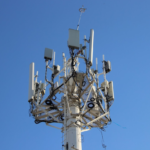
    This is not a deal about connecting homes in Mexico City. Instead, it focuses on the “Direct to Device” connectivity model. This technology allows standard mobile phones and Internet of Things devices to connect directly to low-orbit satellites without needing ground towers. For the first time, a major Mexican conglomerate can offer clients the ability to make calls or send data from the middle of the Sonoran Desert, the mountains of Chihuahua, or maritime zones without installing a single physical pole.

    For Bestel, which built its reputation on a vast fiber optic network and manages Sky’s satellite services, the logic is purely economic. Federico Garcés, Bestel’s Deputy Director of Enterprise Products, stated that the goal is to ensure business continuity where traditional infrastructure is limited. The deal allows Televisa to bypass the brutal costs of “last mile” implementation. In the telecom industry, the last mile is the most expensive part of connectivity. By utilizing Starlink, Bestel can now offer immediate coverage to mining companies, logistics firms, and government offices without digging trenches or stringing cable across difficult terrain.

    The Hybrid Network Effect

    The strategy Televisa is pursuing is integration rather than replacement. Bestel is not abandoning its fiber; it is augmenting it. The company is now selling “hybrid architectures” where a business might use Bestel’s fiber for daily heavy lifting but switch to Starlink for redundancy or to connect a remote warehouse. This makes the company a one-stop shop for connectivity, solving the problem of the “last mile” by eliminating the mile entirely.

    The “last mile problem” refers to the high cost and logistical difficulty of connecting a physical fiber optic cable or cell tower directly to a business or home located in a remote area. Building infrastructure across deserts, mountains, or national parks is often economically unviable. Starlink solves this by bypassing physical construction entirely, using satellites to deliver connectivity directly to the customer’s location.

    This move puts Bestel in a competitive race with other local players who have already recognized Starlink’s dominance. Globalsat, another Mexican satellite firm, also decided to resell Starlink services to stay relevant. However, Televisa’s scale changes the equation. With a sales force already embedded in the corporate world and a massive existing client base, Televisa can accelerate the adoption of satellite technology much faster than smaller niche players.

    The Shifting Power Dynamic

    The agreement alters the landscape for Mexico’s telecommunications industry in two specific ways. First, it solidifies Starlink’s victory in the government procurement space. Under the administration of Andrés Manuel López Obrador, the state-owned CFE Telecomunicaciones awarded Starlink contracts worth up to 1.556 billion pesos to bring internet to underserved areas. Now, with Televisa acting as a private sector arm, Starlink’s footprint will expand beyond state-led initiatives into the profitable private sector.

    Second, it forces traditional carriers to compete against the sky. Currently, Starlink claims a user base of approximately 160,000 in Mexico, a number that is likely to explode following this alliance. For existing incumbent operators, the threat is no longer just about remote villages; it is about losing high-value corporate accounts. A bank with branches in rural areas, a logistics fleet, or a construction firm can now bypass traditional telcos entirely and buy a seamless fiber-satellite package from Televisa.

    However, the deal is not without challenges. Previous government contracts between Mexican entities and Starlink have faced scrutiny. In 2025, the Superior Audit of the Federation discovered that nearly 40% of Starlink services installed for the CFE were out of service or pending activation. While Bestel claims it will offer superior integration and support, the alliance highlights a dependency on a foreign provider whose constellation, while vast, is controlled entirely by Musk. As of 2026, Starlink operates over 10,000 active satellites, representing more than 60% of the global active fleet.

  • New CFE Smart Meters Will Use Bluetooth, Could Change Your Power Bill

    New CFE Smart Meters Will Use Bluetooth, Could Change Your Power Bill

    Mexico’s state power company is developing a new generation of electric meters with Bluetooth connectivity, a move that could eliminate the estimated billing that has long frustrated customers and give them real-time visibility into their energy use.

    The Comisión Federal de Electricidad, better known as the CFE, confirmed the project as part of a broader push to modernize the country’s electricity distribution network. CFE Director General Emilia Calleja Alor announced the initiative, describing it as a cornerstone of the company’s modernization strategy.

    CFE meters
    File photo

    The new meters are designed to connect wirelessly to smart home assistants such as Amazon Alexa or Google Assistant. That means a homeowner could simply ask a device how much electricity has been used so far this month — and get an answer. For those without a smart speaker, the connection would also work through a smartphone.

    The bigger operational shift is on the CFE’s end. The system would allow technicians to perform meter readings, disconnect service, and restore power remotely, around the clock. That solves a persistent headache: accessing meters inside gated communities, apartment buildings, or homes where no one is available to let workers in.

    Irán Rey Galero Trejo, head of the Advanced Measurement Laboratory at the Valle de México Norte Distribution Division, explained the technical architecture behind the rollout. Each meter, he said, can function as a local hub connecting up to 500 other devices — without requiring extra infrastructure in the street. The system operates under a framework called Amade, an autonomous energy distribution measurement architecture.

    “It is self-sustaining,” Galero Trejo said. “A meter integrated into the home ecosystem will serve as an access point for up to 500 meters.” He added that the Bluetooth module is built to last as long as the physical meter itself — meaning no additional replacement cycles.

    Accurate billing is one of the most-cited goals. Overcharging based on estimated readings, rather than actual meter data, has been a chronic complaint in Mexico, particularly in the Yucatán Peninsula, where electricity rates are among the highest in the country. Yucatán’s grid has also faced scrutiny over reliability, with surging demand outpacing generation capacity and frequent blackouts affecting homes and businesses alike.

    The new system promises to replace estimates with precise, real-time data — and to make that data auditable by the customer, not just the utility. Reconnection after a service interruption would also happen faster, since it could be done remotely rather than requiring a truck and crew.

    As for when any of this arrives at your door: not yet. The CFE has not announced a rollout date or timeline. The project remains in development, and implementation is expected to be gradual. El Financiero reported the initiative has been in the works since at least March.


    Smart Meter Rollout: At a Glance

    • Who: Comisión Federal de Electricidad (CFE)
    • What: New electric meters with Bluetooth connectivity
    • Compatible with: Smart home assistants (Alexa, Google Assistant) and smartphones
    • Key features: Real-time consumption data, remote readings, remote disconnection/reconnection
    • Hub capacity: Each meter can serve as an access point for up to 500 nearby meters
    • Technology: Amade autonomous distribution measurement architecture
    • Rollout date: No date announced; project currently in development
    • Billing impact: Aims to eliminate estimated charges with precise, real-time data

    Source: Diario de Yucatán

  • Magnicharters Grounds All Flights for 2 Weeks, Stranding Passengers

    Magnicharters Grounds All Flights for 2 Weeks, Stranding Passengers

    Magnicharters abruptly suspended all of its flights Saturday, leaving travelers stranded at airports in Cancún, Mérida, and Huatulco and citing vague “logistical problems” that it has yet to explain in detail.

    The airline, which operates under the corporate name Grupo Aéreo Monterrey, S.A. de C.V., announced the suspension covers all scheduled flights from April 11 through April 25. The timing hit hard: it was the Saturday before a busy holiday travel week, and many passengers had already checked in their bags.

    Magnicharters
    Magnicharters has suspended flights across Mexico. Photo: Courtesy

    Social media quickly filled with complaints. One traveler, Denise de Rosenzweig, posted that Magnicharters canceled flight 162 on the Cancún-Monterrey route after a two-hour delay, with luggage already checked and no airline staff in sight. “Nadie de Magnicharters se hizo presente, en ningún teléfono contestan,” she wrote — nobody from Magnicharters showed up, and nobody answered the phones.

    At the Cancún terminal, an airport employee identified as Alejandro Roset stepped in to address confused passengers when no airline staff appeared. He told travelers the flight had been canceled and that Profeco — Mexico’s consumer-protection agency — had been contacted in case anyone wanted to file a complaint.

    In a written statement, the airline offered little clarity. “We are addressing this situation with due diligence to resolve it,” the company said, adding that as a 30-year-old carrier it “deeply regrets” the disruption to passengers.

    Mexico’s Secretariat of Infrastructure, Communications and Transportation (SICT) and the Federal Civil Aviation Agency (AFAC) confirmed the suspension and activated an emergency assistance plan. Travelers stranded in Cancún, Mérida, and Huatulco were directed to the counters of Aeroméxico, Viva Aerobus, and Volaris for help. Under Mexican law, airlines that cancel operations must offer passengers an alternative flight, pay compensation, or issue a full refund plus indemnification.

    The collapse did not come entirely out of nowhere. On Dec. 19, 2025, a Magnicharters captain grounded flight 780 at Mexico City International Airport, telling passengers the plane would not depart until the airline paid what it owed — citing roughly five months of unpaid wages and per diem allowances. The pilot, identified as Edgar Macías González, was removed by authorities and the flight departed hours later with a replacement crew. AFAC opened an administrative investigation. By February 2026, the airline was reportedly operating with only 2 aircraft across 5 airports and had posted a 5% drop in passengers through the first two months of the year.

    Founded in 1994, Magnicharters describes itself as “La aerolínea turística de México” and serves more than 200,000 passengers a year. Its fleet of Boeing 737s connects Mexico City and Monterrey to beach destinations including Puerto Vallarta, Huatulco, Cancún, the Riviera Maya, and Mérida.

    For travelers flying in or out of Yucatán, the disruption hits a region where air connectivity has been growing steadily. Mérida’s airport set a monthly passenger record of 351,915 in July 2025 and continues to add domestic and international routes.

    Magnicharters provided a contact number for affected customers: 55-51-41-13-51. Passengers seeking to file a formal complaint can reach Profeco at 55 5568 8722 or 800 468 8722. El Financiero has additional details on passenger rights under Mexican aviation law.

    If Your Magnicharters Flight Was Canceled

    • Flights suspended: April 11–25, 2026
    • Routes affected: all domestic and international Magnicharters routes, including Cancún, Mérida, and Huatulco
    • Airlines offering assistance: Aeroméxico, Viva Aerobus, and Volaris at affected airports
    • Magnicharters passenger line: 55-51-41-13-51
    • Profeco: 55 5568 8722 or 800 468 8722
    • Passengers are entitled by law to an alternate flight, compensation, or a full refund plus indemnification

    Source: El Universal

  • With Universal Health Care, Mexico Is Overhauling Its Fragmented Hospital System

    With Universal Health Care, Mexico Is Overhauling Its Fragmented Hospital System

    Universal health care is coming to Mexico. File photo

    For decades, getting care from a public hospital in Mexico has depended not on where you live or what you need, but on who you work for. That is about to change.

    President Claudia Sheinbaum announced this week that a presidential decree will formally create the Servicio Universal de Salud — Universal Health Care — with full implementation beginning Jan. 1, 2027. The goal: any Mexican can walk into any public clinic or hospital and be treated, regardless of which institution they are enrolled with.

    A System Built on Silos

    Mexico’s public healthcare has long operated in parallel lanes. Private-sector workers are covered by IMSS (Instituto Mexicano del Seguro Social). Federal government employees belong to ISSSTE (Instituto de Seguridad y Servicios Sociales de los Trabajadores del Estado). Those without formal employment — roughly 40% of the population — rely on IMSS-Bienestar.

    Each institution runs its own hospitals, clinics, records, and budgets. If the nearest hospital happens to belong to a different system than yours, you generally cannot be seen there. Patients mid-treatment who lose their enrollment status can have care interrupted. Transfers between institutions for emergency cases are common — and costly.

    Eduardo Clark, the Health Ministry’s undersecretary for sectoral integration, put it plainly: hospitals and clinics often sit closer to a patient’s home than the facility they are technically assigned to, yet patients cannot access them due to enrollment rules.

    What Changes in 2027

    Starting Jan. 1, 2027, the first phase of service-sharing between institutions kicks in, with eight priority areas identified. Among them:

    • Universal emergency care and uninterrupted hospitalization
    • High-risk pregnancies and emergency deliveries
    • Código Infarto (heart attack response) with hemodynamics services
    • Código Cerebro for stroke events
    • Breast cancer screening, biopsies, and treatment at the nearest unit
    • Continuity of treatment for kidney failure, cancer, and transplants
    • Vaccinations and primary care consultations for acute conditions

    The key shift on emergencies: patients will be able to go to the nearest public hospital for urgent care and stay there through the end of their treatment, without being transferred for administrative reasons.

    In the second half of 2027, specialized services — radiology, laboratory work, imaging — will begin crossing institutional lines. By 2028, the plan calls for universal prescription filling, specialist referrals, and open follow-up for chronic conditions such as diabetes and hypertension.

    The ID Card That Makes It Work

    None of this functions without shared data. Registration for a new universal health credential begins April 13, starting with adults 85 and older in 24 state capitals and all 16 Mexico City boroughs. The credential — issued through Bienestar offices — will eventually replace IMSS and ISSSTE membership cards and double as an official government ID.

    The software underpinning the system was developed internally by IMSS and is being extended to IMSS-Bienestar, with ISSSTE and Pemex also being integrated for interoperability. No private licenses were purchased, Sheinbaum said.

    A companion app will let users access a digital version of the credential, view nearby health facilities, and — by 2027 — manage appointments, review medical records, and access AI-assisted teleconsultations.

    What It Means for Expats and Residents

    Foreign residents with legal status in Mexico can already enroll in IMSS voluntarily, paying an annual fee that varies by age. Under the new system, IMSS enrollment would also open the door to ISSSTE and IMSS-Bienestar facilities — a significant expansion of access.

    Officials have been clear that the rollout is gradual by design. Clark said the phased approach is meant to ensure the system’s financial and operational sustainability. The objective, as Sheinbaum framed it, is that by the time the current administration ends, any Mexican can receive care for any condition at any public health institution — and be received.


    At a Glance: Mexico’s Universal Health Service

    • Decree: Presidential decree creating the Servicio Universal de Salud, signed April 2026
    • Phase 1 launch: Jan. 1, 2027 — emergency care, obstetrics, cancer screening, primary care
    • Phase 2: Second half of 2027 — specialized services (imaging, lab, radiology)
    • Phase 3: 2028 — universal prescriptions, specialist referrals, chronic disease follow-up
    • Credential rollout: Begins April 13, 2026, starting with adults 85+
    • Institutions covered: IMSS, ISSSTE, IMSS-Bienestar (and eventually Pemex health services)
    • App features: Digital ID, facility locator, appointment management, teleconsult, AI health tools

    Source: Mexican Secretaría de Salud

  • 2nd Fire in a Month Hits Mexico’s Troubled Dos Bocas Refinery

    2nd Fire in a Month Hits Mexico’s Troubled Dos Bocas Refinery

    A fire broke out Thursday afternoon at the Olmeca refinery in Dos Bocas, Tabasco — the second significant incident at the facility in less than a month — sending a thick column of black smoke visible for kilometers and triggering a large emergency response.

    Pemex, Mexico’s state oil company, confirmed the blaze started in a petroleum coke storage warehouse inside the complex. The company activated its internal safety protocols and deployed emergency crews to contain the fire. About 150 Pemex personnel responded, along with support from the Navy, the Defense Ministry, and Tabasco state authorities.

    Dos Bocas
    Thursday’s fire at the Olmeca refinery in Dos Bocas, Tabasco, was the second significant incident at the facility in less than a month. Photo: Courtesy

    No injuries were reported. President Claudia Sheinbaum said Thursday evening that Pemex director Víctor Rodríguez and refinery manager Julio César Aguilar had confirmed the fire was contained and limited to the coke storage area.

    Residents of the nearby town of Paraíso, about 5 kilometers (3 miles) from the refinery, spotted the smoke first and began posting videos to social media. Footage showed intense flames inside the structure and audible alarms going off across the complex.

    Petroleum coke — commonly called petcoke — is a carbon-rich byproduct of the crude oil refining process. It accumulates in large quantities at refineries like Olmeca, which is designed to process Mexico’s heavy Maya crude.

    A pattern of incidents

    This is the latest in a string of problems at Dos Bocas. On March 17, a far more deadly incident occurred at the refinery’s perimeter when heavy rains caused oily water to overflow beyond the fence line. A vehicle drove through the pooled residue, sparking a fire that killed five workers. Four were employees of a subcontracted security firm; one worked directly for Pemex. The Attorney General’s Office opened an investigation into that incident.

    In the weeks that followed, Pemex also reported separate oil spills in the area, recovering hundreds of thousands of liters of crude from beaches in Veracruz and Tabasco.

    The Olmeca refinery — also known as Dos Bocas, for its location on the Gulf Coast in the municipality of Paraíso — was inaugurated in 2022 and began production in 2024. It is considered a flagship project of Mexico’s push for energy self-sufficiency, designed to reduce the country’s dependence on imported refined fuels from the United States.

    Still short of capacity

    The refinery was built to process up to 340,000 barrels per day but has yet to hit that target consistently. Its peak throughput of around 320,000 barrels per day was recorded briefly in late December 2025 and early January 2026, when both crude combination units ran simultaneously. As of November 2024, the plant was processing about 206,000 barrels per day — roughly 60% of capacity.

    Operational challenges have included problems with the cogeneration system, weather-related disruptions, port logistics issues, and reliability problems in key processing units. Mexico’s overall oil output stood at about 1.635 million barrels per day at the end of 2025, a 7% drop year-over-year and the lowest in decades, according to industry analysts.

    Pemex said it will continue to provide updates as crews work to fully extinguish the fire and assess the situation.

    At a Glance: Dos Bocas Refinery

    • Official name: Refinería Olmeca
    • Location: Paraíso, Tabasco, on Mexico’s Gulf Coast
    • Inaugurated: 2022; production began 2024
    • Designed capacity: 340,000 barrels per day
    • Recent peak throughput: ~320,000 barrels per day (late 2025/early 2026)
    • April 10 incident: Fire in petroleum coke storage warehouse; no injuries reported
    • March 17 incident: Perimeter fire killed 5 workers; federal investigation opened
    • Emergency response: ~150 Pemex personnel, Navy, Defense Ministry, Tabasco state authorities

    Source: Pemex, La Jornada, El Universal