Category: News

  • ‘Hondurasgate’: Leaked Audio Recordings Expose Alleged International Plot Targeting Mexico 

    ‘Hondurasgate’: Leaked Audio Recordings Expose Alleged International Plot Targeting Mexico 

    honduras
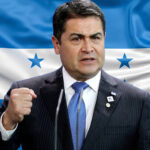
    Former Honduran president Juan Orlando Hernández, recently released from a 45-year U.S. drug sentence, is at the center of the ‘Hondurasgate’ scandal.

    A series of leaked voice notes, verified using forensic software, purportedly reveal a sprawling scheme involving former President Juan Orlando Hernández, Donald Trump, Benjamin Netanyahu, and Argentina’s Javier Milei to destabilize progressive governments in Latin America.

    A political firestorm, being dubbed “#Hondurasgate” on social media, after the publication of 37 leaked audio recordings. The investigation, led by the Hondurasgate platform and the Mexico-based digital outlet Diario Red en América Latina, alleges the existence of a coordinated campaign funded by international right-wing actors to spread disinformation and destabilize the administrations of Mexican President Claudia Sheinbaum and Colombian President Gustavo Petro.

    The recordings, allegedly obtained from WhatsApp, Signal, and Telegram conversations between January and April 2026, place the recently pardoned former Honduran President Juan Orlando Hernández (JOH) at the center of a plot to build a “digital journalism unit” designed to attack leftist leaders in the region.

    The Mexican Connection: A “Smear Campaign Office”

    According to the transcripts, which have been authenticated using forensic voice authentication software developed by the Czech firm Phonexia, Hernández is heard discussing the need to “move the narrative in Mexico” by activating media allies.

    In a conversation with current Honduran President Nasry Asfura, Hernández allegedly requests $150,000 to rent an apartment in the United States to set up a propaganda cell. “We are going to set up a cell, Mr. President. From here, from the United States, an information cell, so they can’t track us there in Honduras. It’s going to be like a Latin American news site,” Hernández says in the leaked audio.

    Hernández reportedly added, “Some cases are coming up against Mexico, some cases are coming up against Colombia, and, most importantly, against Honduras,” suggesting a strategy to weaponize issues like insecurity and drug trafficking to erode public trust in the current administrations.

    During her morning press conference on Wednesday, President Claudia Sheinbaum confirmed she had listened to the excerpts but dismissed the operation as ineffective.

    “They can set up a smear campaign office against our government in Honduras, using resources from a friendly nation. It won’t affect us, not at all,” Sheinbaum stated. “There may be days of confusion, but if we remain true to our principles … no one will be able to undermine the transformation project”.

    International Support: Milei, Netanyahu, and Trump

    The investigation reveals a complex web of international financing and political favors. The audios suggest that Argentine President Javier Milei pledged $350,000 to support the initiative. “I was on a call with President Javier Milei, and it was successful. Very, very good,” Hernández is heard telling Asfura.

    Perhaps the most explosive claims involve the circumstances surrounding Hernández’s release from prison. The former Honduran leader was serving a 45-year sentence for drug trafficking but was pardoned by U.S. President Donald Trump in December 2025.

    In one recording, Hernández allegedly explains the geopolitical debt behind his clemency, stating that Israeli Prime Minister Benjamin Netanyahu had “everything to do” with his release. “The pardon money didn’t even come from you. It came from a group of rabbis and people who supported Israel,” Hernández says in a leaked voice note.

    Analysts cited by Middle East Eye and El País suggest that Netanyahu’s involvement points to a broader strategy to counter left-wing influence in the hemisphere, using Hernández as a proxy ally.

    Reactions and Denials

    The response from the accused has been mixed. While current Honduran President Asfura has remained publicly silent, Honduran National Congress President Tomás Zambrano dismissed the tapes as a “burda fabricación” (crude fabrication). Juan Orlando Hernández, speaking from his new status as a free man, has also denied the authenticity of the conversations.

    However, the publishers of the Hondurasgate investigation stand by their reporting, noting that the audio was subjected to rigorous forensic analysis. Colombian President Gustavo Petro, also a target of the alleged plot, reacted on social media platform X, stating, “That’s how the extreme right’s communication networks move. The money comes from cocaine and Israel”.

  • Gringo Tax: Mexico City Club Hits Americans With $300 Cover, Story Goes Viral
    Gringo Tax: Mexico City Club Hits Americans With $300 Cover, Story Goes Viral

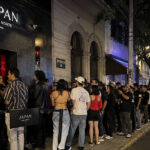
    A Mexico City nightclub is charging U.S. citizens MX$5,000 (about US$300) just to walk through the door, while visitors from any other country pay around US$20. The Instagram post announcing the policy racked up more than 26,000 likes and set off a fresh round of debate about tourism, gentrification, and the state of U.S.-Mexico relations.

    The venue is Club Japan in Roma Norte, one of the capital’s trendiest and most contested neighborhoods. Owner Federico Crespo told the Guardian the move was deliberate. “This is a response to a year of insults directed at us — as a country — by the United States,” he said. “It’s very much a response to the many attacks against Mexico from Trump.”

    Gringo tax
    A trendy nightclub in Mexico City has U.S. visitors paying a much higher cover charge than nationals. Photo: Social media

    Not a Surcharge — Technically

    The club was careful about how it framed the policy on social media. “It is not that ‘we charge more to the gringos,’ but that we offer discounts for those who need it,” the post read. Under the pricing structure, the base admission is MX$5,000 (about US$300). Citizens of countries other than the U.S. receive a 93% discount and pay MX$350 (about US$20). Mexicans and other Latin Americans get 95% off, paying MX$250 (about US$15). Students and teachers from outside the U.S. qualify for a 97% discount, bringing their cover down to MX$150 (about US$9). Americans simply don’t receive a discount.

    A follow-up post from the club was direct about the intent: “This policy in NO WAY responds toward animosity or any negative sentiment towards American citizens as INDIVIDUALS. This is a political positioning.” The club added that it was inviting U.S. citizens to “take the reins of their country.”

    Crespo also said any extra revenue from the full-price admissions goes directly to club workers. Rising rents in Roma Norte and surrounding neighborhoods have pushed many employees into longer commutes and steeper costs of living. “It’s a way to give that money to the people most affected by this issue,” he said.

    A Neighborhood Under Pressure

    Roma Norte didn’t become a flashpoint overnight. Since the pandemic, the neighborhood — along with nearby Condesa and Juárez — has absorbed a wave of American remote workers drawn by the peso’s favorable exchange rate and a quality of life that costs a fraction of what it would stateside. According to Georgetown University research, rents in those districts have climbed more than 60% in recent years, compared to roughly 30% across Mexico City as a whole.

    For many longtime residents, that math has a human cost. Landlords have converted apartments into short-term rentals. Cafés once serving the neighborhood now cater to a clientele that doesn’t speak Spanish. The number of Americans living in Mexico jumped 70% from 2019 to 2022 and has continued rising, reaching 1.6 million according to a 2024 U.S. State Department report.

    Frustration turned public last July when anti-gentrification protests broke out in Roma Norte and Condesa. Some demonstrations turned violent, with storefronts damaged and signs reading “My city is not your Airbnb” and “Gringos, stop stealing our home.” The U.S. Embassy issued a security alert ahead of a third planned march.

    Political Backdrop

    The club’s pricing lands against a backdrop of strained diplomatic relations. President Trump’s rhetoric about Mexico — including tariff threats and calls to designate cartels as foreign terrorist organizations — has sharpened public sentiment south of the border. Whether American tourists will actually line up and pay US$300 to get in is another question. But Crespo seems less interested in filling the room with U.S. passport holders than in making a point, and for now, the internet is paying attention.

    For background on the original protests, the Guardian’s full report has additional detail on Club Japan and the broader context.


    At a Glance: Club Japan’s Cover Charge Policy

    • U.S. citizens: MX$5,000 (about US$300) — no discount
    • Other international visitors: MX$350 (about US$20) — 93% off
    • Mexicans and Latin Americans: MX$250 (about US$15) — 95% off
    • Students and teachers (non-U.S.): MX$150 (about US$9) — 97% off
    • Location: Roma Norte, Mexico City
    • Owner: Federico Crespo
    • Club’s Instagram post received more than 26,000 likes

    Source: New York Post, the Guardian

  • Mexico Cuts School Year Short for Heat and the World Cup
    Mexico Cuts School Year Short for Heat and the World Cup

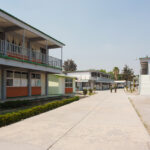
    Mexico is ending its school year nearly six weeks early, citing extreme heat and the looming start of the 2026 FIFA World Cup. Classes will wrap up June 5 — 40 days ahead of the original July 15 finish date.

    Education Secretary Mario Delgado announced the decision, saying the National Council of Educational Authorities voted unanimously to move the calendar after receiving widespread requests from parents, teachers, and school administrators. The next school year will begin Aug. 31, one day earlier than the Sept. 1 start date that applied in 2025.

    The World Cup kicks off June 11 with Mexico’s opening match in Mexico City, putting the tournament squarely in the middle of what would have been the final stretch of the academic year. Three Mexican cities — Mexico City, Guadalajara, and Monterrey — are hosting matches across a tournament that runs through July 19.

    Heat Is Already a Major Concern

    Mexico’s summers have always pushed the limits of classroom comfort, but 2026 is shaping up to be particularly brutal. Researchers studying the tournament’s host cities found that Monterrey’s afternoon temperatures could reach wet-bulb globe readings above 90°F (32°C) — a measure that factors in humidity, wind, and sun angle, not just air temperature. The same study found that 14 of the World Cup’s 16 host venues face conditions that could be dangerous for athletes and spectators alike.

    The 2022 World Cup in Qatar was moved from summer to winter specifically because of heat risks. No such option existed for a North American tournament timed around traditional June-July scheduling.

    For Mexican schools, most of which lack air conditioning, the combination of peak summer temperatures and World Cup excitement made a compressed calendar increasingly difficult to justify. The government’s move gives families more flexibility and removes any pressure on schools to keep students in sweltering classrooms while the country’s national team is playing on home soil.

    Yucatán Watching Closely

    The Peninsula has its own stake in how the summer plays out. Although no matches will be held in Yucatán, airspace restrictions tied to the tournament are already in effect for Cancún, where a FIFA Fan Festival at Malecón Tajamar will broadcast all 104 games on giant screens. Hotel prices across the region are expected to climb 40-60% during the tournament window, and Mérida is actively marketing itself as a destination for fans with downtime between matches.

    An earlier school release date may have a ripple effect on the Peninsula’s summer tourism numbers. Families freed up in early June — rather than mid-July — will have a longer window to travel domestically, potentially accelerating what analysts already expect to be a record season for Mexican beach destinations.

    A Historic Hosting Year

    The 2026 tournament marks the third time Mexico has served as a World Cup host, a distinction no other country holds. Mexico previously hosted in 1970 and 1986. Estadio Azteca — now officially rebranded — will become the first stadium in history to host matches across three separate World Cup tournaments.

    FIFA has mandated 3-minute hydration breaks midway through each half for all matches, regardless of temperature, as part of broader heat management protocols for the tournament.

    Source: Bloomberg


    At a Glance

    • Mexico’s school year will end June 5, 40 days earlier than the original July 15 close
    • The decision was unanimous among the National Council of Educational Authorities
    • Education Secretary Mario Delgado announced the change in response to widespread requests
    • The 2026 FIFA World Cup begins June 11 with Mexico’s opener in Mexico City
    • The next school year will start Aug. 31, one day ahead of the 2025 start date
    • Mexico City, Guadalajara, and Monterrey are hosting matches through July 19

  • U.S. Attorney General Vows More Charges Against Mexican Officials 
    U.S. Attorney General Vows More Charges Against Mexican Officials 

    A sweeping U.S. indictment targeting a sitting Mexican official has set off one of the sharpest diplomatic confrontations of President Claudia Sheinbaum’s government.

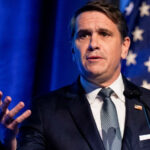
    Todd Blanche, acting Attorney General of the U.S., announced that the indictment of Sinaloa’s governor is just the beginning, as tensions over sovereignty escalate between the Trump administration and Mexico’s President Sheinbaum.

    [PHOENIX] — Acting United States Attorney General Todd Blanche has issued a stark warning to Mexican politicians, stating that the recent indictment of Sinaloa Governor Rubén Rocha Moya is merely “the beginning” of a broader legal campaign. The announcement comes as President Donald Trump intensifies his rhetoric, threatening unilateral military ground operations inside Mexico to combat drug cartels.

    In an interview with News Nation on the sidelines of the Border Security Expo in Phoenix on Wednesday, Blanche confirmed that additional charges are imminent. When asked if the Department of Justice would pursue more cases beyond visa revocations, Blanche responded unequivocally, “Sure, yes”.

    “Last week, we announced that an indictment was filed against a governor of Mexico by the Southern District of New York,” Blanche told reporter Ali Bradley. “I think that’s something we’ve done in the past, and we will certainly continue to do it”.

    The Rocha Moya Indictment

    The escalating legal pressure began on April 30, when a federal grand jury in the Southern District of New York indicted Rubén Rocha Moya, the governor of Sinaloa, along with nine other current and former Mexican officials. The charges include drug trafficking and weapons offenses, effectively accusing the state’s highest-ranking official of collaboration with the Sinaloa Cartel, which the U.S. designated as a Foreign Terrorist Organization (FTO) in 2025.

    Rocha Moya, who has since taken a leave of absence from his post, is the first sitting Mexican governor to be charged under the new FTO framework.

    Blanche attributed the influx of intelligence that is driving these cases to the extradition of high-profile cartel leaders. “One of the consequences of many of the leaders of some of these cartels having been brought here over the last year… is that some of them are probably going to want to cooperate,” Blanche explained. He added that such cooperation “may lead to additional charges” against political figures previously thought to be untouchable.

    Potential Military Action

    The Justice Department’s legal offensive is unfolding alongside a dramatic military posture shift from the White House. On the same day as Blanche’s interview, President Trump explicitly warned that the United States would conduct ground operations in Mexican territory if the government in Mexico City fails to dismantle the cartels itself.

    “If they aren’t going to do the job, we will do it, and they understand that,” Trump said during a public event at the White House, dismissing anticipated complaints from Mexican officials as irrelevant.

    The White House reinforced this stance with the release of the 2026 Counterterrorism Strategy, which declares the administration’s readiness to take “unilateral action” against cartels operating in countries deemed “complicit” in narcoterrorism. This strategy has already manifested in U.S. military actions at sea, with reports indicating that operations against smugglers have resulted in over a hundred casualties in maritime zones over the past year.

    Mexico’s Response

    Facing the dual threat of criminal indictments against her political class and military intervention against her nation, Mexican President Claudia Sheinbaum has adopted a firm stance of defiance rooted in constitutional law.

    “It is not negotiable,” Sheinbaum said during a press conference following the latest threats, referring to Mexico’s sovereignty and territorial integrity. She has consistently rejected U.S. military intervention, dating back to a January phone call with Trump where she told him such assistance was “not necessary”.

    “We seek coordination without subordination, as equals,” Sheinbaum stated earlier this year, a phrase she has repeated as a cornerstone of her administration’s foreign policy.

    Rather than accepting U.S. military help, Sheinbaum has turned the argument back on Washington. She recently suggested that Trump should focus on combating the American demand for drugs and the illegal trafficking of firearms from the U.S. into Mexico. Citing Department of Justice statistics, she noted that 75% of the guns used by cartels originate in the United States.

    “If the flow of illegal weapons from the United States into Mexico were stopped, these groups wouldn’t have access to this type of high-powered weaponry,” Sheinbaum argued.

  • Mexico Secures 1 Million Barrels of Oil Deal With Japan 

    Mexico Secures 1 Million Barrels of Oil Deal With Japan 

    oil
    Since the 20th century, Mexico and Japan have transformed a modest trade relationship into a key economic partnership.

    In a strategic pivot to safeguard its energy security, Japan has finalized an agreement to import one million barrels of crude oil from Mexico. The deal, confirmed by Mexican President Claudia Sheinbaum, comes as the de facto closure of the Strait of Hormuz threatens the supply lines for over 90% of Japan’s oil imports.

    The agreement represents a concrete shift in global energy procurement, driven by escalating conflict in the Middle East. Following a recent telephone conversation between Japanese Prime Minister Sanae Takaichi and President Sheinbaum, both nations committed to bolstering bilateral energy cooperation to mitigate the risks posed by the disruption of the strategic chokepoint.

    President Sheinbaum confirmed the arrangement during a press conference, explaining that the crude to be shipped is surplus material not processed by Mexico’s domestic refineries. “It is not the first time it has been done. This is the surplus crude we still have for export,” Sheinbaum stated. She noted that Japan’s request had been longstanding, but the urgency of the current crisis accelerated the approval. While Sheinbaum did not specify the delivery date, reports from the Japanese economic daily Nikkei and other sources suggest the shipment is scheduled for July 2026.

    A Critical Alternative to a Vulnerable Route

    The urgency of the deal is underscored by Japan’s heavy reliance on Middle Eastern oil. With domestic production covering only roughly 0.3% of its crude needs, Japan is the world’s fourth-largest oil importer and is exceptionally vulnerable to maritime blockades. The Strait of Hormuz, a narrow waterway between Iran and Oman, has effectively been closed amid the ongoing US-Iran-Israel conflict, prompting Tokyo to seek urgent alternatives.

    This vulnerability has forced a rapid diplomatic response. By turning to Mexico, Japan gains access to a Pacific coastline supply route that avoids the conflict zones of the Middle East entirely. Mexico produces approximately 1.8 million barrels of crude oil per day, though a significant portion of that volume is directed toward domestic refining. Currently, between 400,000 and 500,000 barrels are available for daily export, meaning the one-million-barrel shipment for Japan is a substantial, but manageable, commitment for the state-owned oil company Pemex.

    Broader Economic Pressures

    The reverberations of the Hormuz closure are being felt in fuel markets as well. To shield consumers from the shock of Brent crude reaching $107 per barrel at its April peak, the Sheinbaum administration has tightened a price containment agreement. This pact caps regular gasoline (Magna) below 24 pesos per liter, as the government estimated that without intervention, unsubsidized diesel could have surged to as high as 35 pesos per liter.

    While the deal has been framed by some as a historic diplomatic victory, the logistical and financial realities present a more measured picture. The agreement provides a vital stopgap, allowing Japan to diversify its sources away from an increasingly volatile Middle East. However, it remains a relatively small volume compared to Japan’s total consumption, suggesting it is a strategic supplement rather than a complete solution to the supply crisis.

    Furthermore, analysts note that Pemex continues to face significant financial constraints. The state company recently posted a first-quarter loss of MX 2.6 billion in debt.

    The logistical challenges of shipping crude across the Pacific, as opposed to the shorter routes through Hormuz, also add layers of cost and transit time to the transaction.

    Ultimately, the Japan-Mexico agreement signals a slow redrawing of the global oil map. It confirms that Latin America is an essential, stable alternative supplier in a fractured global market, and that Mexico is willing to play a more active role in Pacific energy security despite its domestic production challenges.

    Mexico and Japan’s Little-Known Long-Term Partnership

    Following Mexico’s nationalization of oil in 1938 and Japan’s post-World War II industrial boom, bilateral trade grew slowly, centered on Mexican raw materials such as minerals, copper, and later crude oil in exchange for Japanese machinery and consumer goods. 

    A key shift occurred in the 1960s and 1970s as Japanese auto and electronics manufacturers established assembly plants in Mexico, leveraging its proximity to the U.S. market. The relationship deepened further in the 21st century with the entry into force of the Economic Partnership Agreement in 2005, which eliminated most tariffs on industrial and agricultural goods. 

    Since then, trade has expanded rapidly: Mexico exports automobiles, auto parts, and agricultural products like pork and vegetables to Japan, while Japan sends high-tech machinery, electrical equipment, and steel to Mexico. 

    By the 2010s and 2020s, annual bilateral trade surpassed $20 billion, making Japan one of Mexico’s top Asian trading partners, though the flow remains broadly balanced with a slight Mexican surplus in recent years.