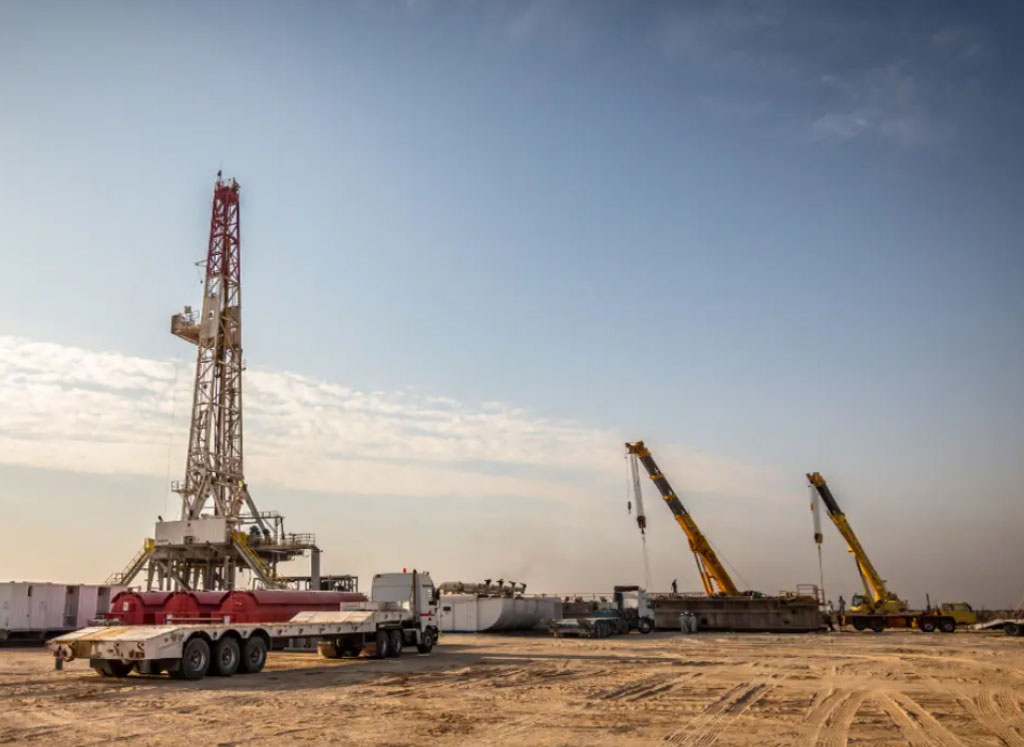
The decision by the government of President Claudia Sheinbaum to permit fracking is not merely a minor policy change. It signals a willingness to prioritize practical economic results over long-held ideological promises, including those of her predecessor and political ally, Andrés Manuel López Obrador.
For a country that relies heavily on imported gas and has a state oil company, Pemex, in financial trouble, this debate is now about real-world governance.
The issue is particularly sensitive because it strikes at the heart of the political project that brought Sheinbaum to power. For years, rejecting fracking was a key environmental and ethical symbol for the ruling party, beyond just its economic feasibility. Reopening this door means accepting internal political costs and acknowledging that the new government’s early stages will involve uncomfortable decisions that break from the promise of pure continuity.
What Is Fracking?
Fracking, or hydraulic fracturing, is a method to extract oil and natural gas from deep underground. It involves drilling vertically and then horizontally into shale rock formations. A high-pressure mixture of water, sand, and chemicals is then injected to fracture the rock and release the trapped hydrocarbons, which flow back to the surface.
Fracking is legal in many countries, including the United States, Australia, and Canada. However, it’s countries like France, Germany, and the Netherlands that have enacted national bans. But it’s not only wealthy European countries that have banned the practice; South Africa, Bangladesh, Uruguay, and Tunisia, among many others, have also closed the door to it.
Why Is Fracking So Controversial?
Environmental and public health groups strongly oppose fracking due to several documented risks:
- The process of hydraulic fracturing uses large volumes of water and generates wastewater that can contaminate groundwater with chemicals and naturally occurring radioactive materials.
- Methane leaks from fracking, extraction, and transport can undermine climate goals.
- Fracking is associated with air pollution, heavy truck traffic, and community disruption.
- The injection of wastewater into deep disposal wells has been linked, though not conclusively, to increased seismic activity.
Political Costs and Redefining the Path
Beyond the immediate political noise, this episode marks a turning point in Sheinbaum’s leadership style. The decision to proceed, even without complete consensus, suggests a leader willing to tolerate internal friction to preserve decision-making capacity.
The practical message is clear: the government’s stability will not rest solely on ideological loyalty, but on its effectiveness in securing energy, investment, and economic functioning.
This is not just about an extraction technique, but about defining priorities in a context of real constraints. If the government can manage the resulting tensions without paralyzing its agenda, it will have consolidated its authority. If it cannot, the cost could weaken the ruling coalition and the narrative of transformation it is still trying to redefine.