The atmosphere across Mexico’s World Cup host cities has transformed into something far beyond a typical sporting event.
As the FIFA tournament unfolds, a particularly warm and palpable wave of affection has been directed toward the South Korean national team’s fans and players.
From the bustling streets of Guadalajara to the plazas of Mexico City, Korean supporters have been met with hospitality and genuine camaraderie that have surprised even the most seasoned football travelers.
This phenomenon, rooted in a profound sense of mutual respect and a shared historical underdog spirit, is creating some of the most memorable moments of the 2026 World Cup.
The scenes of celebration have been remarkable. Videos circulating globally show that Korean fans have turned ordinary dining experiences into spontaneous international parties. In one viral incident, a group of South Korean supporters in a Guadalajara taqueria, enjoying authentic Mexican cuisine, heard the opening notes of PSY’s global hit Gangnam Style. Within seconds, what began as a simple dinner transformed into a full-blown dance party.
The Korean visitors immediately began following the rhythm, and the infectious energy quickly spread to the Mexican diners around them. Patrons of all ages and nationalities joined in, dancing together between tables, capturing the moment on their phones, and laughing as cultural barriers dissolved.
The restaurant’s staff, far from being bystanders, were reportedly seen dancing alongside the patrons, clapping to the beat and encouraging the impromptu celebration, a testament to the natural rhythm that defines Mexican hospitality. This scene was not isolated. At the legendary Arena Coliseo during a lucha libre wrestling night, Korean fans once again broke into the same dance, stealing the spotlight from the masked wrestlers and getting the entire crowd to groove along, showing that the love for joy knows no borders.
This extraordinary welcome is not a spontaneous act of random friendliness; it is rooted in a specific and cherished moment of World Cup history.
The bond traces back to the 2018 Russia World Cup. In the group stage, Mexico was facing a tense elimination scenario. South Korea, already eliminated from the tournament, was playing its final group match against the heavily favored and defending champions, Germany. In a stunning upset, the Korean team defeated Germany two to zero, a result that directly propelled Mexico into the Round of 16.
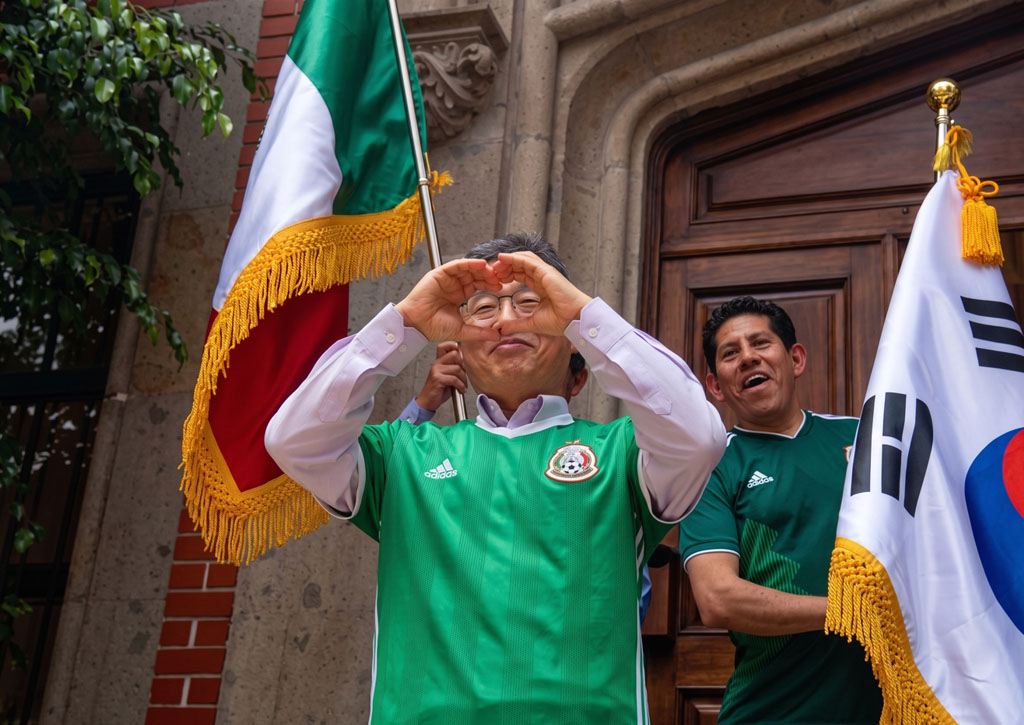
In gratitude, Mexican fans famously gathered outside the South Korean embassy in Mexico City, sharing tequila and beer, and chanting a now legendary slogan: “Coreano, hermano, ya eres mexicano” (“Korean, brother, you are now Mexican”). This sentiment has been powerfully revived for this World Cup.
During South Korea’s opening group match against the Czech Republic in Guadalajara, Mexican fans showed up in full force, waving Taegeukgi flags, wearing sombreros mixed with Korean red shirts, and cheering every Korean attack as if it were their own. Mexican supporters joined their Korean counterparts in jeering the opposition and performing the famous “Mexican wave” through the stands as one unified block of support.
Korean superstar Son Heung-min is treated with the same reverence as a local hero, with Mexican fans eagerly anticipating his every touch of the ball. This goodwill is further backed by organized diplomatic efforts.
The roots of this connection run deeper than pop culture, stemming from a shared history of struggle and resilience. Korean immigration to Mexico began in 1905 when over a thousand Korean laborers arrived as indentured workers on the henequen plantations of the Yucatán Peninsula.
However, this goodwill is about to face its most severe test. On Thursday, June 18th, at the Akron Stadium in Guadalajara, South Korea will face off against Mexico in a critical Group A match with massive stakes for advancing to the knockout rounds.
Both teams won their opening matches, and the atmosphere will shift from open-armed embrace to competitive fervor.