Author: MxTrib Staff

  • The $1 Billion Mexico World Cup Gamble… Will It Pay Off?

    The $1 Billion Mexico World Cup Gamble… Will It Pay Off?

    With fewer than five months to go before Mexico welcomes the world as co-host of the 2026 FIFA World Cup, a construction frenzy is underway that will test the limits of the country’s planning and building capabilities. The Sheinbaum administration and governments across the three host cities have committed more than US $1 billion to infrastructure improvements, cultural exhibits, and tourist amenities, all in the hopes of ensuring that upgrades to public transport systems, airports, and urban services will not only make for a memorable experience for the nearly six million additional visitors expected in June and July 2026, but also provide lasting benefits for residents.

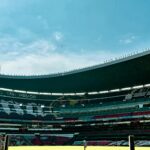
    It’s an ambitious undertaking. From the US $460 million renovation of Mexico City International Airport (AICM) to the unprecedented transformation of the iconic Estadio Banorte (formerly Estadio Azteca), crews are working around the clock to meet looming deadlines. In Guadalajara, the Chapala Highway connecting the international airport to the metropolitan area is being expanded to six lanes at a cost of 2.6 billion pesos (US $137 million), complete with new sidewalks, a dedicated bike lane, and enhanced lighting. Monterrey is doubling its metro rail network from 38 kilometres (24 miles) to over 80 kilometres (50 miles) with the construction of Lines 4 and 6, which will form the longest monorail system in the Americas once complete.

    The stakes couldn’t be higher. Mexico is poised to become the first country in history to host the FIFA World Cup three times, having previously welcomed the tournament in 1970 and 1986. Estadio Banorte itself will become the only stadium on the planet to have hosted three World Cup opening matches when it kicks off the tournament on June 11, 2026. Whether the country can pull off this massive infrastructure overhaul in time remains to be seen. Here’s a comprehensive look at the projects racing toward completion.

    Airport Overhauls Across Host Cities

    Naturally, as the Mexican hub of the 2026 FIFA World Cup, Mexico City is getting the lion’s share of attention when it comes to airport improvements. AICM is undergoing a massive 8.5 billion peso renovation that began in May 2025, with Grupo Aeroportuario Marina (GAM) overseeing the work. According to AICM General Director Juan José Padilla Olmos, the project is expected to reach 70 to 80 percent completion by the time the tournament starts.

    The renovation focuses on structural rehabilitation, drainage upgrades, and reconfiguration of passenger areas to improve efficiency. Terminal 1’s main security area now has 13 inspection lines, up from six, while Terminal 2’s checkpoint has received new X-ray equipment. Officials project a 25 percent reduction in passenger waiting times once the upgrades are in place. Other improvements include new flooring, lighting, air conditioning, baggage belts, and restrooms, as well as the expansion of Terminal 2 parking capacity from 2,437 to 4,837 spaces.

    To mark the World Cup, a 30 foot (9.14 metre) Adidas Trionda soccer ball now stands at Terminal 2’s traffic circle, while murals throughout both terminals celebrate Mexico City’s role as host of the opening match.

    In GuadalajaraGrupo Aeroportuario del Pacífico (GAP) is continuing its expansion project at Miguel Hidalgo y Costilla International Airport, with Terminal 2 currently under construction. The airport is also using a special carbon-absorbing paint that releases oxygen on select surfaces.

    Monterrey International Airport has seen significant investment as well. Grupo Aeroportuario Centro Norte (OMA) has spent 15 billion pesos (US $815 million) during the 2021 to 2025 period on operational infrastructure, certifications, security, equipment, runways, platforms, and the complete renovation of Terminal A.

    Estadio Banorte’s Transformation

    The legendary Estadio Banorte is undergoing one of the most important renovations in its history. Closed in May 2024 for a comprehensive overhaul, the stadium is scheduled to reopen on March 28, 2026, when Mexico hosts Portugal in a friendly match intended to serve as a full-scale rehearsal ahead of the World Cup.

    The renovation will cost approximately 3 billion pesos (US $160 million) and includes the demolition of one of the lower stands, installation of new seating throughout (with the stadium’s characteristic red seats being fitted in the lower sections), high-resolution LED screens, advanced lighting systems, and the redevelopment of press areas and entrances. New locker rooms are being constructed under the suites, along with a modernized player tunnel. Once complete, the stadium is expected to accommodate around 90,000 spectators with improved comfort and safety.

    The venue’s name change has proven controversial. On March 14, 2025, the stadium changed from Estadio Azteca to Estadio Banorte after a sponsorship deal with Grupo Financiero Banorte, the bank financing the renovation work. Banorte provided a US $105 million loan, repayable over 12 years, to support the upgrades, in addition to an earlier US $75 million loan secured by the stadium’s owners, Grupo Ollamani. Surveys show around 84.6 percent of the public oppose the name change. During the World Cup itself, FIFA’s policy on corporate sponsored names means the venue will be known as Mexico City Stadium.

    Cycling and Pedestrian Infrastructure

    Mexico City is making significant investments in cycling infrastructure ahead of the tournament. The city government has set aside 500 million pesos for various cycling projects totalling 300 kilometres (186 miles). Eighty kilometres (50 miles) of new bike lanes will be ready by June, increasing the capital’s total cycling routes to 613 kilometres (381 miles).

    The most prominent (and controversial) among these new projects is the Gran Tenochtitlán bike path, a 34 kilometer (21 mile) route running along Tlalpan Avenue, one of the city’s principal north-south causeways. The project also includes the restoration of green areas along the avenue, with street lights being upgraded throughout.

    The city is also rehabilitating 34 pedestrian underpasses along Tlalpan Avenue with the goal of improving mobility and safety. Twelve crossings located in the 2 kilometre (1.2 mile) stretch between Plaza Tlaxcoaque (just south of the Zócalo) and the Chabacano Metro station were being refurbished as of November.

    In Monterrey, the “FIFA Corridor” initiative will link public spaces and tourist attractions throughout the metropolitan area, with a focus on pedestrian-friendly, cyclist-friendly, and transit-oriented design.

    Metro and Transit Upgrades

    Public transit improvements form the backbone of Mexico’s World Cup preparation strategy. President Claudia Sheinbaum has announced federal government allocations of between 1.5 billion pesos and 2 billion pesos (US $81.7 million to US $109 million) to each host state to strengthen public transportation and mobility networks.

    In Mexico City, 23 billion pesos have been earmarked for metro upgrades, including new trains, improved stations, and better service. The capital is also rehabilitating its light rail service connecting the Taxqueña multi-modal hub to the southern borough of Xochimilco and building a new trolleybus line linking the National Autonomous University of Mexico campus with the Santa Úrsula neighbourhood adjacent to Estadio Banorte. Metro Line 2 will gain a better connection to the light rail ending near the stadium, making match-day transit more efficient for the hundreds of thousands of fans expected at each event.

    Guadalajara is advancing the new Line 5 of its electric BRT public transport system, which will connect the airport with Estadio Akron (also known as Estadio Guadalajara), downtown, and Expo Guadalajara. The new line is expected to reduce travel time by 50 minutes. An electric train link between Paseo Chivas and the stadium is also in the works.

    Monterrey’s transit improvements are the most ambitious. Construction on Metro Lines 4 and 6 was 57 percent and 61 percent complete respectively as of October. Once finished, Line 6 will connect the municipalities of Monterrey, Guadalupe, San Nicolás de los Garza, Apodaca, and Escobedo with the international airport. According to Nuevo León’s Mobility and Urban Planning Minister Hernán Villarreal, the extension will also connect BBVA StadiumFundidora Park, and other key areas designated for the FIFA Fan Festival.

    Governor Samuel García has announced a budget of 150 billion pesos (US $8 billion) for his six-year term, which includes funding for all planned World Cup projects. He has also promised to expand the city’s bus network by delivering 4,000 new buses, developing 30 transfer centers, and installing 500 bus stops.

    World Cup Accommodation: A Growing Concern

    With millions of visitors expected, accommodation capacity remains a pressing concern for all three host cities. Mexico City currently has approximately 61,500 hotel rooms, and hoteliers are working to add 3,300 new rooms in luxury properties before the tournament. World Cup 2026 hotels Mexico searches have surged online as fans scramble to secure accommodations.

    “All luxury hotel brands are looking at Mexico City as a tourist investment hub,” said Alfredo Martínez, president of the Mexico City Hotel Association, to Forbes México. The association is working with the Territorial Planning Ministeron an infrastructure roundtable to accelerate hotel real estate investment.

    For those searching “Mexico City hotels June 2026” or “World Cup accommodation,” officials recommend booking early. The government is assessing potential options on the city’s outskirts, looking at neighbourhoods such as TláhuacXochimilcoMagdalena Contreras, and Coyoacán for accommodation alternatives. Short-term rentals through platforms like Airbnb are expected to ease the room shortage, though a recently passed regulation has raised concerns about available inventory.

    In Jalisco, 83,000 hotel rooms are already available, with another 38 hotels planned representing an estimated investment of 20 billion pesos. Monterrey’s tourism sector is receiving an additional US $8.74 million investment in hotels, restaurants, and cultural sites.

    The Road Ahead

    The infrastructure push represents more than just World Cup preparation. Mexican officials have consistently emphasized that these investments are designed to leave a long-term legacy of social and urban improvement.

    “This isn’t just about a month of football,” Jalisco Governor Pablo Lemus stated. “This is about building a legacy that continues to benefit Jalisco long after the final whistle.”

    Whether all projects will be completed on time remains uncertain. Recent reports indicate potential delays in the renovation of stands and VIP areas at Estadio Banorte, with some works potentially extending beyond initial deadlines. Airport renovations at AICM will pause from May 31 to July 31, 2026, to accommodate increased passenger flow during the tournament, with construction resuming in August.

    Still, authorities across all three host cities remain confident. Mexico will host 13 matches across Mexico City (five games), Guadalajara (four), and Monterrey (four), with Estadio Banorte serving as the focal point when it hosts the opening match on June 11.

    For visitors planning their trips, the message from Mexican officials is clear: the country is ready to welcome the world. Whether the infrastructure can keep pace with the ambition will be answered in the coming months.

  • New Mexico Minimum Wage Increase Takes Effect: What Expats Need to Know

    New Mexico Minimum Wage Increase Takes Effect: What Expats Need to Know

    Photo: Yucatán Magazine

    As 2026 kicked off, some 8.5 million Mexican workers saw their paychecks grow following the country’s ninth consecutive year of double-digit minimum wage increases. The National Minimum Wage Commission (CONASAMI) approved a 13% hike to the general daily minimum wage, raising it from 278.80 pesos to 315.04 pesos per day.  For expats and visitors who employ household staff, dine out frequently, or rely on local services, this wage adjustment carries direct implications for monthly budgets and the broader cost of living across Mexico.

    The increase marks a continuation of a wage-recovery strategy that began in 2019 under the previous administration and has now resulted in a cumulative rise of 256.6% since 2018, when the daily minimum stood at just 88.36 pesos. At current exchange rates of approximately 17.4 pesos to the US dollar, the new general minimum wage translates to roughly $18.10 USD per day, or about $550 USD monthly. 

    Workers in the Northern Border Free Zone, which encompasses municipalities in Baja CaliforniaSonoraChihuahuaCoahuilaNuevo León, and Tamaulipas along the US border, received a more modest 5% increase, bringing their daily minimum to 440.87 pesos (approximately $25.34 USD).

    New Mexico Minimum Wage Increase for 2026

    President Claudia Sheinbaum Pardo announced the adjustment during her morning press conference on December 3, 2025, describing it as the product of consensus between government, unions, and employers. Minister of Labor Marath Bolaños noted that the government’s wage policy has increased the purchasing power of minimum-wage earners by 154% between 2018 and 2025. 

    The stated goal is for the minimum wage to eventually cover the equivalent of 2.5 basic consumption baskets, a threshold that would allow a worker to support themselves and their dependents adequately. The increase structure comprises a fixed boost of 17.01 pesos through the Independent Recovery Amount (known as MIR in Spanish) combined with a 6.5% percentage adjustment.

    For the foreign community living in Mexico, these numbers represent more than abstract policy. They signal changes to the cost of hiring a housekeeper in San Miguel de Allende, paying a gardener in Puerto Vallarta, or tipping at a taqueria in Mexico City. Understanding the details of this wage adjustment is essential for anyone managing a household budget or running a business in Mexico.

    The New Wage Structure Explained

    The 2026 minimum wage operates under Mexico’s two-zone system, which has been in place since 2019. The General Zone covers most of the country, including major expat destinations such as OaxacaMéridaGuanajuato, and the Riviera Maya. Here, the daily minimum wage of 315.04 pesos translates to a monthly income of approximately 9,582 pesos (roughly $550 USD) based on a 30-day calculation.

    The Northern Border Free Zone maintains a higher wage floor due to elevated living costs and economic activity near the United States. Municipalities included in this zone span from Tijuana and Mexicali in Baja California to Ciudad Juárez in Chihuahua, Nuevo Laredo and Matamoros in Tamaulipas, and Reynosa on the United States border in Texas. Workers here now earn a minimum of 440.87 pesos daily, equivalent to approximately 13,409 pesos monthly ($771 USD).

    Beyond the general rates, CONASAMI also adjusted professional minimum wages for 61 specialized trades and occupations. These categories include technicians, equipment operators, nurses’ aides, bilingual secretaries, and certified trade workers across industrial, agricultural, administrative, and service sectors. Professional minimum wages for 2026 range from approximately 280 pesos to 624 pesos per day, depending on the skill level and certification requirements of each role. These specialized rates increased between 5% and 13%, keeping pace with the general adjustment.

    What This Means for Expat Households

    For the estimated one million Americans and Canadians living in Mexico, along with growing communities of Europeans and digital nomads, the minimum wage increase will likely translate into higher costs for domestic services. Housekeepers, gardeners, caregivers, and cooks have historically earned wages that hover at or slightly above the legal minimum, and employers can expect upward pressure on these rates throughout 2026.

    Current market rates vary significantly by location. In Mazatlán, a housekeeper working three hours weekly typically earns between 300 and 400 pesos per visit. Full-time domestic workers in Mexico City earn approximately 9,850 pesos monthly according to recent surveys, while gardeners in the capital average around 8,040 pesos. In tourist-heavy areas like Playa del Carmen and Tulum, where competition for English-speaking staff runs higher, rates can reach $7 to $10 USD per hour compared to $5 for Spanish-speaking workers elsewhere.

    Mexican labor law requires employers of household staff to provide certain benefits regardless of hours worked. The aguinaldo, or Christmas bonus, mandates 15 days’ pay for full-time employees and a proportional amount for part-time workers based on days worked throughout the year. Vacation premiums, severance obligations, and increasingly, registration with the Mexican Social Security Institute (IMSS) also apply. While many household employment arrangements remain informal, the legal framework has become stricter, and enforcement through labor inspections has increased.

    Inflation and the Cost of Basic Goods

    Mexico’s annual inflation rate stood at 3.69% in December 2025, down from 3.80% in November and within the Bank of Mexico’s target range of 3% plus or minus one percentage point. However, this headline figure masks uneven price pressures that affect daily expenses for residents and visitors alike.

    The cost of Mexico’s basic food basket, or canasta básica, rose 4.4% in urban areas and 3% in rural regions during 2025, outpacing overall inflation. This basket includes 24 essential products such as cooking oil, rice, sugar, beans, eggs, chicken, milk, tortillas, and tomatoes. In urban areas, the monthly cost now averages approximately 2,467 pesos ($142 USD), while rural areas see prices around 1,854 pesos ($107 USD). Regional variations are substantial. A recent survey by the Federal Consumer Protection Agency (Profeco) found the same basket of goods priced at 903 pesos at a Walmart in San Luis Potosí versus 784 pesos at a Chedraui in Tamaulipas.

    Restaurant and lodging inflation remained particularly elevated at 7.35% year-over-year in December 2025. Prepared foods at lunch counters, sandwich shops, and taco stands also saw increases, driven partly by higher ingredient costs and partly by wage pressures. Electricity prices jumped 20.70% in 18 cities following the end of government subsidy programs. Public transportation costs rose 4.32% in the first half of November alone.

    Impact on Employment and Business Costs

    The wage increase extends beyond direct payroll effects for employers. KPMG Mexico has warned that higher minimum wages raise the base salary used for calculating social security contributions to IMSS, with knock-on effects for mandatory benefits including bonuses, vacation premiums, and year-end payments. Companies must update their payroll systems, employment contracts, and documentation to remain compliant.

    Despite concerns that wage increases could dampen hiring, Mexico’s labor market has remained relatively stable. The average registered salary for workers affiliated with IMSS reached 624.90 pesos daily in late 2025, reflecting annual growth of approximately 7%. Female participation in formal employment continued to expand, with women holding 9.2 million registered positions, representing 40.4% of formal employment.

    However, economists and business groups have expressed caution about 2026. Alberto Alesi, General Director for Mexico, the Caribbean, and Central America at ManpowerGroup, characterized the employment environment as “notably more conservative” compared to previous years. The OECD lowered its GDP growth forecast for Mexico to 1.2% for 2026, citing moderate consumption, fiscal consolidation, and trade uncertainty. Banamex analysts have suggested that wage increases may slow formal job creation, particularly among small and medium-sized enterprises already navigating tighter margins.

    Other Labor Changes Taking Effect in 2026

    The minimum wage adjustment arrives alongside several other significant labor reforms. As of January 1, 2026, the pilot program requiring digital platform workers to register for social security has become mandatory. Delivery drivers and ride-hailing workers for services like UberDidi, and Rappi must now be enrolled with IMSS. Updated rules published in late December revised how net income is calculated, with exclusion factors varying by transport mode: 48% for cars, 32% for motorcycles, and 3% for non-motorized transport. The Ministry of Labor estimates that approximately one million platform workers per month received occupational risk coverage during the pilot phase.

    The Ley Silla, or Chair Law, which took effect in June 2025, is now subject to enforcement through Labor Ministry inspections that began in December. This legislation requires employers to provide seating for workers who perform tasks that can be done seated, affecting retail, hospitality, and service industries.

    Looking ahead, the Ministry of Labor has submitted a constitutional reform proposing a gradual reduction of the standard workweek from 48 to 40 hours, beginning in 2027. The plan would reduce working hours by two hours annually until reaching 40 hours in 2030, without reducing wages. If approved, this change would have significant implications for labor costs and operational planning across all sectors.

    The Peso Factor

    Currency fluctuations add another layer of complexity for expats and visitors converting dollars, euros, or other currencies to pesos. The Mexican peso has appreciated significantly in recent months, closing at approximately 17.65 to the US dollar in mid-January 2026, its strongest level since July 2024. The peso gained nearly 16% against the dollar throughout 2025, defying many economists’ predictions.

    This appreciation benefits Mexican workers whose wages are denominated in pesos, as their purchasing power increases relative to imported goods. However, it reduces the effective discount that foreigners receive when spending in Mexico. A dollar that bought roughly 20 pesos in late 2022 now buys closer to 17.5 pesos. For an expat household spending $2,000 monthly in local currency, this represents a meaningful reduction in buying power compared to two years ago.

    Banco de México has maintained its policy rate at 7%, preserving one of the widest real yield differentials in emerging markets and attracting continued foreign investment into peso-denominated assets. Analysts attribute the peso’s resilience to this interest rate differential, along with Mexico’s proximity to US supply chains and relatively stable macroeconomic fundamentals.

    Practical Advice for Expat Budgets

    Given these changes, foreign residents and long-term visitors should anticipate modest increases in service costs throughout 2026. Renegotiating rates with household staff at the start of the year is common practice and offering raises that at least match the 13% minimum wage increase demonstrates good faith while helping retain reliable employees.

    Those employing domestic workers full-time should familiarize themselves with their legal obligations, including aguinaldo calculations, vacation entitlements, and the potential requirement to register workers with IMSS. The website of the Secretary of Labor and Social Welfare (STPS) provides contract templates and benefit calculators in Spanish.

    For day-to-day expenses, shopping at local mercados and fruterías rather than international supermarket chains like City Market or Costco can yield savings of 10% to 20% on groceries. Restaurant costs will likely continue rising faster than overall inflation, so cooking at home more frequently offers a practical hedge against dining-out inflation.

    The minimum wage increase reflects Mexico’s ongoing commitment to improving living standards for its workers after decades of stagnant wages. For the expat community, it serves as a reminder that the cost advantages of living in Mexico, while still substantial compared to the United States and Canada, are gradually narrowing. Understanding these shifts helps foreign residents’ budget appropriately while supporting fair compensation for the workers who make daily life in Mexico possible.  

  • Official Mexico City Walking Tours Offer Insider Access to Ancient Sites

    Official Mexico City Walking Tours Offer Insider Access to Ancient Sites

    Photo: Courtesy INAH

    When you visit the circular pyramid at Cuicuilco, it seems impossible that this remarkable Mexico City site, hemmed in by a shopping center and residential towers, was once the ceremonial center of a civilization that predates the Aztecs by more than a millennium. 

    Yet here, where worshippers once honored Huehueteotl, the ancient fire god, small groups of visitors can enjoy official Mexico City walking tours led by archaeologists from the National Institute of Anthropology and History (INAH)

    For expats and long-term residents who think they’ve seen everything Mexico has to offer, the INAH tour program presents a unique opportunity to experience some of the country’s lesser-known archaeological heritage. And with Mexico preparing to host matches at three stadiums during the 2026 FIFA World Cup, the timing couldn’t be better for cultural tourism to take center stage.

    Official Mexico City Walking Tours

    The institute’s cultural walks, known as Paseos Culturales, trace their origins to 1957, when an INAH archaeologist began sharing the organization’s research findings with colleagues and students. What started as informal academic excursions has evolved into a public program offering approximately 130 official Mexico City walking tours per year in the downtown area alone, with additional expeditions to sites throughout the country.

    The process works like this: historians and archaeologists propose walking itineraries to the INAH, selecting locations that showcase Mexico’s cultural heritage. Once approved, tours open to the public at roughly 260 pesos (approximately $15 USD). Each excursion is led by academic specialists who bring decades of research expertise to their narration.

    According to tour guides, the program’s mission centers on sharing Mexico’s living heritage with content that reflects the latest archaeological research and discoveries. Program coordinator Mónica de Alba has noted that public interest has grown substantially in recent years, with residents increasingly recognizing the depth of cultural offerings available in their own city. 

    INAH’s Hidden Gems

    While places like Teotihuacán and Chichén Itzá remain Mexico’s most-visited archaeological destinations, the official Mexico City walking tour program deliberately focuses on lesser-known sites. The October schedule, for example, incorporates Day of the Dead traditions with visits to places like Xochimilco, where participants take moonlit boat tours through the ancient canal system and chinampas, the floating gardens that predate the Spanish conquest.

    Other recent excursions have explored the Ecatepec neighborhood on Mexico City’s outskirts, where open-air markets, street food vendors, and religious festivals maintain traditions that connect directly to pre-Hispanic practices. A tour timed to coincide with the feast of Our Lady of Mercy took participants through La Merced market, one of the city’s oldest commercial districts.

    Historian Jesús López del Río, who leads tours examining human sacrifice practices among Mesoamerican civilizations, has emphasized that these walks allow the general public to connect with societies separated by vast distances of time and space. Understanding the pre-Hispanic past, he notes, extends beyond famous achievements like Mayan mathematics or Aztec engineering: it requires grasping how these civilizations understood and related to their world.

    For expats interested in exploring Mexico’s archaeological heritage through the INAH tour program, reservations are required. Upcoming official Mexico City walking tours and booking information are available by visiting the official Paseos Culturales website at www.paseosculturales.inah.gob.mx. Tours fill quickly, particularly for popular destinations. 

  • Mexico’s Inflation Rises to 3.77%; food prices hit hardest
    Mexico’s Inflation Rises to 3.77%; food prices hit hardest

    Mexico’s inflation rate climbed to 3.77% during the first half of January, reversing a brief downward trend and presenting fresh challenges for consumers and policymakers.

    The National Institute of Statistics and Geography (INEGI) reported the increase on Thursday, showing inflation rose from 3.58% in the second half of December. The uptick marks a setback after several months of gradual improvement.

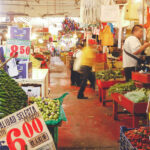
    The increase stems primarily from rising food costs, particularly in fruits, vegetables, and basic staples that form the core of Mexican household budgets. Agricultural product prices showed notable volatility during the two-week period.

    Energy costs also contributed to upward pressure. Gasoline prices rose 0.88% during the first fifteen days of January, while LP gas costs increased 0.83%. Electricity rates climbed 1.13%, adding to household expenses.

    Core inflation, which excludes volatile food and energy prices, reached 3.56%. This measure tracks the underlying price trends that central banks monitor when setting monetary policy and signals persistent pressure beyond temporary fluctuations.

    The Bank of Mexico has maintained its benchmark interest rate at 10.25% as officials balance inflation control against economic growth concerns. The latest uptick may delay potential rate cuts that economists had anticipated for early 2026.

    Mexico’s central bank targets an inflation rate of 3%, plus or minus one percentage point. While the current reading remains within that acceptable range, the reversal in direction raises concerns about achieving sustained price stability.

    Food inflation has been particularly challenging for Mexican households, which typically spend a larger portion of income on groceries compared to families in the United States. Rising agricultural prices put direct pressure on family budgets.

    Transportation costs also increased during the period, with public transport fares rising 0.45%. Combined with higher fuel prices, mobility expenses grew across most categories.

    Non-core inflation, which includes agricultural products and energy, showed the sharpest increases. This category tends to fluctuate more dramatically based on seasonal factors and supply conditions.

    Economists note that January typically brings price adjustments as businesses reset rates for the new year. However, the magnitude of the increase suggests underlying pressures beyond normal seasonal patterns.

    The peso’s recent volatility against the dollar may contribute to import cost pressures, particularly for processed foods and manufactured goods. Currency fluctuations can filter through to consumer prices over several weeks.

    Government subsidies for basic foods and transportation help moderate price increases for some items, but coverage remains limited. Officials continue monitoring staple prices closely for signs of excessive increases.

    Consumer confidence faces headwinds from persistent inflation, which erodes purchasing power despite wage gains in some sectors. Retail activity during early January has shown mixed signals.

    The next inflation report, covering the second half of January, will indicate whether the increase represents a temporary spike or signals renewed upward momentum. Central bank officials will scrutinize the data carefully.

    Key Inflation Figures for Early January 2026:

    • Overall inflation: 3.77% (year-over-year)

    • Previous period: 3.58%

    • Core inflation: 3.56%

    • Gasoline: +0.88%

    • LP gas: +0.83%

    • Electricity: +1.13%

    • Bank of Mexico target range: 2-4%

    • Current benchmark interest rate: 10.25%

    Sources: Milenio, INEGI official data, Reuters market coverage, Bloomberg economic reports

  • Mexico to Use Own Aircraft for U.S. Training After Toluca Controversy

    Mexico to Use Own Aircraft for U.S. Training After Toluca Controversy

    A U.S. military transport aircraft landing at a civilian airport sparked a national debate about sovereignty and bilateral security protocols.

    President Claudia Sheinbaum announced Tuesday that Mexico will use its own aircraft to transport personnel for training in the United States, ending a practice that allowed U.S. military planes to land in Mexico for pickup operations.

    The policy shift follows widespread criticism after a U.S. Air Force C-130J Super Hercules landed at Toluca International Airport on Jan. 18. The aircraft arrived from Texas to transport Mexican security personnel for training exercises under bilateral cooperation agreements.

    “We’ve decided that when it involves training, it’s better for a Mexican aircraft to go to the United States to drop off those who are being trained, rather than having a U.S. aircraft come pick them up,” Sheinbaum said during her morning press conference.

    The Hercules landing coincided with Federal Aviation Administration warnings about military activities in the Eastern Pacific, creating heightened sensitivity about U.S. military operations near Mexico. The timing amplified concerns following the Trump administration’s recent military action to capture Venezuela’s then-president Nicolás Maduro earlier this month.

    Sheinbaum emphasized that the National Security Council authorized the Toluca landing and that such training flights are part of standard bilateral security cooperation. She rejected claims the landing violated any laws, noting that Senate authorization is only required when foreign troops enter Mexico for operations — not for transport crews.

    “The Senate approves when troops or trainers come to Mexico to train,” she explained. “In this case, no troops came. It was the aircraft crew, they didn’t bring weapons.”

    The president confirmed that similar U.S. military aircraft have landed in Mexico before, typically at military installations rather than civilian airports. The decision to use Toluca this time came from the National Security Council as a logistical determination.

    Military cooperation between Mexico and the United States dates back decades through programs including the Mérida Initiative, which began in 2008 to combat drug trafficking and organized crime. The framework includes training exchanges, equipment transfers, and intelligence sharing under carefully negotiated protocols.

    Critics questioned why the military transport used Toluca’s civilian airport rather than the nearby Santa Lucía Air Force Base. Images of the massive four-engine transport at a commercial facility raised questions about operational procedures and transparency in bilateral military arrangements.

    The C-130J Super Hercules is one of the most versatile military transport aircraft in service. According to manufacturer Lockheed Martin, the plane handles everything from troop transport to humanitarian relief missions and is operated by 23 countries worldwide, including Mexico’s Air Force.

    Mexico operates three older C-130 Hercules aircraft assigned to the Air Squadron 302 at Santa Lucía base. The military announced in 2025 plans to purchase a new C-130J, which would make Mexico the first Latin American country to operate the advanced variant when delivered in 2028.

    Opposition party Movimiento Ciudadano questioned the government’s handling of the incident, noting that the Senate had not authorized any U.S. military personnel entry. The party pointed out that a December 2025 request to approve Navy SEAL training in Campeche was postponed indefinitely without explanation.

    The new protocol establishes stricter oversight of training operations. All international training must now receive approval from the National Security Council, and Mexican aircraft will handle all personnel transport to avoid future confusion about foreign military presence on Mexican soil.

    The change reflects Mexico’s emphasis on sovereignty while maintaining security cooperation relationships. Both governments continue to state they will collaborate on combating cartels and fentanyl trafficking, with Mexico repeatedly stressing it will not accept violations of its sovereignty.

    Security officials from both countries are scheduled to meet Friday to continue bilateral cooperation efforts focused on countering transnational criminal organizations and controlling illegal flows of drugs and weapons across the shared border.

    Key Facts About the Toluca Aircraft Incident

    • Aircraft: U.S. Air Force C-130J Super Hercules (registration 08-5726)
    • Flight origin: Dyess Air Force Base, Abilene, Texas
    • Landing location: Toluca International Airport, State of Mexico
    • Date: Jan. 18, 2026
    • Purpose: Transport Mexican security personnel to U.S. for training
    • Authorization: Mexican National Security Council approved the flight
    • New policy: Mexico will use its own aircraft for future training transport

    Sources: Diario de Yucatán, El Financiero, Milenio, El Imparcial, PBS News, NPR, Congressional Research Service