
Category: News

  • Canada Sends Its Biggest-Ever Trade Mission to Mexico — but Wants Security Guarantees First

    Canada Sends Its Biggest-Ever Trade Mission to Mexico — but Wants Security Guarantees First

    Canada wants to deepen its economic ties with Mexico, but it has a condition: the Mexican government needs to show that security is a real priority.

    That was the message from Dominic LeBlanc, Canada’s minister responsible for trade, during the largest Canadian trade mission ever sent to Mexico. The six-day trip, running Feb. 15 to 20, brought more than 370 delegates and roughly 250 businesses to Mexico City, Monterrey and Guadalajara.

    “If we want investment and businesses to keep growing, they need to see the government working on priorities like security,” LeBlanc said during the mission’s opening events in Mexico City on Sunday.

    The timing is no accident. The mission comes weeks after 10 employees of Vancouver-based Vizsla Silver Corp. were kidnapped from the company’s Panuco silver-gold project in Concordia, Sinaloa, on Jan. 23. Five of the workers were later found dead. The abduction, linked to a faction of the Sinaloa cartel, forced the company to suspend operations and sent its stock price tumbling more than 40%.

    LeBlanc said Canada’s Royal Canadian Mounted Police plans to double the number of officers working at the Canadian Embassy in Mexico this year. He pointed to existing intelligence-sharing between Canadian and Mexican security agencies as a positive sign, but made clear that more is needed.

    “It is very important to continue the solid and reliable relationship that Canada and Mexico have between security agencies and military organizations,” he said.

    Mexico’s Economy Secretary Marcelo Ebrard, speaking after meeting with LeBlanc, confirmed that Canada has proposed folding security into a new bilateral action plan. That plan, which Ebrard said would be presented in the second half of 2026, will also cover critical minerals, port infrastructure, supply chains and opportunities for young workers in both countries.

    Ebrard framed the initiative as separate from the United States-Mexico-Canada Agreement, known as the USMCA or T-MEC. With the trade deal’s mandatory review looming this year and American officials floating the idea of scrapping the trilateral pact in favor of separate bilateral deals, both Canada and Mexico have reasons to strengthen their direct relationship.

    “This meeting, and the dialogue, and everything we want to achieve with the action plan is for a reason,” Ebrard told reporters. He said bilateral merchandise trade between the two countries has grown twelvefold since the original NAFTA took effect in 1994, topping $56 billion in 2024.

    The trade mission is part of a broader push by Prime Minister Mark Carney to diversify Canada’s trade beyond the United States. Mexico is already Canada’s third-largest single-country trading partner after the U.S. and China, and Canadian direct investment in Mexico reached $46.3 billion in 2024. More than 60 Canadian auto parts companies and nearly 140 Canadian mining firms operate in the country.

    During the mission’s opening, the Canadian Business Council and Mexico’s Consejo Coordinador Empresarial signed a memorandum of understanding to coordinate business cooperation. The five sectors targeted for growth include agriculture and food, advanced manufacturing, clean technology, information and communications technology, and creative industries.

    Asked about the Vizsla Silver kidnappings, Ebrard said the topic did not come up during meetings with the Canadian delegation and insisted it would not damage the bilateral relationship. But security consultants say incidents like these weigh heavily on corporate investment committees and the insurers who cover operations in high-risk areas.

    Mexico has been working to strengthen trade ties and position itself as a reliable partner for North American supply chains, even as persistent violence in states like Sinaloa, Guerrero and Michoacán complicates that pitch.

    The Canada-Mexico Comprehensive Strategic Partnership, launched in September 2025 during a visit by Carney to Mexico City, provides the framework for the bilateral action plan now under development.

    Canada-Mexico Trade: By the Numbers

    • Bilateral merchandise trade topped $56 billion in 2024, a twelvefold increase since NAFTA took effect in 1994
    • Canadian direct investment in Mexico totaled $46.3 billion in 2024
    • More than 60 Canadian auto parts companies operate in Mexico
    • Nearly 140 Canadian mining companies have operations in the country
    • The February 2026 trade mission included 370-plus delegates and about 250 businesses
    • Five priority sectors: agriculture, advanced manufacturing, clean tech, IT and communications, and creative industries
  • Mexico’s 2026 Residency Rules for Expats Updated, Financial Requirements Increase
    Mexico’s 2026 Residency Rules for Expats Updated, Financial Requirements Increase

    If you are planning to apply for legal residency in Mexico in 2026, you will need to meet higher financial thresholds than at any point in recent memory. 

    The country’s immigration system underwent a significant shift in July 2025 when the federal government published updated guidelines directing Mexican Consulates abroad to calculate residency qualification criteria using UMA (Unidad de Medida y Actualización), rather than the daily minimum wage formula used for decades. That change, combined with a stronger peso and sharply increased government processing fees, means the cost of establishing yourself legally in Mexico has risen considerably.

    For context, the monthly income needed to qualify for temporary residency was roughly US$2,000 in 2022. By 2025, that figure had climbed to around US$4,150. Under the 2026 UMA-based calculations, applicants now need approximately US$4,400 to US$5,000 per month in net income, depending on which consulate handles the application and the prevailing exchange rate.

    Residency Rules for Expats in 2026

    The value of UMA for 2026 was published by INEGI (Mexico’s national statistics agency) on January 8 at $117.31 pesos per day, a 3.69% increase over the 2025 rate of $113.14. That sounds modest, but the real impact comes from the higher multiples of UMA that consulates must now apply when assessing economic solvency. The updated multiples, laid out in the July 2025 guidelines, effectively rebased residency requirements to 2025 income and savings levels.

    The good news is that UMA increases are far more predictable than the old minimum wage model. While Mexico’s minimum wage jumped 13% in 2026 alone to $315.04 pesos per day, UMA typically rises only 3% to 5% each year in line with official inflation. That means future requirements should be easier to plan around. 

    What the Numbers Look Like 

    There are four principal routes to qualify for residency based on economic solvency: monthly income, savings or investments, ownership of a debt-free property in Mexico, or a capital investment in a Mexican company. You must qualify under one route alone; mixing income with savings is not permitted.

    For Temporary Residency (Residente Temporal), the approximate requirements for 2026 are: a monthly net income of around US$4,400 to US$5,000, or a minimum balance of approximately US$70,000 to US$75,000 in savings or investments maintained over the preceding 12 months. Applicants can include 401(k) balances and certain other investment accounts, though cryptocurrency holdings are not accepted.

    For Permanent Residency (Residente Permanente), generally reserved for retirees, the bar is higher: approximately US$7,500 to US$8,000 per month in income, or roughly US$280,000 to US$300,000 in savings. These represent increases of 25% to 30% compared with 2025 thresholds. The Instituto Nacional de Migración (INM) fees paid inside Mexico after consular approval have seen some of the largest increases in years. A one-year Temporary Resident card jumped from $5,570 pesos in 2025 to $11,140 pesos in 2026. A Permanent Resident card went from $6,789 to $13,578 pesos. These fees are fixed in pesos, so applicants paying from US or Canadian dollar accounts should budget for currency fluctuations. 

    Consulate Differences Still Matter

    One persistent frustration of the Mexican residency process is that requirements vary from one consulate to the next. While the UMA formula is consistent nationwide, individual consulates retain discretion over how strictly they apply thresholds, what exchange rate they use, and what documentation they require. Some ask to see six months of income statements; others want 12.

    Appointment availability is also becoming an issue. Several consulates in the United States and Canada are booking months in advance. Applicants close to the minimum financial thresholds are advised to confirm exact requirements directly with their chosen consulate before scheduling an appointment.

    Practical Tips for 2026 Applicants

    Early preparation is key. UMA updates tend to trigger a surge in applications starting in February, and appointment slots fill quickly. Applicants whose income falls near the borderline may find the savings-based route easier to document and less vulnerable to scrutiny.

    The consulate application fee remains relatively low at US$56 in the United States and C$80 in Canada, though it is non-refundable regardless of the outcome. Many applicants choose to work with an immigration facilitator, typically costing between US$250 and US$600, to ensure their documentation meets the strictest consulate standards.

  • Go, Canada! Canadians Beat Out USA for Most Air Routes to Mexico
    Go, Canada! Canadians Beat Out USA for Most Air Routes to Mexico

    Photo: Kylie Anderson / Unsplash

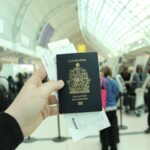
    For the first time on record, Canadian cities hold more top-ten positions than America in the ranking of busiest international air routes into Mexico. According to data released by Mexico’s Federal Civil Aviation Agency (AFAC), five of the ten busiest international corridors now connect Canadian airports with Mexican destinations, with the Torontoto Cancún route topping the list as the single busiest international flight into the country.

    The Toronto to Cancún route grew 26.1% in 2025 to surpass 1.3 million passengers, while the Montreal connection climbed 24%, carrying more than 737,000 travelers. Those are the largest year-over-year increases since records began. Meanwhile, six of the ten busiest U.S. routes to Cancún lost passengers: Chicago dropped 11.7%, Dallas fell 4.5%, New York slipped roughly 4%, and Atlanta declined 2%.

    Overall, Mexico welcomed just over 2.8 million Canadian visitors in 2025, an 11% increase over the previous year, according to Mexico’s Ministry of Tourism. Of that total, 1.6 million arrived through Quintana Roo, accounting for 13.6% of all international arrivals to the state. The United States remains the overall leader by volume, with 13.7 million passengers (5.29 million to Cancún alone), followed by Canada, the United KingdomColombia, and Argentina.

    More Air Routes to Mexico Result of Boycotts of USA

    The shift didn’t happen by accident. A boycott of U.S. travel that began in early 2025, triggered by President Donald Trump’s repeated suggestions that Canada should become the 51st U.S. state, has shown no signs of slowing down. An Abacus Data poll in March 2025 found that 62% of Canadians planned to avoid traveling to the U.S. for the following year. By late 2025, Flight Centre Canada reported that bookings to U.S. destinations were down 40% year over year, with general manager Anita Emilio telling CTV News the decline was expected to continue through 2026.

    Airlines wasted no time redirecting capacity. According to aviation data from PAX News, Canada’s four largest carriers, Air CanadaWestJetPorter Airlines, and Air Transat, collectively boosted capacity to Latin America by approximately 36% for the 2025-2026 winter season while trimming more than 1,500 flights to the United States. WestJet and Air Canada together now control roughly 70% of the Canada-Mexico market. New seasonal routes, including WestJet’s direct Calgary to Cozumel service and a Winnipeg to Cancún connection, launched in late 2025, with Porter introducing its first-ever Caribbean flights from Toronto, Hamilton, and Ottawa.

    Francisco Madrid, director of STARC (a Mexican tourism research body), put the shift in perspective: for the first time in history, the busiest international air routes into Mexico are not those connecting U.S. cities, but those linking Canadian ones.

    Betting on Canada

    Tourism officials in the region are treating this as an opportunity that demands a deliberate response. Andrés Martínez Reynoso, director of the Quintana Roo Tourism Promotion Council (CPTQ), confirmed plans to double promotional spending in Canada for 2026. The council is also working to increase flight frequency from the 19 Canadian cities already connected to Cancún, at a time when 17 new air routes into Cancún International Airport are being added, including five from Canada and the first ever non-stop from Dublin via Aer Lingus.

    But the boom comes with a caveat. Seven out of every ten international tourists arriving in Mexico still come from North America. The decline of South American and European markets in the 2025 rankings, with countries like Brazil and Peru both losing ground, underlines the risk of relying too heavily on a single region. The CPTQ says diversification toward those markets is now part of its strategy, alongside the Canadian push.

    For expats living along the Riviera Maya and in Cancún, the influx is already visible. More Canadian voices at airport arrivals, more WestJet and Air Canada liveries on the tarmac at CUN, and a growing snowbird population choosing Mexico over Florida and Arizona

    Whether the trend holds will depend in part on the political temperature between Ottawa and Washington, but for now, Canada has quite literally taken the top spot on the departure board.

  • Mexico City Smog Sets Off ‘Double No Driving Day’ Contingency
    Mexico City Smog Sets Off ‘Double No Driving Day’ Contingency

    Millions of drivers in the Mexico City metropolitan area faced expanded traffic restrictions Friday as environmental authorities kept a Phase 1 pollution contingency in place.

    The Megalopolis Environmental Commission (CAMe) said high ozone concentrations across the Valley of Mexico showed no signs of easing, blaming low wind, strong sunshine and temperatures around 80°F for trapping pollutants close to the ground. That meant a “Doble Hoy No Circula” — or double no-driving day — remained in effect from 5 a.m. to 10 p.m.

    Under the expanded restrictions, all vehicles with hologram 2 verification stickers were barred from the road, along with hologram 1 vehicles whose plates end in 1, 3, 5, 7, 9 or 0. Vehicles with hologram 0 and 00 stickers and blue engomado decals with plates ending in 9 or 0 were also pulled from circulation. Cars without any hologram — including those with out-of-state or foreign plates — could not drive at all.

    Electric and hybrid vehicles, emergency services, authorized school transport and motorcycles were exempt.

    What is the Hoy No Circula program?

    Mexico City’s no-driving day program dates back to 1989, when record ozone levels pushed the government to act fast. The idea was simple: ban most private cars from the road one weekday per week based on the last digit of their license plates. Officials hoped it would cut weekday traffic by roughly 20%.

    The program applies across all 16 boroughs of Mexico City and 18 neighboring municipalities in the State of Mexico. On a normal day, vehicles are restricted based on a color-coded sticker system tied to emissions verification. Newer, cleaner cars with “00” or “0” hologram stickers can generally drive without limits, while older or higher-emitting vehicles face one restricted weekday and some Saturday bans.

    When pollution spikes — as it did this week — authorities escalate the restrictions. A Phase 1 contingency doubles the number of cars pulled off the road. In the worst cases, a Phase 2 can restrict even more vehicles.

    Does it work?

    Researchers have long debated the question. A widely cited study from the University of Chicago found no evidence that the restrictions improved air quality, noting many households simply bought a second car — often an older, dirtier one — to dodge the weekly ban.

    Still, the program has survived more than three decades and inspired similar efforts in Bogotá, Santiago and São Paulo. Authorities have gradually tightened it, lowering the ozone threshold for triggering a contingency and adding Saturday restrictions for high-emission vehicles.

    Mexico City sits in a mountain-ringed basin at about 7,350 feet above sea level. Roughly 5.5 million vehicles circulate daily, and the dry season — typically February through May — brings the worst air quality of the year. High-pressure systems trap pollutants in the valley, and intense sunlight drives the chemical reactions that create ground-level ozone.

    On Jan. 1, a new expansion of Hoy No Circula took effect across 22 municipalities in the Valley of Toluca and Santiago Tianguistenco, restricting vehicles with hologram 1 and 2 stickers six days a week. That same day, CAMe activated a separate contingency for fine particulate matter driven by New Year’s Eve fireworks.

    CAMe said the current contingency would remain in place until atmospheric conditions improve.

    What to know about Mexico City’s Doble Hoy No Circula:

    • The program bans certain vehicles from driving between 5 a.m. and 10 p.m. based on plate numbers and emissions stickers.
    • A “double” restriction kicks in when ozone exceeds 150 parts per billion.
    • Fines for violations can run several thousand pesos, and vehicles may be towed and impounded.
    • Electric vehicles, hybrids, emergency services and motorcycles are exempt.
    • The dry season, roughly February through May, is the worst period for ozone in the Valley of Mexico.
    • Residents can check real-time air quality through the city’s “Aire” app or the CAMe website.
  • Face Mask and Antiviral Sales Jump 17% as Mexico Measles Outbreak Spreads

    Face Mask and Antiviral Sales Jump 17% as Mexico Measles Outbreak Spreads

    Sales of face masks, hand sanitizer and common medications have surged across Mexico’s pharmacy chains as a measles outbreak that began last year continues to grow, with confirmed cases now reported in all 32 states.

    The National Union of Pharmacy Businesses (Unefarm) reported a 17% spike in demand for face masks, antibacterial gel, ibuprofen, paracetamol, antivirals and antibiotics starting last weekend and picking up steam on Monday. The increase is tied directly to rising measles cases across the Mexico City metropolitan area and several other states.

    Juvenal Becerra Orozco, president of Unefarm, said the buying trend is being driven by two things: parents stockpiling supplies out of concern, and schools in several states now requiring students to wear masks. “Parents are in a bit of a panic and are buying face masks as reserves, along with ibuprofen, antibiotics or paracetamol,” Becerra Orozco said.

    National outbreak grows

    Mexico has confirmed more than 9,000 measles cases since the outbreak began in early 2025, with 28 deaths across seven states. The surge originally centered in the northern border state of Chihuahua, where officials traced the outbreak to an unvaccinated 8-year-old Mennonite boy who had visited relatives in Seminole, Texas.

    Chihuahua still accounts for nearly half of all confirmed cases since 2025, but the western state of Jalisco has become the current epicenter. Jalisco alone has logged more than 1,600 confirmed cases in 2026 — roughly 58% of this year’s national total. Schools in Guadalajara, Mexico’s second-largest city, have made face masks mandatory.

    The state of Mexico, which surrounds the capital on three sides, announced this week it is screening students’ temperatures at school entrances and ramping up vaccination campaigns. Mexico City has launched an aggressive vaccination push after confirming more than 160 cases.

    Through Feb. 6, there were more than 2,100 confirmed cases nationwide in 2026 and nearly 6,000 suspected cases.

    Pharmacy supply holding — for now

    Across Unefarm’s more than 5,600 affiliated pharmacies in 18 states, supplies remain adequate. Pharmacy owners have increased their orders to stay ahead of demand, and prices have held steady so far. Becerra Orozco compared the current situation to the early days of the Covid-19 pandemic, when demand for similar products spiked 70% to 80% almost overnight, causing widespread shortages at laboratories and pharmacies.

    The current 17% increase is specific to measles-related buying, he said, though it overlaps with the winter respiratory illness season, which was already driving higher sales of some medications.

    Vaccination campaign accelerates

    Deputy Health Minister Ramiro López Elizalde said this week that Mexico has 28 million vaccine doses ready for immediate use, on top of the 14.3 million already administered since 2025. The priority group is children ages 6 months to 12 years.

    The state of Mexico reported that within five days of launching its vaccination week, it had administered 352,111 doses covering measles, influenza, Covid-19, rubella, pneumococcal disease, tetanus, hexavalent and rotavirus vaccines. Officials expected to hit their 400,000-dose target by Thursday.

    Yucatán Peninsula largely spared

    In Southeast Mexico, the Yucatán Peninsula has experienced minimal impact to date. Yucatán state has confirmed only five cases since the outbreak began—three in 2026 and two in 2025 —in the municipalities of Mérida, Kanasín, and Izamal. That represents 0.05% of the national total, the lowest incidence rate in the country.

    Campeche has recorded 14 confirmed cases and Quintana Roo has 12. Quintana Roo recently joined the national vaccination campaign, with authorities focusing on schools and rural communities.

    The Pan American Health Organization issued an epidemiological alert on Feb. 4, calling on countries across the Americas to intensify surveillance and vaccination. PAHO noted that measles cases in the first three weeks of 2026 were 43 times higher than the same period in 2025. Among confirmed cases with vaccination data, 78% were unvaccinated.

    A PAHO panel is expected to convene on April 13 to review whether Mexico and the United States will lose their measles-free status — a designation Mexico has held for three decades. The meeting falls less than two months before the 2026 FIFA World Cup, which Mexico is co-hosting.

    Measles in Mexico: Key Facts

    • More than 9,000 confirmed cases since early 2025; 28 deaths
    • Jalisco is the current epicenter with 58% of 2026 cases
    • All 32 states have reported confirmed cases
    • 28 million vaccine doses available for immediate use
    • Priority vaccination group: children ages 6 months to 12 years
    • The MMR vaccine is 98% effective against measles
    • Yucatán state: 5 confirmed cases, lowest rate in the country
    • PAHO will review Mexico’s measles-free status on April 13