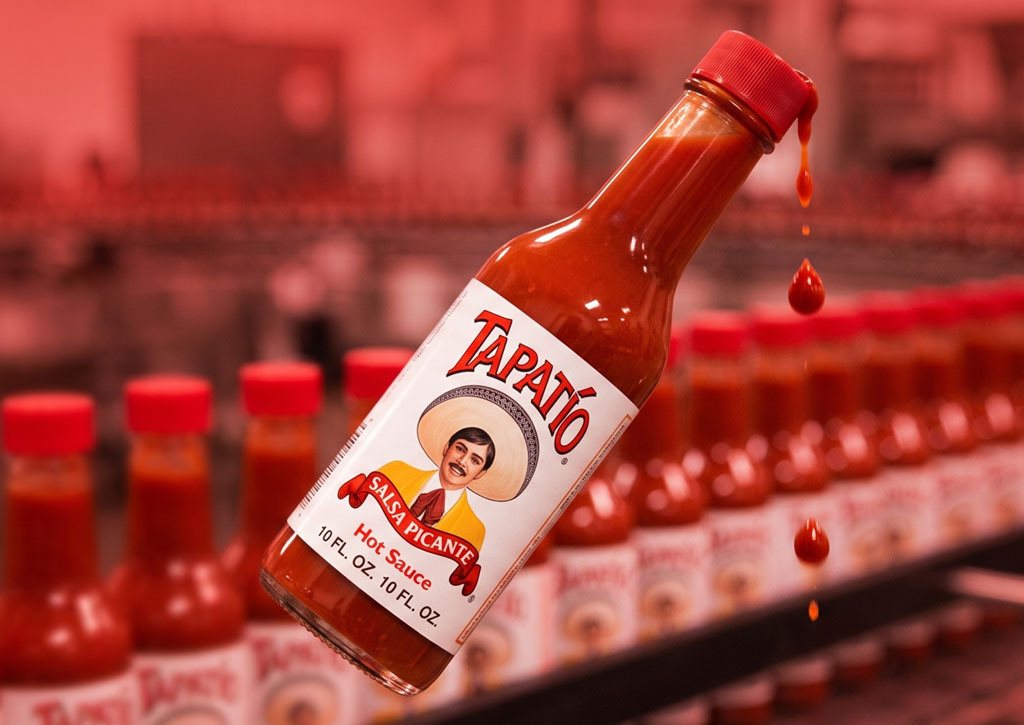
After 55 years as a family-run business, the iconic hot sauce brand Tapatio was sold in January to a private equity firm. The transaction marks the end of an era for a company that began as a modest operation in a small Los Angeles warehouse and grew into a staple of American kitchens, ranking as the fifth best-selling hot sauce brand in the United States.
The story of Tapatio is a classic immigrant success story. The company was founded in 1971 by Jose-Luis Saavedra Sr., a native of Mexico City who had immigrated to Southern California. Saavedra was not a chef by training; he worked in the aerospace industry. The business was born from a simple homemade recipe for a spicy sauce that he and his wife shared with friends and coworkers. Tapatiosauce proved so popular that when Saavedra was laid off from his aerospace job, he decided to pursue it as a full-time venture.
The early years were defined by hard work and perseverance. Saavedra, who spoke little English, leased a modest 750-square-foot building in Maywood, California, and initially had to work other jobs to support his new business. He did nearly everything himself, from grinding the peppers to applying the glue to the labels.
The sauce’s name was also a trial. The first label, “Cuervo,” quickly drew a lawsuit from the tequila company Jose Cuervo. A second attempt, “Charro,” met the same legal fate. Finally, Saavedra chose “Tapatio,” a term used to describe a person from Guadalajara, Mexico. He chose this name as a tribute to his children, all of whom were born in that city. Even then, the name was challenged by food giants ConAgra and Del Monte, but Saavedra fought back and successfully kept the trademark.
The company’s growth was steady. In 1985, it moved to a larger 8,500-square-foot facility in Vernon, California. By 1996, it had outgrown that space as well, and Saavedra built a custom 30,000-square-foot state-of-the-art facility. His three children eventually joined the business, helping to manage its expansion. By 1988, the sauce, once popular primarily among the Hispanic community, had become a staple in American households. The brand’s iconic label, featuring a man in a sombrero, became a familiar sight in kitchens and restaurants across the country.
Highlander Partners, a Dallas-based private investment firm, executed the acquisition in 2026. The financial terms of the deal were not disclosed. Still, the family behind El Tapatio released a press statement stating that there was no way the company could continue to operate as it had for decades under current market conditions. The family expressed gratitude to their fans and said the decision was extremely difficult, especially for the company’s founder, who recently suffered a stroke at 97.
Tapatio’s sale is a clear echo of similar acquisitions that have reshaped the hot sauce landscape in recent years. In 2017, the spice maker McCormick & Co. acquired Frank’s RedHot, the quintessential Buffalo wing sauce, as part of its larger $4.2 billion purchase of Reckitt Benckiser’s food business.
In 2020, McCormick made another significant move, purchasing the Cholula hot sauce brand from the private equity firm L Catterton for $800 million in cash. These deals, like the Tapatio acquisition, are driven by the growing consumer appetite for spicy flavors.
A 2024 survey found that 62% of consumers are more likely to buy a food or beverage item if it is advertised as spicy. This trend has made established hot sauce brands with loyal followings and strong brand identities exceptionally valuable assets.
But the reality is that when large corporations acquire brands like Tapatio, compromises on ingredients are common, and longtime loyal fans often turn away. Taste aside, part of what makes brands like Tapatio special is their story.