Category: Travel

  • New Rule to Officially Allow Uber Pickups at Mexico City Airport

    New Rule to Officially Allow Uber Pickups at Mexico City Airport

    Airport
    Mexico’s most important airport seems to be on the verge of finally getting its act together when it comes to ride-sharing services.

    For a long time, travelers at the Mexico City International Airport (AICM) have faced a problem. They could use ride-sharing apps like Uber, DiDi, or InDrive to get to the airport, but not to leave. This was because government and airline rules allowed only authorized airport taxis to pick up passengers.

    That situation is changing. The federal government has announced a new plan to create legal pickup zones for ride-sharing platforms. This is part of a solution to end conflicts between app drivers, airport taxis, and the authorities.

    How Will the New Pickup System Work?

    The new system will not allow Uber or DiDi to pick up passengers directly outside the main exits of Terminals 1 and 2. Instead, the government is creating a special waiting area for these vehicles.

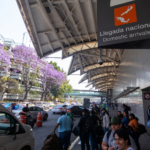
    This designated zone is located between Terminal 1 and Terminal 2, about an eight-minute walk from both buildings. The space has covered seating and is watched over by security personnel.

    The government plans to offer a free public-transport shuttle to take passengers directly from the terminals to the new ride-sharing pickup zone.

    Why Are These Changes Happening?

    There are two main reasons for this change. First, there has been tension between app drivers and traditional airport taxi drivers. The taxi drivers pay for federal concessions and have blocked airport roads to protest what they see as unfair competition. The government wants to establish order and reduce these conflicts.

    Second, Mexico is preparing to host the FIFA World Cup. Millions of tourists will arrive at the airport, and the government needs to provide more transportation options. Officials want to solve this problem before the event begins on June 11.

    What About the Current Rules?

    Currently, app drivers can face fines from the National Guard for picking up passengers at the airport. The government says ride-sharing services do not have federal permission to operate inside the airport zone.

    Uber has argued that it has a legal injunction, or amparo, that protects its drivers. However, the government clarifies that this court order only stops arbitrary arrests; it does not give the company a permit to operate at the airport.

    The new plan is an attempt to solve this legal gray area by moving the pickups to a location where the apps can operate without breaking federal rules.

    When Will This Start?

    Officials have already started adapting the space for the new pickup zone. The government is currently in talks with ride-sharing companies like Uber, DiDi, and InDrive to finalize the details. The new pickup zones are likely to be completed before the FIFA World Cup begins.

    President Claudia Sheinbaum has confirmed the strategy. She also mentioned that the government will review the high prices charged by concessionaire taxis to make them more fair for riders.

    Travelers in other cities are calling for similar rules, especially at airports like Cancún and Tulum, where taxi drivers are notorious for overcharging

  • Tijuana Beyond the Border: What Travelers Actually Need to Know
    Tijuana Beyond the Border: What Travelers Actually Need to Know

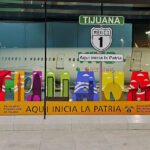
    Tijuana reality is more nuanced than either the old reputation or the new boosterism suggests. File photo

    Tijuana has always been a city that people think they understand before they’ve ever set foot there.

    For generations of Americans, the mental image was fixed: a rowdy border town of cheap drinks, questionable nightlife, and little else. That picture was always incomplete. Today, it’s also increasingly outdated, though the full truth about Tijuana is more nuanced than either the old reputation or the new boosterism suggests.

    Start with the history. Tijuana found its footing during Prohibition, when Americans flooded south looking for legal liquor and jazz. It was a city born of appetite and proximity, and that energy never really left. What did emerge alongside it was something genuinely surprising: culinary innovation. The Caesar salad was invented here in the 1920s by Italian immigrant Caesar Cardini, and Tijuana’s craft beer culture predates the American craze by decades, with Tecate — brewed just 45 minutes east — among its most famous exports.

    The modern city has even more to offer. The Valle de Guadalupe wine country to the south has become one of Mexico’s most celebrated culinary destinations, drawing serious food and wine travelers from across North America. Baja-style fish and shrimp tacos — the genuine article — are worth the trip on their own. The city has a thriving arts scene, a pro baseball team, and direct beach access. Increasingly, travel content creators with serious followings are documenting a Tijuana that feels urban, energetic, and genuinely fun. They’re not wrong.

    But let’s be honest about the other side of the ledger.

    Tijuana recorded roughly 1,600 homicides in 2024 — the highest total of any city in Mexico, and a rate of nearly 96 per 100,000 residents. That puts it among the most violent cities in the world by that measure, not just in Latin America. For context, Chicago — a city Americans often cite as dangerously violent — has a homicide rate closer to 18 per 100,000. It’s also worth noting that Tijuana’s overall crime index, according to Numbeo, sits at 82.47 — significantly higher than Cancún, which registers at 54.61 and is itself considered one of Mexico’s more dangerous tourist destinations. In other words, Tijuana isn’t just edgier than the resort towns most Americans visit — it’s in a different category entirely.

    The city is also sharply divided by neighborhood in ways that Google Maps won’t always warn you about. Areas like Zona Río, Avenida Revolución, and Playas de Tijuana are where tourists tend to stay, eat, and move around relatively comfortably. A few blocks in the wrong direction can change the equation entirely. This is not a city for aimless wandering. It rewards visitors who do their research and stay oriented.

    Practical advice from people who know the city well: use Uber rather than unmarked taxis, avoid displaying expensive items in public, skip the bridges near the Tijuana River after dark, and don’t let a great evening push you into unfamiliar neighborhoods late at night. These aren’t extraordinary precautions — they’re the same common sense that applies in any major city with economic inequality and a visible criminal underclass. Tijuana simply has less margin for error than most.

    None of this should stop a curious, informed traveler from going. The food alone makes a compelling argument, and the region’s cultural richness — from the wine valleys to the Pacific coast — is genuine. But the travelers who have the best experiences in Tijuana tend to be the ones who went in clear-eyed, not the ones who were told there was nothing to worry about.

    Know what you’re walking into. Then go enjoy the tacos.

  • Why Semana Santa Is the Best Time to Visit Mexico City

    Why Semana Santa Is the Best Time to Visit Mexico City

    Mexico
    Semana Santa is the ideal time to visit Mexico City and enjoy everything the city has to offer.

    Mexico City’s Semana Santa holiday period offers a rare combination: reduced traffic congestion and a packed calendar of cultural and religious events, making it an ideal time for visitors.

    While many residents leave the capital for beach destinations, the city transforms. Traffic, normally a daily challenge, eases significantly. At the same time, the city hosts major events, including one of the country’s most important religious traditions, drawing over a million attendees.

    The Easing Of Traffic in Mexico City During Semana Santa

    The reduction in traffic during Semana Santa is substantial. Millions of residents leave the city for destinations like Acapulco and Queretaro, emptying offices and schools. For those staying or visiting, this means shorter travel times and easier access to attractions.

    However, visitors should note that vehicle restrictions remain in effect. The Hoy No Circula program operates on its normal schedule throughout Semana Santa 2026, with no announced suspensions. Drivers must check the daily restrictions, as vehicles with holograms 1 and 2 are subject to normal limitations even on holidays.

    Public transportation operates on modified schedules. The Metro runs from 7:00 to 24:00 on Jueves and Viernes Santo, while Metrobus operates from 5:00 to 24:00 . The “Tu bici viaja en Metro” program allows bicycles on the system throughout the holiday, providing an alternative transportation option.

    The Ley Seca (dry law) takes effect in several boroughs, including Iztapalapa, Cuajimalpa, and Magdalena Contreras from Jueves Santo through Sunday, limiting alcohol sales and consumption.

    Major Events and Attractions

    After 183 editions, the Iztapalapa’s Passion Play has been recognized by UNESCO as Intangible Cultural Heritage, drawing visitors from across the country. The reenactment moves through the Ocho Barrios to Cerro de la Estrella. In 2025, more than one million people attended the Viernes Santo procession.

    Centro Histórico – The Visita a las Siete Casas (Visit to the Seven Churches) sends families walking between historic temples, including the Catedral Metropolitana, Templo de Santo Domingo, and Templo de San Hipólito.

    Museums and Cultural Sites

    Major museums remain open along Paseo de la Reforma’s museum corridor:

    • Museo Nacional de Antropología
    • Castillo de Chapultepec (Museo Nacional de Historia)
    • Museo de Arte Moderno
    • Museo Tamayo 

    In Coyoacán, visitors can explore the Casa Azul (Frida Kahlo Museum), Museo Anahuacalli, and colonial-era churches, including Parroquia de San Juan Bautista.

    In San Ángel, the Bazar del Sábado and the Diego Rivera and Frida Kahlo studio museum offer additional cultural experiences.

    mexico
    Experiencing a day out with friends in a trajinera at Xochimilco is something everyone should try at least once.

    Outdoor and Family Activities

    Xochimilco – Trajinera boat rides through the canals remain a signature experience. The Feria de la Nieve in Santiago Tulyehualco, a tradition spanning more than 180 years, offers local ice cream varieties.

    Chapultepec – The Parque Urbano Aztlán features the Aztlán 360 panoramic wheel and mechanical rides. The Bosque de Chapultepec also hosts special events, including “Sólo la luz, Primavera,” an outdoor light art installation with 13 sculptures along Reforma from the Ángel de la Independencia to Puerta de los Leones.

  • Cozumel Tourism Booms with Record Cruise and Air Travel Numbers
    Cozumel Tourism Booms with Record Cruise and Air Travel Numbers

    Cozumel
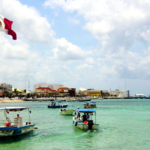
    Caption: With more cruises and flights than ever, Cozumel expects more than 9 million visitors in 2026.

    The island of Cozumel, off Mexico’s Caribbean coast, is expecting to welcome more than 9 million visitors during 2026. According to Mayor José Luis Chacón, a combination of improved air connections, a busy schedule of sporting events, and strong cruise ship traffic is driving the growth.

    Recent years have seen steady increases in tourism. In 2024, the island set a record with 4.6 million cruise passengers, finally surpassing pre-pandemic levels. The numbers continued to climb in 2025, with 4.72 million cruise visitors. Air travel also reached an all-time high, with over 700,000 passengers flying into the Cozumel airport. Ferry service between Playa del Carmen and Cozumel carried more than 3.6 million passengers, bringing the island close to the 9 million mark.

    The first two months of 2026 have started positively. Hotel occupancy was strong throughout January and February, and during the Carnival celebrations, hotels were full. The mayor also highlighted that some cruise ships will now extend their stays in port until 10 p.m., giving visitors more time to spend money in local shops, restaurants, and bars.

    Why Cozumel Is Increasingly Popular

    Cozumel’s appeal rests on several factors that bring visitors back year after year.

    World-Class Diving
    The island sits next to the Mesoamerican Barrier Reef, the second-largest reef system in the world. This makes Cozumel one of the top diving destinations globally. Divers and snorkelers come to see coral formations, sea turtles, rays, and hundreds of tropical fish species in clear, calm water.

    Beaches for Everyone


    The island offers different beach experiences. On the west coast, facing the mainland, the water is calm and protected, ideal for swimming. Public beaches like Playa Palancar and Playa Corona have beach clubs with loungers, food service, and snorkeling gear rentals. On the east coast, beaches like Playa Chumul face the open Caribbean Sea with stronger waves and a wilder feel.

    Cozumel
    Despite having so much going for it, Cozumel is ofcourse known for its beaches, which range from overcrowded to secluded and unspoiled.

    There is also the fact that Cozumel’s Isla Pasion was recently voted the world’s best beach in a TripAdvisor poll. 

    Maya History


    Cozumel was an important pilgrimage site for the ancient Maya, who traveled here to worship Ixchel, the goddess of fertility. At San Gervasio, the only Maya archaeological site open to the public, visitors can walk through the remains of temples and plazas built about a thousand years ago. The Cozumel Museum in San Miguel tells the story of the island from Maya times to the present.

    Dining and Shopping


    The food scene has grown beyond basic tourist fare. Small restaurants serve fresh seafood and authentic Mexican dishes. Craft breweries have opened, including Cerveceria Punta Sur, the island’s first microbrewery. Shopping ranges from silver jewelry stores to artisan markets where local artists sell handmade crafts. Renting a Jeep or scooter is a popular way to explore the island independently.

    Major Events


    Cozumel has become a destination for sports tourism. The island will host major triathlons in 2026, including the IRONMAN 70.3 in September and the Full IRONMAN in November. These events attract athletes and their families from around the world. The February Carnival celebration is another major draw, filling hotels and boosting business for local merchants.

    Cruise Industry Strength


    Cozumel remains one of the busiest cruise ports in the Caribbean, receiving 1,300 ships in 2025. Eleven new cruise ships made their first visits during the year. Royal Caribbean plans to open its Royal Beach Club Cozumel in 2026, providing another attraction for cruise passengers.

    Visitors Are Staying Longer


    Recent media coverage, including a “36 Hours” feature in the New York Times, has highlighted that, beyond the cruise-ship crowds, Cozumel offers a peaceful experience for overnight visitors. Hotel options range from beachfront properties on the east coast to sleek boutique hotels and comfortable waterfront options in town. Local tourism officials have been working to attract more overnight guests, spreading economic benefits to more businesses.

  • Aman Opens  First Mexico Proeprty: What We Know About the Luxurious Amanvari Resort

    Aman Opens First Mexico Proeprty: What We Know About the Luxurious Amanvari Resort

    Photo courtesy Aman

    Aman, the Swiss-founded hospitality group behind some of the most exclusive hotels on the planet, is about to open its first property in Mexico this spring. Amanvari is an adults-only, 18-casita resort on the East Cape of Baja California Sur, about 45 minutes south of Los Cabos International Airport.

    The name combines the Sanskrit words for “peace” and “water,” and the property will occupy a stretch of coastline where desert, estuary, and the Sea of Cortez converge. With nightly rates expected to start around $3,000, it’s likely to become one of the most talked-about hotel openings of 2026.

    For the growing number of international visitors interested in luxury travel in this beautiful part of Mexico, Amanvari marks something of a shift in what the East Cape offers. This is not Cabo San Lucas. There are no mega-resorts or spring break crowds. The East Cape has remained relatively undeveloped, defined by fishing villages, dirt roads, and empty shoreline. Amanvari’s arrival, alongside the Four Seasons that opened in the same community in 2019, signals that this quieter side of Baja is now firmly on the international luxury map.

    The Amanvari Resort and What it Offers

    Amanvari will have 18 standalone casitas, each a two-level pavilion designed by Elastic Architects with early input from Heah & Co. They are positioned at an elevation to frame views of the Sea of Cortez on one side and the Sierra de la Laguna mountains on the other. Interiors use white concrete, natural stone, and tropical hardwood, with open-air courtyards and artwork by Mexican artisans throughout. Some casitas will include cantilevered private pools. A collection of branded Aman Residences, ranging from four to seven bedrooms and listed from $13 million to as much as $35 million, will also be available for purchase.

    The main pavilion, located directly on the beach, will house three restaurants: Arva, Aman’s Italian concept; Nama, for Japanese cuisine; and a third focused on regional Baja flavours using produce from the estate’s own organic farms. The Aman Spa will include a contemporary interpretation of a temazcal, the traditional Mesoamerican sweat lodge, along with Spa Houses, treatment rooms, and an open-air yoga pavilion. Aman has described the spa as a space for “calm reflection as much as rejuvenation.” Guests will also have access to snorkelling, diving, and fishing excursions, guided desert hikes, and visits to local ranches, led by a resident marine biologist.

    Costa Palmas and the East Cape

    Amanvari is part of Costa Palmas, a 1,500-acre (607 hectares) private resort community that has been under development since the mid-2010s. The community already includes the Four Seasons Resort Los Cabos, which opened in 2019 with 118 rooms and 13 dining concepts, among them estiatorio Milos, the Mediterranean seafood restaurant, and Mozza Baja from James Beard Award winner Nancy Silverton. Costa Palmas also has a Robert Trent Jones II-designed 18-hole championship golf course, a deep-water marina that can handle yachts up to 250 feet (76 metres), 18 acres (7 hectares) of organic orchards and farms, and three miles (4.8 km) of swimmable beach.

    The Marina Village functions as the community’s social hub, with boutiques, a nightclub called Chiki, a cafe-boutique hybrid called Casena that serves Baja-roasted coffee, and Casa Blake, a condominium hotel that acts as the heart of village life. For expats and long-stay visitors, Costa Palmas operates more like a self-contained town than a resort. You can dock a boat, play 18 holes, eat at a dozen restaurants, and shop for local goods without ever leaving the property. The addition of Amanvari gives the community a second world-class hotel brand and cements the East Cape’s position as a genuine alternative to the more developed corridors around Cabo San Lucas, about 60 miles (97 km) to the southwest.

    Find out more on the official Aman website at www.aman.com/resorts/amanvari.